
Table of Contents
- Why 24 GB Became the Standard in 2026
- What 24 GB of VRAM Buys You on a GPU
- The RTX 5080 24 GB Situation
- Gaming Versus AI: Different Reasons for the Same Number
- Laptops: 24 GB as the New Professional Baseline
- Windows and Snapdragon Follow the Same Curve
- Mobile GPUs Reached 24 GB Too
- Phones: Why a Handset Needs 24 GB
- Is It Marketing or Measurable?
- Who Should Actually Buy 24 GB
- Frequently Asked Questions
- Is 24GB RAM overkill for gaming in 2026?
- How much VRAM do I need to run AI models locally?
- When is the RTX 5080 24 GB launching?
- Does 24 GB of unified memory equal 24 GB of VRAM?
- Is 24GB RAM worth it in a smartphone?
- Limitations of This Analysis
- Conclusion
- References
- Related Reading
Key Takeaway: 24GB RAM — or 24 GB of VRAM and unified memory — has become the price-to-performance sweet spot across GPUs, laptops and smartphones in 2026, because local AI inference is now the workload that defines hardware requirements. A 24 GB GPU runs 30B-class language models at over 200 tokens per second, whereas 16 GB cards cannot load them efficiently without heavy quantization. On laptops, 24 GB of unified memory handles 4K video editing without the cost jump to 32 GB or 64 GB tiers. On phones, 24 GB supports on-device generative AI alongside high-refresh-rate gaming. The practical consequence: 24 GB is the cheapest credible way to future-proof hardware in the AI era.
Memory tiers used to move slowly. For most of the last decade, 8 GB was adequate, 16 GB was comfortable, and anything above that was a workstation indulgence you justified with a spreadsheet. That calculus broke in 2026, and it broke for one reason: running AI models locally is no longer a hobbyist curiosity but a mainstream expectation, and model weights do not negotiate. A model either fits in memory or it does not.
The result is a visible consolidation around 24 GB. Nvidia is reportedly phasing out the 16 GB RTX 5080 in favour of a 24 GB variant. Apple’s M5 MacBook lineup heavily promotes 24 GB of unified memory as its mainstream professional configuration. Asus, OnePlus and Nubia all ship flagship phones with 24 GB. Lenovo now offers it on a budget Snapdragon laptop. These are not coordinated decisions — they are four separate industries arriving at the same number because the same workload is pushing on all of them.
This article breaks down what 24 GB actually buys you in each category, what it does not, and where the money is better spent elsewhere.
About the Author: The Tech ABC Editorial Team covers consumer hardware with a buyer-first focus — what a device does, what it costs, how it compares, and who should actually buy it. Our memory and GPU coverage is grounded in published benchmark data and manufacturer specifications rather than vendor marketing claims.
Gaming News and Reviews – The Tech ABC
Transparency: This article synthesises reporting and testing published through late 2026, including benchmark data from GPU Battle and PromptQuorum, testing by the Eurocom Test Lab, and independent device testing by Fnac Labo. Claims about unreleased products are attributed to their original sources and clearly marked as reports rather than confirmed specifications. We do not receive compensation from any manufacturer named here.
Why 24 GB Became the Standard in 2026
24 GB became the 2026 standard because local AI inference imposed a hard memory floor that gaming and productivity workloads never did. A game that exceeds your VRAM budget drops textures and keeps running. A language model that exceeds your VRAM budget simply fails to load, or falls back to system memory and collapses to unusable speeds. This binary quality is what turned a gradual upgrade curve into a step change.
The economics reinforced it. Memory is one of the most expensive components to add in bulk, which means manufacturers have strong incentives to find the lowest tier that satisfies the dominant workload rather than the most generous one. Three gigabyte memory modules reaching volume production gave GPU vendors a 24 GB configuration on a 256-bit bus without the cost and complexity of a wider interface. Consequently 24 GB arrived as a natural engineering outcome, not an arbitrary marketing tier.
There is a second driver: the gap above it is punishing. Moving from 24 GB to 32 GB or 48 GB typically crosses into workstation or halo-product pricing, where the premium is disproportionate to the capability gained for most users. The effect is a pronounced value plateau at 24 GB — enough headroom for the workloads people actually run, priced below the point where margins balloon.
What 24 GB of VRAM Buys You on a GPU
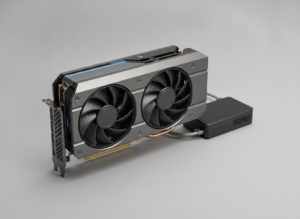
On a desktop GPU, 24 GB of VRAM is the threshold for running 24B to 36B parameter models comfortably with substantial context windows. Benchmarks published by GPU Battle and PromptQuorum in late 2026 show 24 GB cards — the RTX 3090, 4090 and current 5000-series — clearing 200 tokens per second on 30B-class models such as Qwen3.6-35B and Gemma 4 26B. A 16 GB card cannot load those models efficiently without aggressive quantization, which degrades output quality. That is the entire argument for the tier, compressed into one comparison.
A 2026 GPU memory sizing guide circulating in November reinforced the point from the other direction: a 24 GB RTX 4090 handles smaller models like Llama 3.1 8B with substantial room to spare, which means the capacity buys you not just today’s models but the next size class up. Readers tracking Llama’s model generations will recognise the pattern — parameter counts in the accessible tier have climbed steadily, and memory headroom is what determines whether your card follows them.
The RTX 5080 24 GB Situation
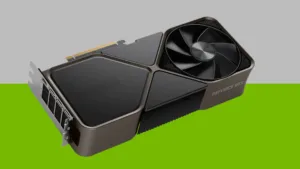
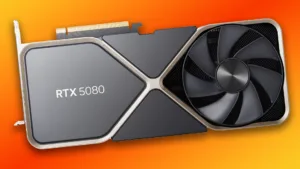
Nvidia is reportedly accelerating a 24 GB variant of the GeForce RTX 5080. Reports from late October and November 2026, attributed to Board Channels and the leaker Moore’s Law Is Dead, indicate an unveiling at CES 2027 in January, with a possibility of December 2026. The card is expected to use 3 GB GDDR7 modules at roughly $1,500 MSRP, though market shortages could push street prices considerably higher.
The strategic logic is clear. Nvidia is reportedly retiring the 16 GB RTX 5080 and the RTX 5090 D V2 in markets including China, which means the 24 GB variant is not an addition to the stack but a replacement for the tier below it. The consequence for buyers is uncomfortable: a 16 GB card bought in 2026 sits on a configuration its own manufacturer is moving away from. Anyone weighing the current card should read our RTX 5080 review alongside the power consumption analysis, because the 24 GB variant inherits the same thermal and power envelope concerns.
Treat the specifications above as reported rather than settled. Leak-sourced pricing in particular has a poor track record, and Nvidia has not published official details.
Gaming Versus AI: Different Reasons for the Same Number
For pure gaming, 24 GB is generous rather than necessary at current settings. Very few 2026 titles saturate 16 GB at 1440p, and the ones that approach it do so at 4K with ray tracing and maximum textures. The honest framing is that gamers buying 24 GB are buying longevity and a comfortable 4K experience, not a present-day requirement.
For AI work the calculation inverts, because capacity is the gate rather than the comfort margin. Therefore the two audiences converge on the same card for opposite reasons — which explains why 24 GB sells well despite being overkill for one of its two main use cases.
| Use case | 16 GB | 24 GB |
|---|---|---|
| 30B-class local LLM | Cannot load efficiently | 200+ tokens/second |
| 8B-class local LLM | Comfortable | Substantial headroom |
| 4K gaming, max textures | Workable | Substantial headroom |
| Reported RTX 5080 status | Being phased out | Expected CES 2027 launch |
Laptops: 24 GB as the New Professional Baseline
In laptops, 24 GB has replaced 16 GB as the recommended baseline for creative professionals, because unified memory architectures force the CPU and GPU to share a single pool. When a 4K timeline, a browser with thirty tabs and a local AI assistant all draw from the same allocation, 16 GB stops being comfortable quickly.
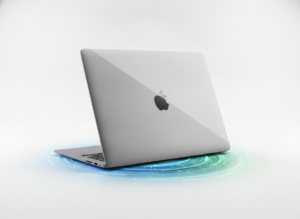
Apple’s late-2026 MacBook lineup built its mainstream positioning around this. The M5 MacBook Air in 13-inch and 15-inch sizes and the M5 Pro MacBook Pro 14-inch all sell widely in 24 GB configurations, which analysts describe as well-calibrated for intensive workflows such as 4K video editing — instant access for both CPU and GPU without the cost of stepping up to 32 GB or 64 GB. The pricing structure drives the behaviour: Apple’s memory upgrades carry substantial premiums, so the tier that satisfies the workload at the lowest cost wins the volume.
Windows and Snapdragon Follow the Same Curve
The Windows ecosystem moved the same direction, and notably from the bottom up rather than the top down. In October 2026 Lenovo launched the IdeaPad Vibe 15Q8X12, built on the Snapdragon X1 chipset, offering up to 24 GB of RAM alongside a 120 Hz OLED display. A budget machine shipping this tier signals that 24 GB has left premium territory entirely.
HP’s OmniBook and HyperX OMEN ranges offer 24 GB configurations for the same reason: heavy multitasking and gaming without pushing buyers into expensive 32 GB tiers. The commercial effect is a crowded, competitive 24 GB segment, which is good news for pricing.
Mobile GPUs Reached 24 GB Too
The flagship RTX 5090 Laptop GPU ships with 24 GB of GDDR7 VRAM, which closes most of the historical gap between mobile and desktop memory capacity. Testing by the Eurocom Test Lab in 2026 found this configuration functions as a genuine desktop replacement, running current AAA titles with full ray tracing and high textures with substantial headroom. Memory is therefore no longer the reason a laptop loses to a desktop — sustained thermals and power delivery are.
Phones: Why a Handset Needs 24 GB
A phone needs 24GB RAM for exactly one reason that justifies the cost: running generative AI models on-device without offloading to a server. Mainstream 2026 flagships still ship 12 GB to 16 GB, which is sufficient for conventional app multitasking. The 24 GB tier exists for devices positioned around local AI inference and competitive mobile gaming.
The Asus ROG Phone 9 Pro leads this category, pairing an overclocked Snapdragon 8 Gen 5 with 24 GB of RAM. Independent testing by Fnac Labo awarded it 9.9/10 for extreme gaming and e-sports stability. The OnePlus 15 with the Snapdragon 8 Elite Gen 5, the Realme GT 5 and the Nubia Red Magic 11 Pro also ship 24 GB configurations.
Is It Marketing or Measurable?
It is measurable, but only for a narrow set of users. Because 2026 flagship silicon on 2 nm and 3 nm processes can execute meaningful generative models locally, memory capacity became the actual constraint on what those models can be. 24 GB removes bottlenecking when heavy generative AI tasks run alongside high-refresh-rate gaming — which is a real benefit and also a specific one.
This Is Why Photoshop Isn’t Your Only Option Anymore
If your phone usage is messaging, photography, social apps and streaming, 24 GB changes nothing you will notice. Spend the difference on battery, display or camera instead. The AI features most people actually use — such as the image processing improvements on recent iPhones — run comfortably within mainstream memory budgets.
Who Should Actually Buy 24 GB
Buy 24 GB if you fall into one of these groups:
- Local LLM users. If you run 24B to 36B parameter models, 24 GB of VRAM is the entry requirement, not an upgrade.
- 4K video editors on Apple silicon. Unified memory pressure makes 24 GB the practical baseline for timelines with effects.
- 4K gamers planning a long hold. Headroom now costs less than replacing a card in two years.
- Mobile esports and on-device AI enthusiasts. The gaming-phone tier delivers genuine stability gains at sustained load.
Skip it if you game at 1080p or 1440p, use cloud AI services rather than local models, or work primarily in documents, browsers and spreadsheets. In those cases 16 GB remains sufficient, and the money is better spent on storage, display quality or a faster CPU. Our tech trends coverage tracks how these thresholds shift as model sizes change.
Frequently Asked Questions
Is 24GB RAM overkill for gaming in 2026?
For most gaming, yes — but it depends on resolution. Few 2026 titles saturate 16 GB at 1440p. At 4K with ray tracing and maximum textures, 24 GB provides substantial headroom. Gamers buying 24 GB are purchasing longevity rather than meeting a current requirement, which is a defensible choice given replacement costs.
How much VRAM do I need to run AI models locally?
24 GB handles 24B to 36B parameter models comfortably. Late-2026 benchmarks show 24 GB cards running 30B-class models above 200 tokens per second with substantial context windows. 16 GB cards cannot load those models efficiently without heavy quantization, which degrades output quality noticeably.
When is the RTX 5080 24 GB launching?
Reports point to CES 2027 in January, possibly December 2026. Late-2026 reporting attributed to Board Channels and Moore’s Law Is Dead indicates roughly $1,500 MSRP using 3 GB GDDR7 modules. Nvidia has not published official specifications, so treat all details as unconfirmed.
Does 24 GB of unified memory equal 24 GB of VRAM?
No — unified memory is shared between CPU and GPU. On Apple’s M5 chips, that single 24 GB pool serves both, which means available graphics memory depends on what the CPU is using. The architecture avoids copying data between pools, delivering efficiency advantages that partly offset the shared capacity.
Is 24GB RAM worth it in a smartphone?
Only for local AI inference and competitive mobile gaming. Testing shows real stability gains on devices like the ROG Phone 9 Pro at sustained load. For messaging, photography and streaming, 12 GB to 16 GB performs identically, so the premium delivers nothing you would perceive.
Limitations of This Analysis
Research limitations. Several claims here rest on leak-sourced reporting rather than manufacturer confirmation, particularly the RTX 5080 24 GB specifications, pricing and timing. Leaked GPU pricing has historically shifted before launch, and shortage conditions in late 2026 mean street prices could diverge substantially from any MSRP. Benchmark figures such as the 200-plus tokens per second throughput depend heavily on quantization method, context length and software stack, which means your results will vary with configuration.
Alternative approaches. Local inference is one route to AI capability, not the only one. Cloud API access delivers access to far larger models than any consumer card holds, at the cost of recurring fees and data leaving your device. Multi-GPU configurations and aggressive quantization also extend what smaller cards manage, though both add complexity. For video work, proxy workflows reduce memory pressure enough that 16 GB machines remain viable on 4K projects.
Professional consultation. Specification requirements for professional creative, engineering or research workflows depend on software licensing, plugin ecosystems and studio pipelines that general guidance cannot capture. Verify configurations against your actual software vendors’ current recommendations before committing to a purchase, and confirm pricing and availability directly with retailers, because both move quickly in constrained memory markets.
Conclusion
24 GB consolidated as the 2026 sweet spot because one workload — local AI inference — made memory capacity a hard gate rather than a comfort setting. Four separate hardware categories converged on the same figure independently, which is the strongest available evidence that the number reflects a genuine technical threshold and not coordinated marketing.
The practical takeaway is narrower than the headlines suggest. If you run large models locally, edit 4K footage on unified memory, or intend to hold a GPU through several more model generations, 24 GB is the rational purchase and the cost delta over 16 GB is easily justified. If you do not, 16 GB still does the job, and the savings buy more perceptible improvements elsewhere. The value of 24GB RAM is real, but it is specific — and knowing which group you belong to matters more than knowing the number.
Read more of our hardware analysis to track how these thresholds move as model sizes and memory pricing shift.
References
- TechPowerUp — GPU specifications and memory configurations
- Notebookcheck — Lenovo IdeaPad Vibe 15Q8X12, October 2026
- GPU Battle / PromptQuorum — local LLM throughput benchmarks, late 2026
- Eurocom Test Lab — RTX 5090 Laptop GPU testing, 2026
- Fnac Labo — Asus ROG Phone 9 Pro independent testing
- Smartprix — 24 GB RAM smartphone listings, 2026
- Notebookcheck — MacBook M5 unified memory configurations
- Phonebunch — flagship smartphone RAM configurations