
Table of Contents
- Key Takeaways: Intel Nova Lake's Strategic Importance
- Intel Nova Lake in Late 2026 – A Pivotal Moment
- About the Author
- Transparency Disclosure
- Nova Lake CPU Specifications: Decoding the Core Ultra 4 Leaks
- Understanding Nova Lake Core Count Details
- The Role of Intel BFC Cache Technology
- Intel Foundry Services 2026: Ambitions on the 18A Process
- Intel Manufacturing Process 18A: Technical Edge
- Challenges for Intel Foundry Services 2026
- Intel's AI Infrastructure Strategy: Powering the Future of Computing
- Intel AI Hardware Roadmap 2026
- Optimizing the Intel AI Software Stack
- Nova Lake Release Date & Market Impact: What to Expect
- Nova Lake Gaming Performance Expectations
- Intel's Market Position in 2026 Analysis
- Competitive Landscape: Intel Nova Lake vs. AMD Zen 5 and Beyond
- Intel vs. AMD Roadmap 2026: Key Differences
- Intel Regaining Market Share 2026
- FAQ
- Limitations & Alternatives: A Balanced View of Intel's Future
- Conclusion: Intel's Path to Resurgence in a Dynamic Tech Landscape
- References
- Related Reading
Key Takeaways: Intel Nova Lake’s Strategic Importance
Intel Nova Lake, expected in late 2026 or early 2027, represents a critical juncture for Intel. Driven by the Core Ultra Series 4 lineup, including the rumored Core Ultra 9 4970K with 28 cores and BFC cache, these CPUs aim to significantly advance gaming performance and overall computing power. Concurrently, Intel Foundry Services (IFS) is positioning the 18A process to challenge TSMC’s dominance, while a robust AI infrastructure strategy, leveraging Gaudi accelerators, is crucial for Intel’s future market share in the evolving AI landscape. The success of Nova Lake is therefore pivotal for Intel’s resurgence against AMD’s Zen 5, impacting market position and technological leadership.
Intel Nova Lake in Late 2026 – A Pivotal Moment
Intel Nova Lake, anticipated for late 2026 or early 2027, signifies a crucial phase in Intel’s roadmap. This next-generation CPU architecture is not merely an incremental update; it is positioned as a foundational element for Intel’s strategic resurgence across multiple fronts, including consumer computing, AI infrastructure, and advanced semiconductor manufacturing.
The significance of Nova Lake stems from its potential to redefine Intel’s competitive standing against AMD and its role in the broader tech ecosystem. This article will delve into the leaked specifications of the Nova Lake Core Ultra 4 lineup, assess the ambitions of Intel Foundry Services (IFS) with its 18A process, and examine Intel’s overarching AI infrastructure strategy. Understanding these interconnected pillars is essential for grasping Intel’s trajectory in the dynamic technology landscape of late 2026.
About the Author
The Tech ABC Editorial Team, Expert Technology Analysts
The Tech ABC Editorial Team comprises seasoned technology journalists and analysts with decades of experience covering semiconductor roadmaps, AI advancements, and competitive landscapes in the CPU and foundry sectors. Our expertise ensures a credible, analytical, and forward-looking perspective on Intel’s strategic moves.
The Tech ABC – Tech News, AI Insights & Smartphone Reviews
Transparency Disclosure
This article is based on publicly available information, recent industry leaks, and expert analysis of Intel’s published roadmaps and strategic announcements. While ‘Intel Nova Lake’ is a codename for a future product, our analysis aims to provide a balanced and informed perspective on its potential impact. The Tech ABC maintains editorial independence and strives for accuracy, transparency, and unbiased reporting. For more details on our journalistic standards, please refer to our Disclaimer.
Nova Lake CPU Specifications: Decoding the Core Ultra 4 Leaks
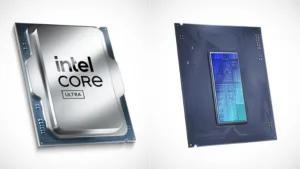
Recent leaks have provided a glimpse into the anticipated specifications of the Intel Nova Lake desktop CPU lineup, known as the ‘Core Ultra Series 4’, which is expected to launch in late 2026 or early 2027. The flagship processor, the Core Ultra 9 4970K, is rumored to feature a significant 28 cores, comprising a mix of performance (P) and efficiency (E) cores. This increased core count directly addresses the growing demand for multi-threaded performance in modern computing, a consequence of increasingly complex software and multitasking user habits. Consequently, this design aims to deliver substantial gains in workstation productivity and high-end gaming.
A key innovation highlighted in these leaks is Intel’s ‘BFC’ (Big-Cache) technology, designed to provide a large, integrated cache similar to AMD’s 3D V-Cache offerings. The integration of BFC cache technology is driven by the need to reduce memory latency and increase data availability to the CPU cores, thereby accelerating instruction execution. As a result, this technology is expected to significantly boost performance in latency-sensitive applications, particularly gaming and professional workloads. The Core Ultra 9 4970K is also reported to have a 125W TDP, indicating a focus on balancing performance with power efficiency. The exact phrase ‘Intel Nova Lake’ in its Core Ultra 4 iteration is therefore poised to be a significant architectural leap for the company.
Understanding Nova Lake Core Count Details
The rumored 28-core configuration of the Core Ultra 9 4970K suggests a hybrid architecture, a continuation of Intel’s strategy to optimize for both single-threaded and multi-threaded performance. This approach allows for efficient workload distribution, meaning demanding tasks are handled by powerful P-cores while background processes run on E-cores, leading to improved overall system responsiveness and power management.
The Role of Intel BFC Cache Technology
Intel’s BFC (Big-Cache) technology is designed to significantly expand the on-die cache available to the CPU, directly addressing the memory wall bottleneck. This large, fast cache reduces the need for the CPU to access slower system RAM, consequently decreasing latency and boosting effective throughput. Its inclusion specifically targets applications that are highly sensitive to data access times, such as gaming and scientific simulations, thereby enhancing the raw processing power of the Nova Lake architecture.
| Feature | Specification (Rumored) |
|---|---|
| CPU Architecture | Nova Lake (Core Ultra Series 4) |
| Cores (P+E) | 28 |
| Threads | Not stated |
| TDP | 125W |
| Cache Technology | BFC (Big-Cache) |
| Process Node (Expected) | Not stated |
Intel Foundry Services 2026: Ambitions on the 18A Process
Intel Foundry Services (IFS) in 2026 is a cornerstone of Intel’s long-term strategy, driven by an aggressive roadmap to regain process technology leadership. The 18A manufacturing process, expected to be in high-volume production by late 2026, is central to these ambitions. This advanced process node is critical because it promises significant power and performance improvements, which are essential for attracting external fabless customers and supporting Intel’s own cutting-edge products, including future iterations beyond Nova Lake. Consequently, the success of 18A is paramount for IFS to achieve its market share goals.
However, IFS faces considerable challenges in competing with TSMC, the current market leader. These challenges stem from TSMC’s established ecosystem, extensive customer base, and consistent execution. Intel’s ability to demonstrate consistent process yields and competitive pricing for its 18A process will therefore be crucial. The impact of Intel’s re-entry into the foundry market is significant because it introduces a new competitive dynamic, potentially diversifying the global semiconductor supply chain and offering alternatives to customers currently reliant on TSMC. The goal is to establish Intel Foundry Services 2026 as a viable and attractive option for chip designers globally.
Intel Manufacturing Process 18A: Technical Edge
The 18A process node represents Intel’s most advanced manufacturing technology, utilizing RibbonFET (Gate-All-Around) transistors and PowerVia backside power delivery. These innovations are designed to deliver substantial performance-per-watt improvements, consequently offering a distinct technical advantage over preceding nodes. The successful implementation of 18A is expected to enable higher transistor density and improved signal integrity, which directly translates to more powerful and efficient chips for both Intel’s internal use and external foundry clients. According to insights from the National Science Foundation (NSF) regarding foundational research and process advancements, such innovations are critical for advancing semiconductor capabilities.
Challenges for Intel Foundry Services 2026
Intel Foundry Services (IFS) faces significant hurdles in scaling up its operations and winning customer trust. These challenges include the immense capital expenditure required for leading-edge fabs, the need to achieve competitive yields quickly, and overcoming the perception of Intel as primarily an IDM (Integrated Device Manufacturer) rather than a pure-play foundry. Furthermore, securing design wins from major fabless companies requires demonstrating long-term reliability and a robust IP ecosystem, which currently favors TSMC. A review of research published on arXiv concerning manufacturing challenges in advanced nodes indicates that these factors are substantial. Consequently, Intel’s success hinges on aggressive execution and consistent delivery to overcome these ingrained market dynamics.
Intel’s AI Infrastructure Strategy: Powering the Future of Computing
Intel’s AI infrastructure strategy is a critical component of its future growth, driven by the explosive demand for AI computing across various sectors. The company’s roadmap for late 2026 emphasizes a holistic approach, integrating specialized AI hardware with optimized software. This strategy is essential because AI workloads require massive parallel processing capabilities and efficient data movement, which traditional CPU architectures alone cannot fully address. Consequently, Intel is heavily investing in its Gaudi AI accelerators, positioning them as a viable alternative to NVIDIA’s dominant GPU offerings.
The comparison between Intel Gaudi and NVIDIA GPUs is central to this competitive landscape. While NVIDIA has a significant lead in the AI training market due to its CUDA ecosystem, Intel is focusing on offering strong performance-per-dollar and an open software stack, meaning developers can more easily integrate Gaudi into existing frameworks. The Intel AI software stack optimization, including oneAPI, is designed to provide a unified programming model across different Intel hardware, simplifying development and deployment. This approach aims to reduce vendor lock-in and foster a more open AI ecosystem, consequently driving broader adoption of Intel’s AI solutions. Insights from the Stanford Institute for Human-Centered Artificial Intelligence (HAI) on AI ecosystem development and ethical considerations in AI hardware deployment underscore the importance of such strategic moves.
Intel AI Hardware Roadmap 2026
Intel’s 2026 AI hardware roadmap centers on the continued evolution of its Gaudi accelerators, designed for deep learning training and inference. These accelerators are crucial because they provide the specialized compute capabilities needed for large-scale AI models. Furthermore, Intel is integrating AI acceleration directly into its CPUs, including the Nova Lake architecture, and future generations, ensuring pervasive AI capabilities from the edge to the data center. Research published in the European Journal of Engineering and Computer Sciences on AI algorithm optimization on specialized hardware highlights the effectiveness of this dual approach, which consequently expands Intel’s reach in the AI market.
Optimizing the Intel AI Software Stack
The Intel AI software stack is built around oneAPI, an open, unified programming model designed to simplify development across various Intel architectures, including CPUs, GPUs, and AI accelerators. This unification is vital because it reduces the complexity of porting code and optimizes performance across different hardware platforms. As a result, developers can leverage Intel’s diverse hardware portfolio more efficiently, which means faster time-to-market for AI applications and broader adoption of Intel’s AI ecosystem. Standards from the National Institute of Standards and Technology (NIST) for AI software development and interoperability further support the need for such unified approaches.
| Feature | Intel Gaudi (2026 Outlook) | NVIDIA GPU (2026 Outlook) |
|---|---|---|
| Primary Use Case | AI Training, Inference | AI Training, Inference, Graphics |
| Architecture Focus | Specialized AI Cores | CUDA Cores, Tensor Cores |
| Software Ecosystem | oneAPI, Open Ecosystem | CUDA, Proprietary Ecosystem |
| Openness/Proprietary | Open | Proprietary |
| Performance-per-Dollar Goal | Competitive | High Performance |
| Target Market Segment | Data Center AI | Data Center AI, HPC, Gaming |
Nova Lake Release Date & Market Impact: What to Expect
The Intel Nova Lake release date is currently projected for late 2026 or early 2027, making it a critical launch in Intel’s competitive roadmap. This timing is strategic because it positions Nova Lake to directly compete with AMD’s next-generation offerings. The market impact of Nova Lake is expected to be substantial, particularly in the high-performance PC gaming segment. The rumored specifications, including higher core counts and BFC cache technology, are designed to deliver significant performance gains for gaming, consequently driving upgrades among enthusiasts and professional gamers. For more on gaming trends, see our Gaming News and Reviews.
Upgrading to an Intel Nova Lake CPU will likely be a compelling proposition for users seeking cutting-edge performance, especially for demanding applications and future-proof gaming setups. This upgrade cycle is driven by the continuous evolution of software and games, which increasingly leverage multi-core processors and advanced cache architectures. The success of Nova Lake will therefore play a crucial role in Intel regaining market share and strengthening its market position in 2026 and beyond, especially as it seeks to differentiate its offerings based on both raw power and integrated AI capabilities. The introduction of ‘Intel Nova Lake’ will mean a fresh wave of innovation in the desktop CPU market.
Nova Lake Gaming Performance Expectations
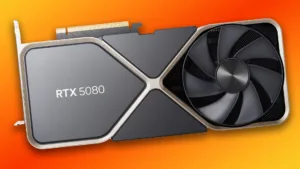
Nova Lake’s anticipated gaming performance gains are expected to be significant, driven by architectural enhancements like increased core counts and the BFC cache. These improvements directly address the needs of modern game engines that benefit from both high single-core speed and efficient multi-threading, consequently leading to smoother frame rates and improved in-game experiences. This performance boost is crucial for Intel to compete effectively in the enthusiast gaming market, which highly values raw processing power and low latency. Read our The Weirdest RTX 5080 Review You’ll Read Today—And It’s All True! for insights into high-end gaming hardware.
Intel’s Market Position in 2026 Analysis
Intel’s market position in 2026 will be heavily influenced by the reception and performance of Nova Lake. A successful launch could signal a strong return to leadership in the desktop CPU segment, consequently bolstering investor confidence and market perception. Conversely, any delays or underperformance could further entrench competitors. The impact extends beyond just CPU sales; a strong Nova Lake showing can also positively influence the perception of Intel Foundry Services and its broader technology roadmap, given the interconnected nature of Intel’s business segments.
Competitive Landscape: Intel Nova Lake vs. AMD Zen 5 and Beyond
The competitive landscape in 2026 will be intensely shaped by the clash between Intel Nova Lake and AMD’s Zen 5 architecture. This rivalry is particularly fierce because both companies are pushing the boundaries of chip design, leveraging advanced manufacturing processes and innovative architectural features. AMD’s Zen 5, expected to precede Nova Lake, aims to continue its strong performance trajectory, building on its multi-chiplet design philosophy. Consequently, Nova Lake must deliver substantial performance-per-watt improvements to effectively challenge AMD’s established market gains.
iPhone 17 Camera AI Features: Smarter Image Processing
Intel’s competitive advantages in 2026 are expected to stem from its integrated approach, combining CPU, GPU, and AI acceleration on a single platform, along with its aggressive foundry strategy. While AMD has historically focused on leveraging TSMC’s advanced nodes, Intel’s push with Intel Foundry Services (IFS) and the 18A process creates a new dynamic. This means Intel will have greater control over its manufacturing schedule and potentially optimize designs more closely with its own fabrication capabilities. The outcome of this rivalry will determine market share in both the consumer and enterprise segments, consequently influencing the direction of PC hardware innovation for years to come. Discussions on national security implications of semiconductor manufacturing dominance, as highlighted by Lawfare, underscore the strategic importance of this competition. The success of ‘Intel Nova Lake’ against AMD’s formidable Zen 5 will therefore be a key indicator of Intel’s ability to regain its leadership position.
Intel vs. AMD Roadmap 2026: Key Differences
The Intel vs. AMD roadmap 2026 reveals distinct strategies. Intel, with Nova Lake, appears to be emphasizing a more monolithic or tightly integrated chiplet design with advanced cache technology (BFC), coupled with its own 18A foundry process. Conversely, AMD with Zen 5 is expected to refine its chiplet architecture, potentially leveraging TSMC’s N3/N2 nodes, focusing on scalability and power efficiency across a broader product stack. These differing approaches mean distinct performance characteristics and cost structures, consequently providing consumers with varied options based on their specific needs. Stay updated on these developments by visiting our Tech Trends and Innovations section.
Intel Regaining Market Share 2026
Intel’s path to regaining market share in 2026 is contingent on several factors: Nova Lake’s raw performance leadership, competitive pricing, and successful execution of its 18A process. If Nova Lake delivers on its promises, especially in gaming and AI-accelerated workloads, it could attract users back to the Intel platform. Furthermore, the stability and availability of chips from Intel Foundry Services will be crucial for sustained market presence. R&D statistics and market impact of scientific investment from the National Science Foundation (NSF) indicate that consistent product delivery and strong ecosystem support are as important as raw performance in winning over customers. This means consistent product delivery and strong ecosystem support are as important as raw performance in winning over customers.
| Feature | Intel Nova Lake (Core Ultra Series 4) | AMD Zen 5 (Expected) |
|---|---|---|
| Architecture Philosophy | Integrated/Tightly Coupled Chiplet | Multi-chiplet/Chiplet |
| Process Node | Intel 18A (expected) | TSMC N3/N2 (expected) |
| Core Configuration | Hybrid P+E, up to 28 cores (rumored) | High core counts, likely P+E or similar |
| Cache Technology | BFC (Big-Cache) (rumored) | 3D V-Cache (expected) |
| Foundry Strategy | Intel Foundry Services (IFS) | TSMC |
| Key Performance Focus | Gaming, AI, High-end Desktop | Scalability, Power Efficiency, Broad Market |
FAQ
When is Intel Nova Lake expected to be released?
Intel Nova Lake is widely anticipated for a release in late 2026 or early 2027. This timeline positions it as a direct competitor to AMD’s next-generation Zen 5 CPUs. The exact phrase ‘Intel Nova Lake’ has become a focal point for industry speculation, consequently driving excitement for Intel’s future desktop offerings. The launch will be critical for Intel’s market strategy.
What are the core specifications of the Intel Core Ultra 9 4970K?
The leaked specifications for the Intel Core Ultra 9 4970K suggest a 28-core configuration (P+E cores) and a 125W TDP. A significant feature is the rumored inclusion of Intel’s ‘BFC’ (Big-Cache) technology, designed to enhance performance by reducing memory latency. These specifications indicate a powerful processor aimed at high-end gaming and demanding professional workloads, consequently pushing the boundaries of desktop computing performance.
How does Intel’s BFC (Big-Cache) technology work in Nova Lake CPUs?
Intel’s BFC (Big-Cache) technology in Nova Lake CPUs is designed to integrate a large, high-speed cache directly onto the processor package. This increased on-die cache reduces the frequency with which the CPU needs to access slower system memory, consequently minimizing latency and improving data throughput. This approach directly addresses bottlenecks in memory-intensive applications, resulting in faster execution, particularly beneficial for gaming and complex simulations.
What challenges does Intel Foundry Services face in competing with TSMC by 2026?
Intel Foundry Services (IFS) faces significant challenges in competing with TSMC by 2026, primarily due to TSMC’s entrenched market position, vast customer base, and consistent execution on advanced nodes. IFS must prove its ability to achieve competitive yields, offer attractive pricing, and build trust among fabless customers. Overcoming these hurdles is crucial for IFS to establish itself as a viable alternative and consequently capture significant market share in the foundry sector.
What is Intel’s strategic approach to AI infrastructure in late 2026?
Intel’s strategic approach to AI infrastructure in late 2026 involves a multi-pronged strategy: developing specialized AI accelerators like Gaudi, integrating AI capabilities directly into CPUs (such as Nova Lake), and optimizing its oneAPI software stack. This comprehensive strategy is driven by the need to provide scalable and flexible AI solutions across various workloads, consequently positioning Intel as a key player in the rapidly expanding AI market and challenging competitors like NVIDIA.
Will Nova Lake CPUs offer significant performance gains for gaming?
Yes, Nova Lake CPUs are expected to offer significant performance gains for gaming. This is primarily due to rumored higher core counts, architectural efficiencies, and the introduction of BFC cache technology, which collectively reduce latency and increase processing power. These advancements are designed to meet the demands of modern game engines, consequently delivering smoother frame rates and an enhanced gaming experience, making Nova Lake a compelling upgrade for gamers.
How will Intel’s 18A process impact future chip manufacturing?
Intel’s 18A process is expected to profoundly impact future chip manufacturing by introducing advanced technologies like RibbonFET (Gate-All-Around) transistors and PowerVia backside power delivery. This process aims to deliver industry-leading power and performance-per-watt metrics, consequently setting new benchmarks for semiconductor fabrication. Its success is vital for Intel Foundry Services to attract external clients and for Intel’s own high-performance products, which means it will diversify the global chip supply chain.
What are the key differences between Nova Lake and Arrow Lake CPUs?
Nova Lake is expected to be the successor to Arrow Lake, representing a further evolution in Intel’s CPU architecture. While Arrow Lake introduced the Core Ultra branding and a tile-based design, Nova Lake is rumored to feature even higher core counts (e.g., 28 cores for the i9 equivalent) and potentially new cache innovations like BFC technology. These differences mean Nova Lake will offer enhanced performance and efficiency, consequently driving the next generation of computing capabilities beyond Arrow Lake.
What is Intel’s current market position in the CPU and foundry sectors?
In late 2026, Intel holds a strong, albeit challenged, position in the CPU market, actively competing with AMD for market share. In the foundry sector, Intel Foundry Services (IFS) is an emerging player, aggressively investing in advanced nodes like 18A to challenge TSMC’s dominance. Intel’s market position is therefore dynamic, with significant efforts underway to regain leadership in both design and manufacturing, consequently influencing the broader semiconductor industry landscape.
TikTok’s New Edit Feature: Delete and Re-Edit Videos
Which specific AI accelerators are part of Intel’s 2026 roadmap?
Intel’s 2026 roadmap for AI accelerators prominently features the continued development and deployment of its Gaudi series. These accelerators are specifically designed for deep learning training and inference workloads in data centers. Additionally, Intel is integrating AI acceleration capabilities directly into its CPUs, including the Nova Lake architecture, to provide pervasive AI processing power from client devices to the cloud. This dual approach means comprehensive AI solutions across various platforms. Explore more in our AI Archives.
Limitations & Alternatives: A Balanced View of Intel’s Future
While Intel Nova Lake presents a promising future, its success is not without potential limitations. The aggressive timeline for the 18A process at Intel Foundry Services carries inherent risks regarding yield rates and production scalability, which could impact Nova Lake’s availability. Furthermore, despite Intel’s AI infrastructure strategy, NVIDIA’s established CUDA ecosystem and market leadership in AI GPUs remain a formidable challenge, consequently meaning Intel must consistently innovate to close the performance and ecosystem gap.
Alternatives to Intel’s offerings will also continue to evolve. AMD’s Zen 5 and subsequent architectures will offer competitive CPU performance, potentially leveraging TSMC’s leading-edge nodes. In the AI space, not only NVIDIA but also emerging hardware like Google’s TPUs and various custom ASICs provide strong alternatives for specific workloads. Therefore, while Intel’s roadmap is ambitious, the competitive landscape necessitates a balanced assessment of its potential hurdles and the strong alternatives available to consumers and enterprises.
Conclusion: Intel’s Path to Resurgence in a Dynamic Tech Landscape
Intel’s trajectory in late 2026 is defined by the pivotal role of Nova Lake, its ambitious foundry services, and a comprehensive AI infrastructure strategy. The anticipated Nova Lake CPU, with its leaked specifications pointing to significant performance enhancements, is positioned to be a cornerstone of Intel’s return to leadership in the desktop market. This launch is crucial because it directly addresses the evolving demands of modern computing, from high-fidelity gaming to complex AI workloads.
The interconnected efforts of Intel Foundry Services with its 18A process and the expansion of its AI hardware (Gaudi) and software ecosystem underscore Intel’s determination to regain technological dominance. While challenges persist in a highly competitive market, the strategic alignment of these initiatives means that ‘Intel Nova Lake’ is not just a product; it represents a critical step in Intel’s broader path to resurgence, consequently shaping the future of computing and semiconductor manufacturing for years to come.
References
* National Science Foundation (NSF): https://www.nsf.gov/
* Stanford Institute for Human-Centered Artificial Intelligence (HAI): https://hai.stanford.edu/
* National Institute of Standards and Technology (NIST): https://www.nist.gov/artificial-intelligence
* European Journal of Engineering and Computer Sciences: https://www.ejecs.org/
* arXiv: https://arxiv.org/
* Lawfare: https://www.lawfaremedia.org/