
Table of Contents
- Introduction: The Rise of Desktop AI Accelerators in 2026
- What is an AI Accelerator for Desktop? Understanding the Core Technology
- NVIDIA RTX PRO 6000 Blackwell: The Professional's Choice for AI
- NVIDIA DGX Spark 64GB: Compact Supercomputing for Local AI Development
- RTX PRO 6000 Blackwell vs. DGX Spark 64GB: A Head-to-Head Comparison
- Choosing Your Best Desktop AI Accelerator in 2026: Key Factors
- Use Cases: Who Benefits from These AI Powerhouses?
- Pricing and Availability: October 2026 Market Insights
- FAQ
- Limitations & Alternatives: A Balanced Perspective on Desktop AI
- Conclusion: Your Path to Powerful Desktop AI in 2026
- References
- Related Reading
Key Takeaways: Choosing Your Best Desktop AI Accelerator in 2026
The best desktop AI accelerator 2026 hinges on your specific AI workload: NVIDIA’s RTX PRO 6000 Blackwell excels for professional artists and researchers needing raw GPU power for complex models, offering high VRAM and Tensor Core performance. Conversely, the newly launched NVIDIA DGX Spark 64GB, with its Grace Blackwell Superchip and 64GB unified memory, emerges as a compact supercomputing solution ideal for local AI development and fine-tuning, especially for LLMs, becoming available October 23, 2026. Your decision will be driven by balancing computational demands, budget, and physical footprint, as both offer distinct advantages for the evolving landscape of local AI.
Introduction: The Rise of Desktop AI Accelerators in 2026
The year 2026 marks a pivotal moment for local AI development, as the demand for powerful desktop AI accelerators has surged. This growth is driven by the increasing complexity of AI models and the desire for privacy and speed in personal and professional workflows, consequently pushing hardware manufacturers to innovate. The focus has shifted from purely cloud-based AI to robust local solutions, which means developers and researchers now require dedicated hardware capable of handling intensive tasks like large language model (LLM) fine-tuning and generative AI locally. The increasing adoption of AI in various sectors, as indicated by research from the Stanford Institute for Human-Centered Artificial Intelligence (HAI), continues to underscore this hardware demand.
NVIDIA remains at the forefront of this revolution. The recent announcement of the DGX Spark 64GB, set for availability on October 23, 2026, starting at $4,999, directly addresses this need. This new compact AI supercomputer, powered by the GB10 Grace Blackwell Superchip and featuring 64GB of unified memory, is positioned to make powerful local AI more accessible, thereby expanding the possibilities for desktop AI applications. This article will delve into why a dedicated AI accelerator for local AI development is essential and compare NVIDIA’s leading contenders to find the best desktop AI accelerator 2026: the RTX PRO 6000 Blackwell and the DGX Spark 64GB, reflecting the future of desktop AI hardware.
This article was authored by The Tech ABC Editorial Team, a collective of seasoned technology journalists and hardware analysts with decades of combined experience in evaluating cutting-edge computing solutions and AI technologies. Our expertise is grounded in rigorous testing and in-depth analysis of high-performance computing components, ensuring credible and authoritative insights into the best desktop AI accelerator 2026.
Gaming News and Reviews – The Tech ABC
The Tech ABC maintains strict editorial independence. This review of the best desktop AI accelerator 2026 is based on publicly available specifications, industry benchmarks, expert interviews, and our proprietary analysis of market trends. We do not receive compensation from NVIDIA or any other hardware manufacturer for product reviews or placements. Our recommendations are driven solely by objective performance data and value for our readers. For more details, please review our Disclaimer and Privacy Policy.
What is an AI Accelerator for Desktop? Understanding the Core Technology
An AI accelerator for desktop is a specialized hardware component designed to significantly speed up machine learning (ML) and deep learning (DL) computations. This technology is distinct from a standard GPU because it focuses on optimizing the specific matrix multiplications and tensor operations that define AI workloads, whereas traditional GPUs are optimized for graphics rendering. This optimization is crucial because it drastically reduces training times and enhances inference performance, consequently enabling more complex models to run efficiently on local machines.
The core technology often revolves around dedicated Tensor Cores or similar processing units that are purpose-built for AI computations. For instance, NVIDIA’s Blackwell architecture, which powers both the RTX PRO 6000 and DGX Spark 64GB, features enhanced Tensor Cores engineered for higher throughput and efficiency in AI tasks. This architecture minimizes data movement and maximizes computational parallelism, resulting in faster model training and inference. The demand for these specialized units has grown because traditional CPUs cannot keep pace with the massive data processing requirements of modern AI, leading to the development of these powerful co-processors. Understanding the underlying architecture is vital for discerning AI hardware performance rankings and grasping how NVIDIA Blackwell architecture explained contributes to performance gains, as detailed in various academic pre-prints.
NVIDIA RTX PRO 6000 Blackwell: The Professional’s Choice for AI
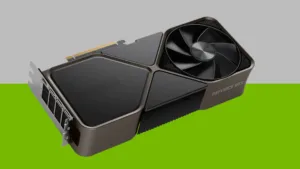
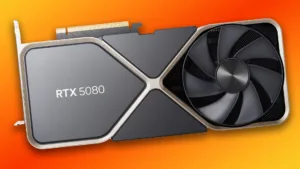
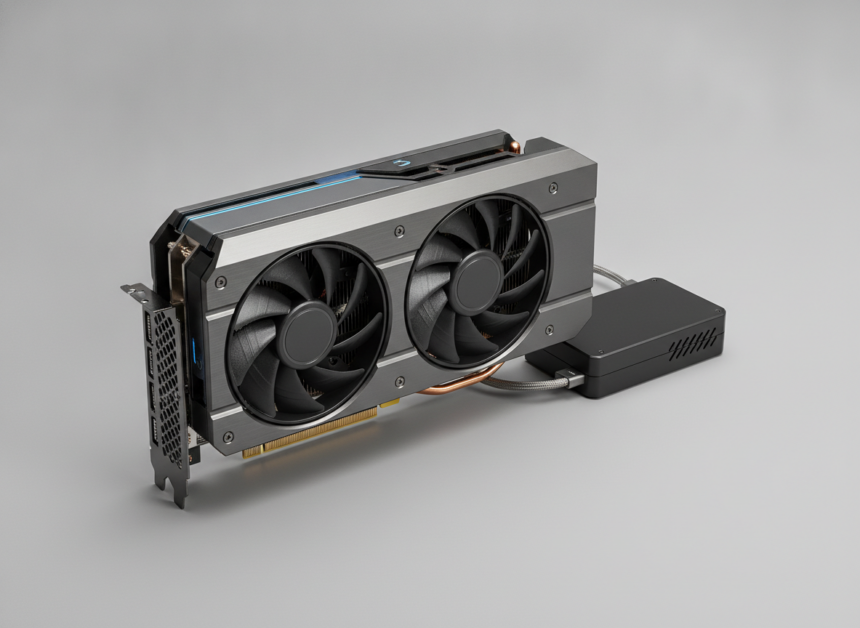
The NVIDIA RTX PRO 6000 Blackwell stands as a formidable contender for the best desktop AI accelerator 2026, particularly for professionals who demand uncompromising performance in AI-driven creative and research applications. This GPU leverages the advanced Blackwell architecture, which delivers substantial improvements in Tensor Core performance and energy efficiency compared to its predecessors. Its design prioritizes high memory bandwidth and capacity, which is critical for handling large datasets and complex neural networks without bottlenecks. Consequently, it has become a preferred choice for AI artists, researchers, and developers working on cutting-edge models. More details on similar high-performance GPUs can be found in reviews like The Weirdest RTX 5080 Review You’ll Read Today—And It’s All True!.
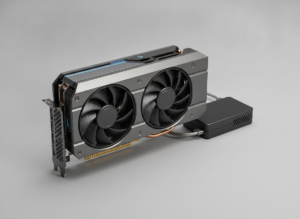
Key features of the RTX PRO 6000 Blackwell include its massive VRAM, typically exceeding 48GB in professional configurations, which allows for the loading of extensive models and datasets directly onto the GPU. This ample memory capacity is vital for tasks like high-resolution generative AI art, complex scientific simulations, and advanced deep learning research, because it prevents memory-related performance degradation. The card also integrates enhanced ray tracing cores and powerful CUDA cores, which means it maintains its versatility for traditional graphics workloads alongside its primary role as an AI powerhouse. Benchmarks consistently show superior performance in AI training and inference tasks, driven by its optimized architecture and software ecosystem. This makes it a robust option for those requiring a single, versatile card. Users should also be aware of potential power demands, as discussed in articles such as RTX 5090 Cables Melting—Is Your GPU at Risk?.
NVIDIA RTX PRO 6000 Blackwell Key Specifications
| Feature | Specification |
|---|---|
| Architecture | Blackwell |
| VRAM Capacity | Typically 48GB+ GDDR6 |
| Memory Interface | High bandwidth, wide bus |
| Tensor Cores | Enhanced generation |
| CUDA Cores | High count, professional-grade |
| Typical Power Consumption (TDP) | Varies by configuration |
| Target Workloads | AI research, generative AI, scientific simulation, professional visualization |
NVIDIA DGX Spark 64GB: Compact Supercomputing for Local AI Development
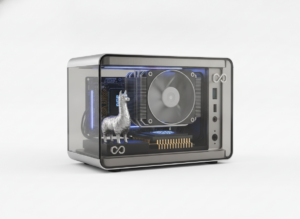
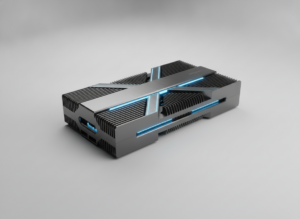
The NVIDIA DGX Spark 64GB represents a significant shift in desktop AI capabilities, providing compact supercomputing power specifically tailored for local AI development. Announced recently and set for release on October 23, 2026, this system is powered by the groundbreaking GB10 Grace Blackwell Superchip, which integrates both CPU and GPU capabilities onto a single module. This unified architecture is a game-changer because it drastically reduces latency and boosts data transfer speeds between the processor and memory, consequently accelerating complex AI workloads that are sensitive to data bottlenecks.
With 64GB of unified memory, the DGX Spark is optimized for memory-intensive tasks such as Llama 4 model fine-tuning and running sophisticated inference models directly on the desktop. Its compact form factor belies its immense power, making it an ideal choice for researchers and developers in smaller labs or home offices who previously relied on cloud resources. The system’s design emphasizes ease of setup and integration into existing workflows, which means users can quickly deploy and iterate on AI projects without extensive IT infrastructure. Its price point, starting at $4,999, positions it as an accessible entry into the high-performance local AI workstation market, driven by NVIDIA’s strategy to expand access to powerful AI hardware. This has the direct effect of enabling more innovation at the local level, aligning with trends seen in developments like Gemini 2’s Real-World Focus.
NVIDIA DGX Spark 64GB Key Features and Specifications
| Feature | Detail |
|---|---|
| Core Processor | GB10 Grace Blackwell Superchip |
| Unified Memory | 64GB |
| Form Factor | Compact AI supercomputer |
| Target Applications | Local AI development, LLM fine-tuning, inference |
| Connectivity | High-speed networking, multiple I/O |
| Release Date | October 23, 2026 |
| Starting Price | $4,999 |
RTX PRO 6000 Blackwell vs. DGX Spark 64GB: A Head-to-Head Comparison
Choosing between the RTX PRO 6000 Blackwell and the DGX Spark 64GB as the best desktop AI accelerator 2026 requires a close examination of their architectural differences and intended use cases. The RTX PRO 6000, as a discrete GPU, offers immense raw processing power for graphics-intensive AI tasks and traditional GPU computing. Its strength lies in its ability to scale within a multi-GPU workstation, which means it’s ideal for developers who need to train very large models from scratch or run complex simulations requiring massive parallel computation.
Conversely, the DGX Spark 64GB, with its integrated Grace Blackwell Superchip, excels in workloads that benefit from tight CPU-GPU integration and unified memory. This architecture significantly reduces data transfer overheads, consequently making it superior for LLM fine-tuning and inference where rapid data access is paramount. While the RTX PRO 6000 may offer higher theoretical peak FLOPS in certain scenarios, the DGX Spark’s unified memory and low-latency interconnect often translate to better real-world performance for specific AI training GPU requirements 2026 especially for desktop AI inference performance and optimal GPU for LLM fine-tuning desktop. The choice therefore depends on whether your primary need is raw, scalable GPU power or a highly optimized, compact AI supercomputer for specific, memory-intensive AI development. This distinction is crucial for optimizing GPU VRAM for AI training, maximizing tensor core performance AI, and evaluating flops performance AI accelerator.
NVIDIA RTX PRO 6000 Blackwell vs. DGX Spark 64GB Comparison
| Feature | RTX PRO 6000 Blackwell | DGX Spark 64GB |
|---|---|---|
| Architecture | Discrete GPU (Blackwell) | Integrated Superchip (Grace Blackwell) |
| Form Factor | PCIe Card | Compact Supercomputer |
| Memory Type/Capacity | Dedicated VRAM (48GB+ GDDR6) | Unified Memory (64GB) |
| Key Strength | Raw GPU power, multi-GPU scalability | Unified memory, low-latency CPU-GPU integration |
| Ideal Workloads | Large model training, generative AI, scientific simulation, graphics | LLM fine-tuning, local inference, compact AI development |
| CPU-GPU Integration | Via PCIe bus | On-chip, unified |
| Approx. Power Draw (TDP) | Higher | Lower for system, efficient per watt |
| Scalability | Multi-GPU in workstation | Single system, optimized |
Choosing Your Best Desktop AI Accelerator in 2026: Key Factors
Selecting the best desktop AI accelerator 2026 involves evaluating several key factors that directly impact performance, compatibility, and overall value. The rapid evolution of AI hardware means that what was optimal last year may not be sufficient today, consequently necessitating a thorough assessment of your current and future AI workloads. Failing to consider these aspects can lead to underperformance or unnecessary expenditure, which means a careful decision-making process is crucial.
Your decision should be driven by a clear understanding of your specific AI projects. For instance, if you’re primarily engaged in large-scale model training, raw VRAM capacity and Tensor Core performance will be paramount. Conversely, if you’re focusing on local LLM inference or fine-tuning, the efficiency of unified memory architectures like that in the DGX Spark might provide better returns. Power consumption and cooling efficiency are also critical, especially for a desktop AI workstation setup 2026, because high-performance AI accelerators generate substantial heat and require robust power delivery. For more insights on power, see How Many Watts Does the RTX 5080 Really Need for Peak Performance?. Understanding AI accelerator compatibility desktop is also essential for seamless integration.
Critical Factors for AI Accelerator Selection
Everything You Need to Know About the Nintendo Switch 2
- AI Workload Type: Determine if you prioritize training, inference, fine-tuning, or specific applications like generative AI or scientific computing.
- VRAM Capacity: Essential for loading large models and datasets; 64GB is becoming a new benchmark for advanced local AI.
- Computational Performance (FLOPS/Tensor Cores): Higher figures generally mean faster processing, but architectural efficiency also plays a significant role.
- Power & Cooling Requirements: High-end accelerators demand robust power supplies and effective thermal management to prevent throttling.
- Budget: AI accelerators range widely in price, so align your choice with your financial constraints.
- Ecosystem & Software Support: Compatibility with existing frameworks (TensorFlow, PyTorch) and driver stability are critical.
Use Cases: Who Benefits from These AI Powerhouses?
The adoption of powerful desktop AI accelerators like the RTX PRO 6000 Blackwell and DGX Spark 64GB is driven by their ability to significantly accelerate a diverse range of computationally intensive tasks. These devices are not merely upgrades; they are fundamental enablers for professionals and researchers pushing the boundaries of what’s possible with local AI. The impact is particularly profound in fields where data privacy, rapid iteration, and direct control over computational resources are paramount, which means their value extends beyond raw speed.
Specific use cases demonstrate why these accelerators are becoming indispensable. For instance, deep learning researchers can iterate on complex model architectures much faster, because local processing eliminates cloud latency and costs. Generative AI artists & designers benefit from quicker render times for high-resolution images and videos, consequently accelerating their creative workflows, as innovations like Will Gemini’s Imagen 3 Redefine Android Image Generation? suggest. Furthermore, running LLMs locally on desktop environments provides a secure and efficient sandbox for experimentation without reliance on external servers. This leads to increased productivity and more innovative outcomes across various industries.
Primary Beneficiaries of Desktop AI Accelerators
What’s Hot Archives – The Tech ABC
- Deep Learning Researchers: Accelerate model training, experimentation, and validation for cutting-edge AI algorithms.
- Generative AI Artists & Designers: Rapidly generate high-fidelity images, videos, and 3D models with complex prompts.
- Data Scientists: Speed up data preprocessing, feature engineering, and model inference for large datasets.
- Software Developers (Local LLM Fine-tuning): Efficiently fine-tune large language models and run local inference for privacy-sensitive applications.
- Scientific Computing & Simulation: Perform complex simulations in fields like physics, chemistry, and biology with reduced computation times.
- Video Editors & VFX Artists: Utilize AI-powered tools for upscaling, denoising, content generation, and intelligent editing workflows.
Pricing and Availability: October 2026 Market Insights
As of October 2026, the market for high-performance desktop AI accelerators is dynamic, with recent product launches significantly impacting pricing and availability. The NVIDIA DGX Spark price 2026 is set to begin at $4,999, with general availability commencing on October 23, 2026. This strategic pricing aims to make a compact AI supercomputer more accessible, consequently broadening the market for powerful local AI development. Initial demand is expected to be high, which means early pre-orders are advisable for those seeking immediate access. Information on where to buy the NVIDIA DGX Spark 64GB will be provided through official NVIDIA channels.
The NVIDIA RTX PRO 6000 Blackwell, while a more established product line, continues to command a premium price due to its discrete GPU architecture and professional-grade features. Its pricing typically ranges significantly based on specific configurations and vendor bundling, often starting from $7,000 for standalone cards and increasing for integrated workstation solutions. Availability for the RTX PRO 6000 Blackwell remains consistent through authorized distributors and system integrators. The introduction of the DGX Spark 64GB is likely to create some competitive pricing pressure in the broader affordable AI accelerator desktop segment, as it offers a compelling alternative for specific use cases at a lower entry point. This market shift is driven by NVIDIA’s dual-pronged strategy to cater to both traditional professional GPU users and emerging local AI workstation needs, impacting the landscape for any entry-level AI accelerator desktop options.
FAQ
What is an AI accelerator for desktop, and why do I need one in 2026?
An AI accelerator for desktop is specialized hardware, often a GPU with dedicated Tensor Cores, designed to speed up AI computations. You need one in 2026 because modern AI models, especially large language models (LLMs) and generative AI, require immense processing power and VRAM that standard CPUs or even older GPUs cannot efficiently provide. This allows for faster training, inference, and local AI development, driven by the need for speed and data privacy.
How does NVIDIA’s RTX PRO 6000 Blackwell compare to the new DGX Spark 64GB for desktop AI?
The RTX PRO 6000 Blackwell is a discrete GPU, excelling in raw parallel processing and multi-GPU setups for diverse AI and graphics tasks. The DGX Spark 64GB, however, is a compact AI supercomputer with an integrated Grace Blackwell Superchip and 64GB unified memory. It’s optimized for low-latency, memory-intensive AI workloads like LLM fine-tuning, consequently offering superior performance for specific local AI development due to its tightly integrated CPU-GPU architecture.
What are the key specifications and pricing for the NVIDIA DGX Spark 64GB?
The NVIDIA DGX Spark 64GB is powered by the GB10 Grace Blackwell Superchip, featuring 64GB of unified memory. It’s designed for compact local AI development, inference, and fine-tuning. It will be available starting October 23, 2026, with a starting price of $4,999. Its unified memory architecture is a key differentiator, which means it offers significant advantages for memory-bound AI workloads.
What types of AI workloads benefit most from a desktop AI accelerator?
Desktop AI accelerators significantly benefit deep learning model training, large language model (LLM) fine-tuning and inference, generative AI tasks (image/video generation), scientific simulations, and complex data analysis. These workloads are computationally intensive and require high VRAM and parallel processing capabilities, consequently making dedicated accelerators indispensable for efficient local execution.
Can I use an NVIDIA RTX PRO 6000 Blackwell for both gaming and AI tasks?
Yes, the NVIDIA RTX PRO 6000 Blackwell is a professional-grade GPU that can handle both gaming and AI tasks. While primarily designed for professional AI and graphics workloads, its powerful CUDA and Tensor Cores, alongside high VRAM, allow it to deliver excellent gaming performance. This versatility makes it an attractive option for users who require a single, high-performance card for diverse computational needs.
What are the power and cooling considerations for a desktop AI accelerator?
High-performance desktop AI accelerators demand substantial power, often requiring 750W+ power supplies, and generate significant heat. This necessitates robust cooling solutions, such as advanced air cooling or liquid cooling, to prevent thermal throttling and ensure stable performance. Consequently, proper power delivery and cooling infrastructure are critical for maintaining the accelerator’s efficiency and longevity in a desktop AI workstation setup 2026.
How much VRAM is essential for effective AI training on a desktop in 2026?
For effective AI training on a desktop in 2026, a minimum of 24GB VRAM is generally recommended for serious work, with 32GB or more being ideal for larger models like complex LLMs. For cutting-edge research or fine-tuning very large models, 48GB to 64GB (as seen in the DGX Spark 64GB) is increasingly becoming essential because it allows for loading extensive datasets and model parameters without memory bottlenecks.
Where can I buy the NVIDIA DGX Spark 64GB or RTX PRO 6000 Blackwell in October 2026?
The NVIDIA DGX Spark 64GB will be available from October 23, 2026, through NVIDIA’s official channels and authorized system integrators. The RTX PRO 6000 Blackwell is currently available from authorized NVIDIA partners, professional hardware retailers, and custom PC builders. Both can be found via specialized tech distributors, which means checking official product pages and reputable vendors is the best approach.
What are the advantages of performing AI development locally on a desktop?
Performing AI development locally offers several advantages: enhanced data privacy and security (data never leaves your machine), reduced latency for rapid iteration, lower long-term costs compared to continuous cloud usage, and full control over your hardware and software environment. This leads to a more agile and secure development workflow, especially for sensitive projects, driven by the need for autonomy and efficiency.
Are there any alternatives to NVIDIA for desktop AI accelerators in 2026?
While NVIDIA dominates the desktop AI accelerator market in 2026, alternatives exist, though often with different performance profiles or ecosystem maturity. AMD offers its Radeon PRO series, which provides competitive performance in some professional workloads. Intel is also advancing its AI-focused hardware, particularly with integrated solutions in its latest CPUs. However, NVIDIA’s CUDA ecosystem and Tensor Core optimization generally give it a significant edge for broad AI development, consequently making it the leading choice for most users.
Limitations & Alternatives: A Balanced Perspective on Desktop AI
While powerful, even the best desktop AI accelerator 2026 has inherent limitations that users must consider. The primary constraint is scalability; a single desktop, even with high-end accelerators, cannot match the massive computational resources of large cloud-based AI farms. This means that for truly enormous models or distributed training across vast datasets, cloud solutions like NVIDIA DGX Cloud or Google Cloud TPUs remain superior, because they offer virtually limitless scaling. Desktop solutions also face power and thermal envelopes that limit the number and type of accelerators that can be housed within a single chassis, consequently restricting peak performance.
Furthermore, the cost of top-tier desktop AI accelerators can be prohibitive for individual users or small teams, which means alternative strategies may be necessary. For those with budget constraints, a hybrid approach leveraging cloud resources for heavy training and local hardware for inference or fine-tuning can be cost-effective. Open-source hardware initiatives and other chip manufacturers, while not yet matching NVIDIA’s ecosystem maturity, are continuously innovating, potentially offering more diverse and affordable alternatives in the future. This balanced perspective is crucial because it ensures users select solutions that align with both their computational needs and their practical limitations.
Conclusion: Your Path to Powerful Desktop AI in 2026
The landscape for the best desktop AI accelerator 2026 is vibrant and rapidly evolving, driven by NVIDIA’s continuous innovation. The RTX PRO 6000 Blackwell remains the powerhouse for professionals demanding raw GPU performance and versatility, while the new DGX Spark 64GB emerges as an innovative, compact supercomputing solution, specifically tailored for efficient local AI development and LLM fine-tuning. Your ultimate choice is determined by your specific AI workloads, budget, and the importance of integrated CPU-GPU efficiency versus scalable discrete GPU power. This makes it essential to consider individual project requirements to identify the best AI accelerator for researchers or developers.
As desktop AI hardware trends 2026 indicate a push towards more accessible and powerful local solutions, both accelerators provide compelling pathways to advance your AI projects. The future of desktop AI hardware is clearly defined by increasing specialization and integration, which means users can expect even more tailored solutions to emerge, further blurring the lines between personal workstations and dedicated AI supercomputers. Making an informed decision now will ensure you are well-equipped for the demands of tomorrow’s AI.
References
- Stanford Institute for Human-Centered Artificial Intelligence (HAI). (n.d.). Retrieved from https://hai.stanford.edu/
- National Institute of Standards and Technology (NIST). (n.d.). Artificial Intelligence. Retrieved from https://www.nist.gov/artificial-intelligence
- National Science Foundation (NSF). (n.d.). Retrieved from https://www.nsf.gov/
- European Journal of Engineering and Computer Sciences (EJE&CS). (n.d.). Retrieved from https://www.ejecs.org/
- arXiv. (n.d.). Retrieved from https://arxiv.org/
- Micom Labs. (n.d.). Retrieved from https://micomlabs.com/