
Table of Contents
- Apple 2026 Lineup: A Split Calendar, Not a Single Launch
- Apple Release Dates 2026: The Full Launch Calendar, Month by Month
- iPhone 18 Pro and iPhone 18 Pro Max: A20 Pro, Vapor Chamber, 12GB RAM
- iPhone Duo: Apple's First Foldable, and Who It Is Actually For
- Apple Watch Series 12 and Ultra 4: The Health Sensing System Is the Story
- MacBook Pro M5 Pro and M5 Max: Neural Accelerators in Every GPU Core
- iPad Pro (M5) and Vision Pro (M5): Carryover Hardware That Still Ships
- AirPods 5, HomePod and Apple TV: Inside the "Welcome Home" Wave
- Buy Now, Wait, or Skip: Our Verdict on Every Device in the Apple 2026 Lineup
- Frequently Asked Questions
- What Apple products can you actually buy right now in October 2026?
- Why did Apple not release a standard iPhone 18 in 2026?
- How much does the iPhone Duo cost?
- Does the Apple Watch Series 12 have Touch ID?
- Is there a new iPad Pro in 2026?
- Should I buy the M5 Pro MacBook Pro now or wait for the M6 redesign?
- Is the Apple Vision Pro worth buying in 2026?
- What is the Readiness Score on Apple Watch Series 12?
- What is Apple announcing at the October 2026 "Welcome home" event?
- Which Apple devices should you avoid buying right now?
- Limitations and What This Analysis Cannot Tell You
- Conclusion: One Calendar, Two iPhone Seasons
- References
- Related Reading
The apple 2026 lineup is a split calendar, not a single launch. As of October 13, 2026, you can buy the iPhone 18 Pro and 18 Pro Max (A20 Pro, 12GB RAM, from around €1,450 for 256GB), the foldable iPhone Duo, the Apple Watch Series 12 and Ultra 4 ($799), AirPods 5, the 14- and 16-inch MacBook Pro with M5 Pro and M5 Max (March 2026), the M5 iPad Pro and the M5 Vision Pro ($3,499). The standard iPhone 18 and 18e slipped to Spring 2027; the cheaper Vision Air slipped to 2028–2029.
Apple 2026 Lineup: A Split Calendar, Not a Single Launch
The apple 2026 lineup broke the pattern Apple had held for more than a decade, because the company staggered its releases across four separate waves instead of consolidating them into one September keynote. As a result, the shelf in October 2026 looks nothing like previous years: the Pro-tier iPhones and Apple’s first foldable are shipping, while the standard tiers moved to Spring 2027. The context matters too — John Ternus is now CEO, and the split calendar is driven by the hardware demands of on-device Apple Intelligence combined with foldable panel yield constraints that could not absorb standard-model volume in the same quarter.
What follows is every shipping device, its real price, and a buy, wait or skip verdict for each. This article is date-stamped deliberately: as of October 13, 2026, with Apple’s second fall event, “Welcome home,” underway. It does not speculate about unannounced 2027 silicon beyond what Apple and supply-chain analysts have already indicated, and where a figure is not confirmed, it says so rather than filling the gap with a guess.
About the author: Written by The Tech ABC Editorial Team, which covers smartphones, laptops, wearables and spatial computing hardware with a buyer-first focus — what a device does, what it costs, and who should actually buy it.
Transparency: This article reflects publicly announced specifications, dated Apple events and supply-chain reporting available as of October 13, 2026. Performance figures attributed to Apple are labelled as first-party claims and have not been independently benchmarked by The Tech ABC. Health features described here are consumer wellness tools, not medical devices. See our disclaimer for full details.
Apple Release Dates 2026: The Full Launch Calendar, Month by Month
The apple 2026 lineup arrived across four dated waves: the MacBook Pro in March, the iPhone 18 Pro and iPhone Duo on September 9, the wearables on September 18, and the smart home on October 13. Each wave carried a single headline device, which is why no month in 2026 looked like a traditional Apple mega-launch.
| Date | Event / Wave | Devices | Starting price |
|---|---|---|---|
| March 2026 | MacBook Pro refresh | MacBook Pro 14/16-inch (M5 Pro, M5 Max) | Not stated |
| September 9, 2026 | Fall iPhone event | iPhone 18 Pro, iPhone 18 Pro Max | ~€1,450 (256GB) |
| September 9, 2026 | Fall iPhone event | iPhone Duo (foldable) | Not stated |
| September 18, 2026 | Wearables wave | Apple Watch Series 12, Ultra 4, AirPods 5 | Ultra 4: $799 |
| October 13, 2026 | “Welcome home” | HomePod, Apple TV | Not stated |
| Carryover (Oct 2025) | Still current | iPad Pro M5, Vision Pro M5 | Vision Pro: $3,499 |
| Slipped to Spring 2027 | — | iPhone 18, iPhone 18e, iPad Pro M6/M7 | Not stated |
| Slipped to 2028–2029 | — | Apple Vision Air | Not stated |
Apple split the iPhone launch because A20 Pro production for the Pro tier and the Duo’s foldable panel supply could not absorb standard-model volume in the same quarter, therefore the iPhone 18 and 18e moved to Spring 2027. Consequently Apple now runs two annual iPhone moments instead of one, which means the autumn event is Pro-only and the spring event carries the volume tiers. For buyers, the second-order effect is more practical than it sounds: upgrade cycles, carrier promotions and trade-in windows have all shifted by roughly six months, so the familiar “wait until September” advice no longer applies if you are shopping for a standard iPhone.
iPhone 18 Pro and iPhone 18 Pro Max: A20 Pro, Vapor Chamber, 12GB RAM
The iPhone 18 Pro and Pro Max are defined by three changes — the A20 Pro chip, 12GB of LPDDR5X RAM and a next-generation vapor chamber — and all three are driven by on-device Apple Intelligence rather than by photography or gaming demands.
| Specification | iPhone 18 Pro | iPhone 18 Pro Max |
|---|---|---|
| Display size | 6.3-inch | 6.9-inch |
| Chip | A20 Pro | A20 Pro |
| RAM | 12GB LPDDR5X | 12GB LPDDR5X |
| Cooling system | Next-gen vapor chamber | Next-gen vapor chamber |
| Main camera | 48MP Fusion Main | 48MP Fusion Main |
| Variable aperture | Yes | Yes |
| Cover glass | Ceramic Shield 2 | Ceramic Shield 2 |
| Chassis material | Aluminum unibody | Aluminum unibody |
| Colors | Black, Silver, Glacier, Burgundy | Black, Silver, Glacier, Burgundy |
| Starting price (256GB) | ~€1,450 | Not stated |
The jump to 12GB of LPDDR5X exists because on-device language models have to sit resident in memory to answer without a server round trip, which means RAM headroom now sets the ceiling on what Apple Intelligence can run locally. Published research on quantized on-device inference, including work indexed on arXiv examining the memory footprint of compressed language models, indicates that memory capacity rather than raw compute frequently limits which models fit on a mobile device. A further consequence is thermal: local inference produces sustained load rather than short bursts, therefore sustained clocks matter more than peak clocks and the vapor chamber became mandatory rather than optional. That sustained-load profile also puts pressure on power draw, which is why how an iPhone’s battery behaves under heavy use is now as relevant a spec as the chip name.
On the camera, the 48MP Fusion Main introduces variable aperture for the first time on an iPhone, which gives creators genuine optical control over depth of field instead of a computational approximation applied after capture. The effect is practical: portrait separation and background falloff are decided by the lens at the moment of exposure, resulting in files that need less corrective editing later — a meaningful shift from the direction set by the AI-led image processing of the previous generation. Apple also moved to an aluminum chassis milled from a single block, abandoning the stainless steel and titanium of earlier Pro models, because aluminum moves heat away from the A20 Pro more efficiently, resulting in a lighter body that holds performance longer. The connectivity side has followed a similar in-house trajectory, consistent with Apple’s long campaign to bring modem silicon under its own roof.
Everything You Need to Know About the Nintendo Switch 2
Pricing starts near €1,450 in Europe for the 256GB Pro, a hike over the prior generation driven by the vapor chamber assembly, the 12GB memory allocation and the removal of a cheaper entry tier. Our position is decisive: the upgrade is worth it coming from an iPhone 15 Pro or older, where you gain the camera, the chassis and the AI headroom in one step. It is not worth it from an iPhone 17 Pro unless on-device AI features are part of your daily work, because the generational gain outside local inference is incremental. The software story runs alongside this, and readers still catching up on Apple’s recent OS direction can start with our walkthrough of the iOS release cycle and its headline features.
iPhone Duo: Apple’s First Foldable, and Who It Is Actually For
The iPhone Duo is Apple’s first foldable and the first genuinely new iPhone form factor in years, but it is a first-generation device, which means it suits iOS users who want a tablet-class screen in a pocket far more than it suits upgraders shopping on value.
Apple entered a category Samsung has iterated on since 2019, therefore the Duo arrives against mature competition on hinge durability and software multitasking while holding an advantage on silicon and app ecosystem depth. The consequence of that late entry is where the risk sits: performance is a solved problem for Apple, so the open questions concern the crease, the hinge mechanism and long-term panel behaviour. New form factors go through accredited mechanical and wireless compliance testing before shipping — independent labs such as Micom Labs perform exactly this kind of device certification and durability work — but certification establishes that a design meets a standard, not how a specific hinge behaves after three years in a pocket. No long-term field data exists for this model yet, and anyone claiming otherwise is guessing.
Foldable pricing sits well above the Pro Max, which means the Duo competes against a MacBook Air on budget rather than against another phone. Our position: buy it if the second screen replaces a device you already carry, because then the premium offsets a purchase you were making anyway; skip it if the Duo is an addition to your bag rather than a substitution. On finishes, Apple’s recent colour strategy has been to reserve the boldest options for the Pro tier, a pattern we traced in our breakdown of how Apple handles iPhone colour variants across tiers.
Who the iPhone Duo Suits — and Who Should Wait
- Buy it: you already carry both an iPhone and an iPad mini and want one device instead of two
- Buy it: your work is reading-heavy — documents, code review, spreadsheets, multi-app reference
- Buy it: you are locked into iMessage, FaceTime and iCloud and will not move to Android for a foldable
- Wait: you upgrade on value and keep phones four years, because first-generation hinges have no long-term field data
- Wait: photo and video are your primary use case, where the 18 Pro Max is the stronger camera
- Skip: you need maximum battery per dollar, or an accessory and case ecosystem that already exists
Apple Watch Series 12 and Ultra 4: The Health Sensing System Is the Story
The Series 12 and Ultra 4 share the S11 chip and a new Health Sensing System that samples heart-rate variability at a higher frequency, which is what makes the daily Readiness Score possible. The external designs are essentially unchanged, so the upgrade case here is internal rather than cosmetic.
| Specification | Series 12 | Ultra 4 |
|---|---|---|
| Chip | S11 | S11 |
| Case size | Not stated | 49mm |
| Case materials | Aluminum, titanium, ceramic | Titanium |
| Health Sensing System | Yes | Yes |
| Readiness Score | Yes | Yes |
| Touch ID | No | No |
| Battery (continuous outdoor workout) | Not stated | 45 hours |
| Starting price | Ceramic from ~€1,050 | $799 / ~€800 |
The mechanism behind the Readiness Score is straightforward once you strip the marketing away: higher-frequency HRV sampling across the night produces a tighter personal baseline, therefore the watch can identify deviation from that baseline and express it as a single number representing strain or recovery. Peer-reviewed work on physiological signal processing, including research published in the European Journal of Engineering and Computer Sciences on biosignal analysis methods, indicates that sampling density directly affects how reliably short-term variability can be separated from noise. The limit deserves equal emphasis: a Readiness Score is a trend indicator, not a diagnostic. Analysis from Stanford’s Institute for Human-Centered AI on model-driven health inference has repeatedly cautioned that inferred wellness scores should inform behaviour rather than replace clinical assessment — which means you should treat a low score as a prompt to rest, not as evidence of a condition.
TikTok’s New Edit Feature: Delete and Re-Edit Videos
One widely expected feature did not arrive. Early 2025 leaks pointed to Touch ID arriving on the Series 12, but supply-chain analysts reported in May 2026 that Apple scrapped it, because the sensor stack competed for the same internal volume as the battery and the new health array. As a result, the Series 12 ships without Touch ID and with the health sensors intact — a trade Apple appears to have made deliberately, prioritising battery life and measurement quality over convenience. Materially, Apple also brought back a premium Ceramic edition in Pearl White and Night Blue at roughly €1,050, alongside the continuing aluminum and titanium options. The Ultra 4 keeps the familiar 49mm titanium chassis and extends battery life to 45 hours of continuous outdoor workout tracking at $799, which makes it the stronger value for anyone who trains outdoors for long stretches.
MacBook Pro M5 Pro and M5 Max: Neural Accelerators in Every GPU Core
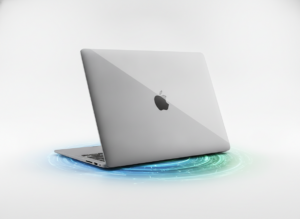
The 14- and 16-inch MacBook Pro with M5 Pro and M5 Max, shipping since March 2026, is the right buy for anyone running local language models — and the wrong buy for anyone holding out for a redesigned entry-level chassis, which remains rumoured rather than announced.
| Measure | M4 Pro / M4 Max generation | M5 Pro / M5 Max (March 2026) |
|---|---|---|
| AI performance (Apple’s claim, relative) | Baseline | Up to 4x |
| Neural Accelerators per GPU core | Not present | One per GPU core |
| Base storage | Not stated | 1TB |
| SSD speed (relative) | Baseline | Up to 2x faster |
| Launch date | Previous generation | March 2026 |
Apple placed a dedicated Neural Accelerator inside each GPU core, which means AI workloads now scale with GPU core count instead of being funnelled through a single separate Neural Engine. Apple claims up to 4x the AI performance of the previous generation — that is a first-party figure and has not been independently verified here. The architectural consequence is uneven by workload: developers running quantized LLMs locally see the benefit directly in tokens per second, because inference is parallel and memory-bandwidth sensitive, while photo editing, video encode and code compilation see conventional generational gains instead. Published arXiv research on local inference throughput and quantization trade-offs supports that distinction, and the broader silicon context behind accelerator-dense designs is well documented in semiconductor research programs funded by the U.S. National Science Foundation.
The 1TB base storage and the roughly 2x faster SSD matter more than they look on a spec sheet, because large model weights and ProRes libraries are storage-bound rather than compute-bound, therefore the base configuration is now genuinely usable without paying for an upgrade at checkout. Our verdict: buy the M5 Pro now if local AI work or sustained export jobs pay for the machine inside a quarter, since the hardware is already shipping and the gains are immediate. Wait if your current machine is an M3 Pro or newer and what you actually want is the rumoured redesigned chassis and display panel, because paying full price twice in eighteen months is a worse outcome than one slower year.
iPad Pro (M5) and Vision Pro (M5): Carryover Hardware That Still Ships
No, there is no 2026 iPad Pro. The current model is the 8th-generation M5 iPad Pro released in late October 2025, and the Vision Pro you can buy today is the M5 refresh — both are carryover hardware that Apple continues to sell as current.
The M5 iPad Pro ships in 11- and 13-inch sizes with Wi-Fi 7 and a base RAM bump to 12GB, which follows exactly the same memory logic driving the iPhone 18 Pro: on-device models need resident headroom, therefore Apple raised the floor across product lines rather than on phones alone. Analysts indicate Apple held the line until Spring 2027 because the next iPad Pro is expected to add vapor chamber cooling for desktop-class sustained workloads, which means buying today is buying the end of a cycle at full price. The position follows from that: buy now only if you need the tablet now for work that is already waiting; otherwise wait two quarters and get the thermal redesign.
The Vision Pro M5 refresh raised the refresh rate to 120Hz from 100Hz and pushed general use toward roughly 2.5 hours, while the price held at $3,499. The cheaper Apple Vision Air, which was expected to swap titanium for plastic to bring that figure down, slipped to 2028–2029 because Apple reprioritized development of AI smart glasses — which means no cheaper headset is arriving to rescue price-sensitive buyers this cycle. That reshapes who the remaining audience is. Research on applied VR and AR outside gaming, including studies published in the International Journal of Technology in Education on immersive deployment in instruction, indicates the strongest measured returns appear in training and structured education settings rather than general consumer use. Consequently the realistic Vision Pro buyer in late 2026 is a developer, an enterprise pilot team or an education deployment with a defined use case — not a household looking for a screen.
Apple Hardware That Slipped Past 2026
Gaming News and Reviews – The Tech ABC
- iPhone 18 and iPhone 18e — moved to Spring 2027 as part of the split iPhone launch
- iPad Pro with M6/M7 and vapor chamber cooling — expected Spring 2027
- Apple Vision Air (lower-cost headset) — delayed to 2028–2029
- Entry-level MacBook Pro redesign with a new display panel — rumoured, not confirmed by Apple
AirPods 5, HomePod and Apple TV: Inside the “Welcome Home” Wave
As of October 13, 2026, this wave is still in motion. AirPods 5 shipped alongside the watches on September 18, 2026, so they are available now. Apple’s second fall event, “Welcome home,” is taking place today, October 13, 2026, led by CEO John Ternus, and it is focused squarely on the smart home ecosystem, which means new HomePod and Apple TV hardware reaches shelves in the following weeks. Final specifications and pricing for the home devices are not confirmed at publication, and this section is updated in place as details land. Buyers weighing AirPods should also know the category’s service history, which we covered in our report on the audio and warranty complaints that followed earlier AirPods Pro models.
The reason for a separate October event is structural rather than cosmetic. The September slot was consumed by three new iPhones plus two watches and a set of earbuds, therefore the home line would have been buried in the same keynote. As a result Apple now has a dedicated moment for the ecosystem tier that sells on bundles and household lock-in rather than on component specifications. The practical consequence for buyers is simple: if you were about to buy a current HomePod or Apple TV, hold off until the new models are priced, because current-generation stock typically moves on discount once replacements are announced. If you are buying an Apple TV for the content rather than the hardware, our rundown of what is worth streaming on Apple TV+ is the better starting point.
Buy Now, Wait, or Skip: Our Verdict on Every Device in the Apple 2026 Lineup
Across the apple 2026 lineup, three devices are clear buys today — the iPhone 18 Pro Max, the Apple Watch Ultra 4 and the M5 Pro MacBook Pro — while the M5 iPad Pro and the Vision Pro are waits, and the Ceramic Series 12 is a skip. The single best overall pick is the Apple Watch Ultra 4, because it delivers the full S11 Health Sensing System and 45-hour workout tracking at $799.
| Device | Starting price | Verdict | Why (one short clause) |
|---|---|---|---|
| iPhone 18 Pro | ~€1,450 (256GB) | Buy | Full A20 Pro package in the smaller body |
| iPhone 18 Pro Max | Not stated | Buy | Best camera and largest display in the range |
| iPhone Duo | Not stated | Buy if it replaces a device | Form factor premium, first-generation hinge risk |
| Apple Watch Series 12 (aluminum) | Not stated | Buy | Same sensors, lowest entry price |
| Apple Watch Series 12 (Ceramic) | ~€1,050 | Skip | Identical sensors at a large material premium |
| Apple Watch Ultra 4 | $799 | Buy | 45-hour workout battery, titanium build |
| AirPods 5 | Not stated | Buy | Shipping now, no successor announced |
| MacBook Pro (M5 Pro) | Not stated | Buy | Per-core Neural Accelerators, 1TB base storage |
| MacBook Pro (M5 Max) | Not stated | Buy for local AI work | Highest on-device inference throughput available |
| iPad Pro (M5) | Not stated | Wait | Vapor-chamber successor expected Spring 2027 |
| Vision Pro (M5) | $3,499 | Wait (consumers) | Price unchanged, no cheaper model until 2028–2029 |
Two of those calls deserve a defence. The M5 iPad Pro is a wait because a vapor-chamber successor is expected in roughly two quarters, which means buying today locks in end-of-cycle hardware at full launch pricing — the worst position in any Apple purchase cycle. The Vision Pro remains a wait for consumers because the $3,499 price did not move with the M5 refresh and the cheaper Vision Air slipped to 2028–2029, therefore no price relief is coming this cycle and the only rational buyers are those with a funded professional use case. One piece of ownership advice applies regardless of which device you choose: over a four-year hold, charging habits affect perceived device lifespan more than any spec on these tables, because lithium-ion cells degrade with cycle depth and heat — a dynamic examined in MIT Energy Initiative research on battery degradation. Our guide to calibrating and managing an iPhone battery covers the practical version of that.
Frequently Asked Questions
What Apple products can you actually buy right now in October 2026?
The apple 2026 lineup currently ships the iPhone 18 Pro and 18 Pro Max, the foldable iPhone Duo, Apple Watch Series 12 and Ultra 4, AirPods 5, the MacBook Pro with M5 Pro or M5 Max, the M5 iPad Pro and the M5 Vision Pro. New HomePod and Apple TV hardware follows the October 13 “Welcome home” event. The standard iPhone 18 is not among them, because it moved to Spring 2027.
Why did Apple not release a standard iPhone 18 in 2026?
Apple split the launch rather than cancelling the model. A20 Pro production for the Pro tier and the iPhone Duo’s foldable panel supply could not absorb standard-model volume in the same quarter, therefore the iPhone 18 and iPhone 18e moved to Spring 2027. The consequence is structural: Apple now runs two iPhone moments a year, with Pro models in autumn and the volume tiers in spring.
How much does the iPhone Duo cost?
Apple has not stated a public figure in the research available, but the Duo sits above the iPhone 18 Pro Max, making it Apple’s most expensive iPhone. For reference, the 256GB iPhone 18 Pro starts near €1,450 in Europe. European and US pricing differ, and final cost shifts with regional tax and carrier terms, so check local pricing before committing.
Does the Apple Watch Series 12 have Touch ID?
No. Supply-chain analysts reported in May 2026 that Apple scrapped the Touch ID sensor, because the sensor stack competed for the same internal volume as the battery and the new health array. As a result, the Series 12 ships with the Health Sensing System and longer battery life intact instead of fingerprint authentication on the wrist.
Is there a new iPad Pro in 2026?
No. The current model is the 8th-generation M5 iPad Pro from late October 2025, offered in 11- and 13-inch sizes with Wi-Fi 7 and 12GB of base RAM. Analysts expect the M6/M7 iPad Pro with vapor chamber cooling in Spring 2027, which means today’s model is end-of-cycle hardware at full price.
Should I buy the M5 Pro MacBook Pro now or wait for the M6 redesign?
Buy now if you run local language models or sustained video exports. The per-GPU-core Neural Accelerators and 1TB base storage pay off immediately, because inference and large-library work are the two areas where the March 2026 refresh moved most. Wait if your machine is an M3 Pro or newer and you want the rumoured redesigned chassis and display. Apple’s 4x AI performance figure is its own claim.
Is the Apple Vision Pro worth buying in 2026?
Only for developers, enterprise pilots and education deployments. The M5 refresh raised the display to 120Hz and pushed general use toward roughly 2.5 hours, but the price held at $3,499. The cheaper Vision Air slipped to 2028–2029 because Apple reprioritized AI smart glasses, which means consumers get no price relief this cycle and should not buy on the expectation of one.
What is the Readiness Score on Apple Watch Series 12?
It is a single daily number summarising recovery, generated from higher-frequency heart-rate variability sampling on the S11 chip’s Health Sensing System. Denser overnight sampling produces a tighter personal baseline, therefore the watch can flag deviation as strain or recovery. The limit is important: it is a trend indicator, not a diagnostic, and it should not be used to make medical decisions.
What is Apple announcing at the October 2026 “Welcome home” event?
Smart home hardware — new HomePod and Apple TV models — at the event taking place today, October 13, 2026, led by CEO John Ternus. Final specifications and pricing are not confirmed at publication. This answer is updated in place as details land, which is why no figures appear here rather than estimates.
Which Apple devices should you avoid buying right now?
The M5 iPad Pro, the Vision Pro for consumer use, the Ceramic Series 12, and current HomePod and Apple TV stock. The iPad Pro has a vapor-chamber successor roughly two quarters out; the Vision Pro holds at $3,499 with no cheaper option until 2028–2029; the Ceramic Series 12 at around €1,050 carries identical sensors to the aluminum model; and the home devices are about to be replaced.
Limitations and What This Analysis Cannot Tell You
Several figures in the apple 2026 lineup remain incomplete at publication, and treating them as settled would misrepresent them. Apple has not stated public pricing for the iPhone Duo, the iPhone 18 Pro Max, AirPods 5 or the MacBook Pro configurations in the sources used here, which is why those cells read “Not stated” rather than carrying an estimate. The 4x AI performance improvement attributed to the M5 Pro and M5 Max is Apple’s own marketing claim and has not been independently benchmarked by The Tech ABC, so real-world gains will vary by model size, quantization method and thermal environment. Pricing cited in euros reflects European retail including local tax and does not convert cleanly to US figures.
There is also no long-term field data on the iPhone Duo’s hinge, because the device has been shipping for roughly five weeks. Accredited compliance testing establishes that a mechanism meets a defined standard; it does not predict how a specific hinge behaves after three or four years of daily folding. Readers who keep phones for four years should weigh that absence of evidence rather than assume durability parity with established foldables.
Alternative approaches are worth naming. If the Pro-tier pricing does not work for you, waiting for the Spring 2027 iPhone 18 and 18e is a legitimate strategy rather than a compromise, because the standard tiers are confirmed rather than speculative. Buyers who want a foldable now and are not locked into iMessage and iCloud have several mature Android options with multiple hardware generations behind them. For laptops, a discounted M4-generation MacBook Pro remains a strong value choice for anyone whose work does not involve local model inference, since the conventional performance gap is incremental.
Finally, the health features described here are consumer wellness tools. The Readiness Score, HRV trends and heart-rate data from the Series 12 and Ultra 4 are not substitutes for clinical assessment. If a reading concerns you or you have a known cardiovascular condition, consult a qualified healthcare professional rather than acting on a wearable metric.
Conclusion: One Calendar, Two iPhone Seasons
The defining fact of this year is scheduling, not silicon. Apple split its releases because Pro-tier chip production and foldable panel supply could not share a quarter with standard-model volume, and consequently the buying advice that worked for a decade no longer holds. If you want a Pro iPhone, autumn is your window. If you want a standard one, spring 2027 is. If you want an iPad Pro or a cheaper headset, the honest answer is that this cycle has nothing new for you.
What that leaves is a shelf of unusually clear decisions. The Apple Watch Ultra 4 at $799 and the M5 Pro MacBook Pro are the two devices where the generational gain is immediate and the successor is not imminent. The iPhone 18 Pro justifies its higher price if you came from an iPhone 15 Pro or earlier, and the iPhone Duo justifies its premium only when it replaces hardware you already carry. Everything else in the apple 2026 lineup rewards patience, because the next revision is already dated. Read more of our hands-on device analysis across tech trends and innovations as the “Welcome home” hardware is priced and this page is updated.
References
- arXiv — research on quantization and memory footprint in on-device language model inference: https://arxiv.org/abs/2103.13630
- U.S. National Science Foundation — semiconductor and computing architecture research programs: https://www.nsf.gov/
- Stanford Institute for Human-Centered AI — analysis of model-driven health inference and its limits: https://hai.stanford.edu/
- European Journal of Engineering and Computer Sciences — peer-reviewed work on physiological and biosignal processing: https://www.ej-eng.org/
- Micom Labs — accredited wireless and mechanical device compliance and durability testing: https://www.micomlabs.com/
- International Journal of Technology in Education — studies on applied VR/AR deployment in instruction and training: https://ijte.net/
- MIT Energy Initiative — research on lithium-ion battery degradation: https://energy.mit.edu/
- Apple Newsroom — official product announcements and specifications: https://www.apple.com/newsroom/
- MacRumors — Apple product release reporting and supply-chain coverage: https://www.macrumors.com/
- AppleInsider — Apple hardware launch and roadmap reporting: https://appleinsider.com/
- 9to5Mac — Apple event and product coverage: https://9to5mac.com/