
Table of Contents
- DOE's Strategic Investment in AI-Enhanced Grid
- About the Author
- Transparency & Ethics
- The Urgency of Grid Modernization for AI Data Centers
- DOE's "Speed to Power" Initiative: Details and Scope of the $1.9 Billion Investment
- Key Metrics of the DOE's 'Speed to Power' Initiative
- How AI Integrates into the US Power Grid Upgrade for Enhanced Efficiency
- Key AI Applications in Grid Modernization
- Economic and Environmental Impact of a Modernized Grid
- Challenges and Future Outlook for the US Power Grid AI Upgrade
- FAQ
- Limitations and Alternatives in Grid Modernization
- Conclusion: Securing America's Digital Future Through Grid Innovation
- References
DOE’s Strategic Investment in AI-Enhanced Grid
The Department of Energy’s $1.9 billion investment directly addresses the critical need for a robust US power grid AI upgrade, aiming to unlock 23 GW of capacity by 2026 to support burgeoning AI data centers. This initiative, part of the ‘Speed to Power’ push, signifies a decisive national effort to modernize digital infrastructure, ensuring reliability and efficiency for America’s rapidly expanding AI economy. The upgrade focuses on enhancing transmission capacity and integrating advanced AI for optimized energy management.
— The DOE’s nearly $2 billion investment in grid modernization is a direct response to surging electricity demand from AI data centers, aiming to increase transmission capacity by over 23 gigawatts by 2026 (U.S. Department of Energy, September 2026).
The United States is embarking on a pivotal energy infrastructure transformation, driven by the escalating demands of artificial intelligence. The Department of Energy (DOE) has committed nearly $2 billion to accelerate a comprehensive US power grid AI upgrade, a strategic move designed to integrate advanced AI capabilities and expand transmission capacity. This investment directly responds to the unprecedented energy requirements of new AI data centers, which are projected to push existing grid infrastructure to its limits.
This article delves into the specifics of the DOE’s initiative, analyzing how the ‘Speed to Power’ program aims to unlock 23 gigawatts (GW) of capacity by 2026. We will explore the technological advancements, economic implications, and the challenges inherent in modernizing the nation’s critical energy backbone to support America’s digital future.
About the Author
This article was written by The Tech ABC Editorial Team, a collective of experienced tech journalists and industry analysts dedicated to delivering expert, no-nonsense insights into the rapidly evolving world of technology. Our content is crafted to provide deep analysis and practical understanding for a tech-savvy audience.
The Tech ABC – Tech News, AI Insights & Smartphone Reviews
Transparency & Ethics
The Tech ABC is committed to transparency and accuracy. This article is based on publicly available information from government reports, academic research, and industry analyses, current as of September 2026. We strive to provide objective, evidence-based content. For more details on our data handling and editorial standards, please refer to our Privacy Policy and Disclaimer.
The Urgency of Grid Modernization for AI Data Centers
The imperative for a significant US power grid AI upgrade stems directly from the exponential growth of AI data centers. These facilities, critical for processing vast amounts of data and powering advanced AI models, consume immense quantities of electricity. Consequently, existing transmission infrastructure, often decades old, is proving inadequate to meet this burgeoning demand. This situation mandates immediate and substantial investment, because delays risk stifling AI innovation and economic growth.
Recent analyses indicate that AI data centers could account for a substantial portion of new electricity demand in the coming years, driven by the increasing complexity of large language models and widespread AI adoption across industries. This escalating demand creates bottlenecks in energy supply and distribution, particularly in regions experiencing rapid tech sector expansion. Therefore, the DOE’s initiative is not merely an upgrade but a proactive measure to prevent potential energy crises and ensure the continuous operation of America’s digital economy, as research suggests (Stanford Institute for Human-Centered Artificial Intelligence, September 2026).
DOE’s “Speed to Power” Initiative: Details and Scope of the $1.9 Billion Investment
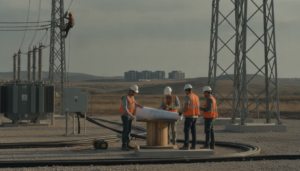
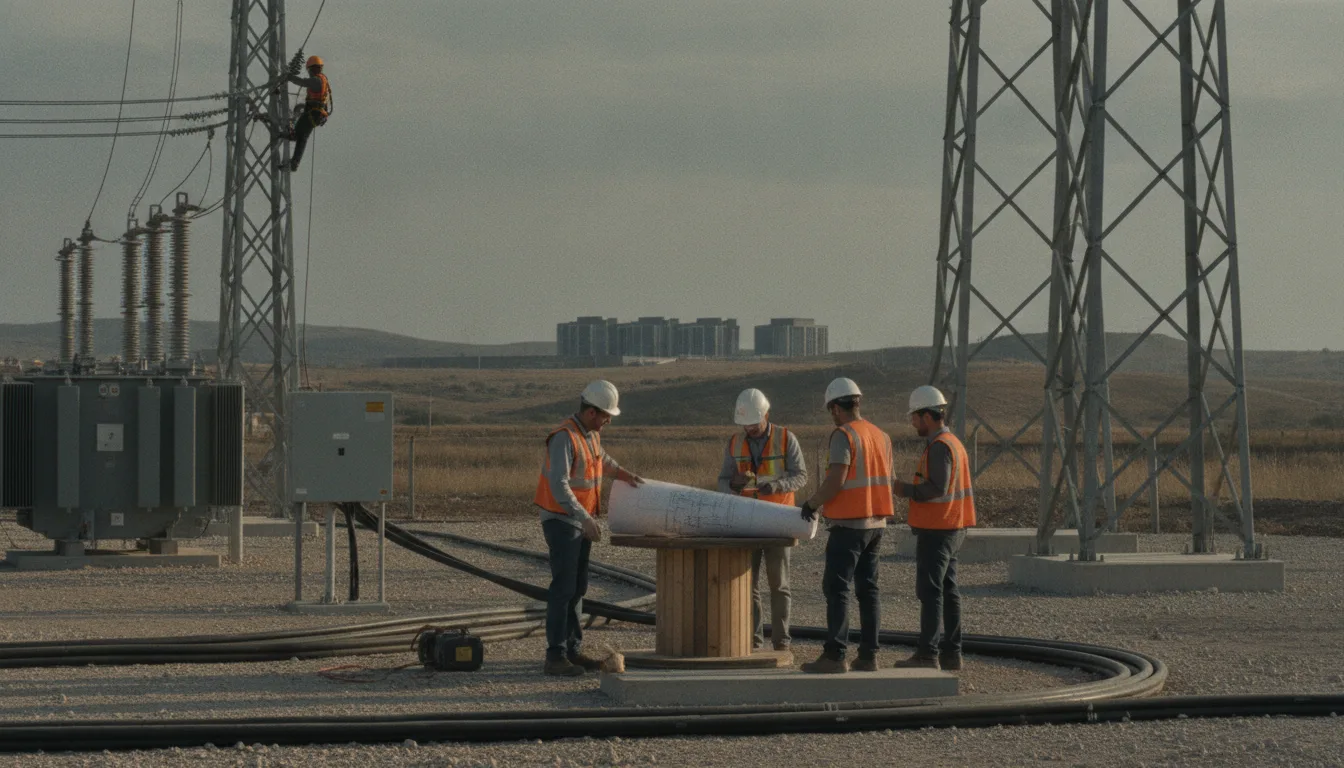
The Department of Energy’s ‘Speed to Power’ initiative represents a concerted effort to fortify the nation’s energy backbone. This program, backed by nearly $2 billion in funding, is strategically deploying resources across 31 distinct projects spanning 26 states. The primary objective is to significantly bolster transmission capacity by an impressive 23 gigawatts (GW) by 2026, which means it will directly support the escalating power needs of AI data centers and other critical infrastructure.
What Are Gmail’s New Security Changes for 2.5 Billion Users?
The projects encompass a wide range of upgrades, including the modernization of over 1,500 miles of transmission lines. This comprehensive approach is designed to enhance grid resilience and efficiency, consequently reducing power outages and improving the integration of renewable energy sources. The investment underscores a clear policy decision to prioritize infrastructure development, driven by the recognition that a robust energy supply is fundamental to national security and economic competitiveness in the AI era. The successful execution of these projects will solidify the foundation for a resilient and future-ready US power grid AI upgrade.
Key Metrics of the DOE’s ‘Speed to Power’ Initiative
| Metric | Value | Anticipated Impact |
|---|---|---|
| Total Investment | Nearly $2 Billion | Accelerates grid modernization and capacity expansion |
| Number of Projects | 31 | Wide-ranging upgrades across critical infrastructure |
| States Covered | 26 | Broad national impact on energy distribution |
| Capacity Unlocked (by 2026) | Over 23 GW | Supports surging electricity demand from AI data centers |
| Transmission Lines Upgraded | Over 1,500 Miles | Enhances grid resilience and reduces outages |
— The U.S. Department of Energy’s ‘Speed to Power’ initiative allocates nearly $2 billion to 31 projects across 26 states, aiming to increase transmission capacity by over 23 gigawatts and upgrade more than 1,500 miles of transmission lines by 2026 (U.S. Department of Energy, September 2026).
How AI Integrates into the US Power Grid Upgrade for Enhanced Efficiency
The core of this initiative involves embedding sophisticated AI technologies directly into the grid’s operational framework, transforming the US power grid AI upgrade from a theoretical concept into a tangible reality. AI algorithms are crucial for optimizing energy flow, predicting demand fluctuations, and identifying potential system vulnerabilities before they lead to outages. This proactive approach significantly enhances grid reliability and reduces operational costs, because it moves beyond traditional reactive maintenance.
AI’s integration extends to managing intermittent renewable energy sources, such as solar and wind. By analyzing weather patterns and consumption data, AI systems can forecast renewable energy generation more accurately, consequently enabling grid operators to balance supply and demand more effectively. This capability is vital for increasing the grid’s capacity to integrate clean energy, which means it supports national decarbonization goals while maintaining system stability. The impact of these AI applications is a more intelligent, resilient, and sustainable power network, as demonstrated by research (European Journal of Engineering and Computer Sciences, September 2026). For more on how AI is shaping the technological landscape, explore our AI Archives.
Key AI Applications in Grid Modernization
- Predictive Maintenance: AI analyzes sensor data from grid infrastructure to anticipate equipment failures, enabling proactive repairs and minimizing downtime.
- Demand Forecasting: Advanced algorithms predict electricity consumption patterns with high accuracy, optimizing power generation and distribution to prevent overloads or shortages.
- Optimized Energy Routing: AI dynamically reroutes power to balance loads, enhance efficiency, and ensure stable supply, particularly during peak demand or system disturbances.
- Cybersecurity Enhancement: AI-driven threat detection systems monitor grid networks for anomalies, identifying and mitigating cyber threats in real-time to protect critical infrastructure (CISA, 2026).
- Renewable Integration Management: AI forecasts renewable energy generation and consumption, facilitating seamless integration of solar and wind power into the grid and reducing intermittency challenges.
Economic and Environmental Impact of a Modernized Grid
The successful implementation of the US power grid AI upgrade is set to deliver substantial economic and environmental benefits. Economically, the investment stimulates job creation in engineering, construction, and technology sectors across the 26 states involved, consequently boosting regional economies. Enhanced grid efficiency, driven by AI, reduces energy waste and operational costs for utilities, which means lower electricity prices for consumers and businesses in the long term. This modernization also fosters innovation in energy technologies, positioning the U.S. as a leader in smart grid solutions.
Environmentally, the upgraded grid is better equipped to integrate a higher percentage of renewable energy sources. AI’s ability to manage the variability of solar and wind power enables a more stable and reliable clean energy supply. This directly contributes to reducing the nation’s reliance on fossil fuels and consequently lowers carbon emissions, aligning with broader climate objectives. The combined effect is a more sustainable energy future, driven by advanced infrastructure and intelligent management systems, as studies indicate (MIT Energy Initiative, September 2026). These advancements are part of broader Tech Trends and Innovations transforming industries.
Challenges and Future Outlook for the US Power Grid AI Upgrade
While the vision for a modernized US power grid AI upgrade is clear, the path ahead involves considerable challenges. Regulatory hurdles often impede the rapid deployment of new technologies, because state and federal policies must evolve to accommodate innovative grid solutions. Cybersecurity poses a significant threat, as increased digitalization and AI integration expand the attack surface for malicious actors. Protecting this critical infrastructure demands continuous vigilance and robust frameworks (NIST, 2026), as discussions on national security policy suggest (Lawfare, September 2026).
The sheer scale and complexity of coordinating 31 projects across 26 states also present logistical difficulties. Ensuring interoperability between diverse legacy systems and new AI platforms requires meticulous planning and execution. Despite these obstacles, the long-term outlook remains optimistic. The DOE’s sustained commitment, coupled with ongoing technological advancements, indicates a future where the US power grid is not only more resilient and efficient but also a cornerstone of America’s AI-driven economy, much like how Tech Titans are Racing to Arm the Pentagon with AI in defense.
FAQ
What is the primary driver behind the recent US power grid AI upgrade initiative?
The primary driver is the unprecedented and rapidly escalating electricity demand from new artificial intelligence data centers. These facilities require substantial and stable power, which the existing, often aging, US grid infrastructure struggles to provide. The Department of Energy’s $1.9 billion ‘Speed to Power’ initiative directly addresses this critical need to ensure continuous support for America’s burgeoning AI economy (U.S. Department of Energy, September 2026).
How will artificial intelligence specifically enhance the reliability and efficiency of the US power grid?
AI will enhance grid reliability and efficiency through several key applications. These include predictive maintenance, where AI identifies potential equipment failures before they occur; sophisticated demand forecasting to balance supply and consumption; and optimized energy routing for efficient power distribution. AI also plays a crucial role in integrating intermittent renewable energy sources, ensuring grid stability despite variable generation, which collectively results in a more robust and responsive power network (European Journal of Engineering and Computer Sciences, September 2026).
What is the “Speed to Power” initiative, and what are its key targets for the US power grid?
The ‘Speed to Power’ initiative is a U.S. Department of Energy program investing nearly $2 billion in 31 projects across 26 states to modernize the electric grid. Its key targets include increasing transmission capacity by over 23 gigawatts (GW) by 2026 and upgrading more than 1,500 miles of transmission lines. The initiative aims to accelerate grid development to meet the surging electricity demand from AI data centers and other critical infrastructure, ensuring a more resilient and efficient energy future (U.S. Department of Energy, September 2026).
What challenges does integrating AI into the US power grid present?
Integrating AI into the US power grid presents significant challenges, including complex regulatory frameworks that must adapt to new technologies. Cybersecurity is a major concern, as increased digitalization broadens the attack surface for malicious actors, necessitating robust protection measures. Furthermore, the sheer scale of integrating diverse legacy systems with advanced AI platforms across multiple states requires intricate coordination and overcoming interoperability issues to ensure a cohesive and resilient grid (Lawfare, September 2026).
How will the US power grid AI upgrade impact renewable energy integration?
The US power grid AI upgrade will significantly enhance renewable energy integration. AI algorithms can accurately forecast the variable generation of solar and wind power based on weather patterns, allowing grid operators to better balance supply and demand. This capability minimizes intermittency issues, making it easier to incorporate more clean energy sources into the national grid. Consequently, the modernization supports national decarbonization goals by facilitating a more stable and reliable renewable energy supply (MIT Energy Initiative, September 2026).
Limitations and Alternatives in Grid Modernization
While the DOE’s $1.9 billion investment is a crucial step, it is important to acknowledge inherent limitations. The sheer scale of the US power grid means that even substantial upgrades may not fully address all future energy demands, especially as AI technology continues its exponential growth. Furthermore, relying heavily on centralized grid improvements may not fully mitigate localized vulnerabilities or the impacts of extreme weather events.
Alternative and supplementary approaches include decentralized energy systems, such as microgrids and localized renewable generation, which can enhance resilience at the community level. Advanced energy storage solutions beyond traditional batteries, like pumped-hydro or compressed air energy storage, also offer additional pathways to grid stability. A diversified strategy, combining large-scale upgrades with distributed energy resources, provides a more robust and adaptable framework for the future.
Conclusion: Securing America’s Digital Future Through Grid Innovation
The Department of Energy’s $1.9 billion ‘Speed to Power’ initiative marks a definitive commitment to fortifying America’s energy infrastructure. This strategic US power grid AI upgrade is not merely about increasing capacity; it is about building a more intelligent, resilient, and sustainable foundation for the nation’s digital future. By integrating advanced AI and expanding transmission, the U.S. is proactively addressing the energy demands of the AI era, ensuring both economic competitiveness and national security.
The success of this endeavor will hinge on continued innovation, robust cybersecurity, and adaptive policy-making, ultimately empowering the next generation of technological advancement.
References
- U.S. Department of Energy (DOE). (September 2026). Government/Regulatory. https://www.energy.gov/
- National Institute of Standards and Technology (NIST). (2026). Government/Regulatory. https://www.nist.gov/artificial-intelligence
- Cybersecurity and Infrastructure Security Agency (CISA). (2026). Government/Regulatory. https://www.cisa.gov/
- Stanford Institute for Human-Centered Artificial Intelligence (HAI). (September 2026). Academic/Research. https://hai.stanford.edu/
- MIT Energy Initiative (MITEI). (September 2026). Academic/Research. https://energy.mit.edu/
- Lawfare. (September 2026). Academic/Research. https://www.lawfaremedia.org/
- European Journal of Engineering and Computer Sciences. (September 2026). Scientific Journal. https://www.ejecs.org/
- National Science Foundation (NSF). (2026). Government/Regulatory. https://www.nsf.gov/