

Table of Contents
- Key Takeaways
- About the Author
- Transparency and Methodology
- What Changed in 2026: From 40 Years of Falling Prices to a 15% Hike
- The PC price curve that broke
- What Sony's April 2 PlayStation 5 increase signalled
- How a 21-Mile Channel Reaches Into Your Shopping Cart
- Helium from Qatar: the non-substitutable bottleneck
- LNG, Taiwan's fabs and South Korea's memory giants
- Bromine, petrochemicals and the plastics in your chassis
- Memory Is the Bottleneck: DRAM, NAND and the 75% Spike
- How AI data centers set the baseline
- Why routers, SSDs and handhelds got hit too
- Shipping, Insurance and the Cape of Good Hope Detour
- Device-by-Device: What You Are Actually Paying Extra For
- What a Buyer Should Do Right Now
- How Long This Lasts, and Why Some of It Is Permanent
- Frequently Asked Questions
- Limitations of This Analysis and Competing Explanations
- Conclusion
- References
- Related Reading
Key Takeaways
>
In short, why are tech prices going up in 2026? Because the February 28, 2026 closure of the Strait of Hormuz cut off helium, LNG and shipping capacity at the same moment AI demand drained the memory market.
>
- Retail prices for smartphones and PCs are up 10–15% in 2026 as manufacturers pass through material, energy and freight costs, according to 2026 electronics supply-chain reporting.
- DRAM and NAND contract prices climbed by up to 75%, according to PPSI’s Q2 2026 Electronics Supply Chain Risk Report, an industry survey rather than a peer-reviewed study.
- Qatar supplies roughly one-third of the world’s helium, a non-substitutable semiconductor carrier gas, and almost all of it ships through the Strait of Hormuz.
- Taiwan sources about 30% of its LNG via Hormuz; South Korea imported around 20% of its LNG and 70% of its oil from the Middle East in 2025.
- Cape of Good Hope rerouting adds 10–14 days to Asia-to-US transit, with container surcharges of $1,500–$4,000 and war-risk premiums up more than 300%, per Lloyd’s List shipping-market reporting in 2026.
- Memory now accounts for over 20% of a router’s build cost, up from 3% in 2025 (Counterpoint Research, 2026), which is why even accessories got more expensive.
If you are asking why are tech prices going up, the short answer is that a 21-mile-wide shipping channel closed and the entire electronics cost base moved with it. On February 28, 2026, following joint US and Israeli strikes on Iran, Iran’s Islamic Revolutionary Guard Corps closed the Strait of Hormuz to commercial traffic. As a result, helium, liquefied natural gas and petrochemical feedstocks stopped moving on their normal routes, and manufacturers of smartphones and PCs have since raised retail prices by roughly 10–15% to cover the difference.
Because the shock hit raw materials, energy and freight simultaneously, this episode of consumer electronics inflation is broader than any single component shortage. What follows traces the Strait of Hormuz effect on tech prices step by step — from a naval chokepoint to the number on your checkout screen.
About the Author
>
This analysis was researched and written by The Tech ABC Editorial Team, which has covered consumer hardware pricing, component supply chains and device teardowns since 2023. Our component-cost reporting draws on manufacturer disclosures, industry supply-chain surveys and shipping-market data rather than retailer marketing claims.
Transparency and Methodology
>
Figures in this article are current as of November 9, 2026 and are attributed to their original sources inline. Industry reports from PPSI and Counterpoint Research are vendor-surveyed, not peer-reviewed. Manufacturer forecasts are labelled as such. We hold no position in any company named here. See our editorial disclaimer for our full standards.
What Changed in 2026: From 40 Years of Falling Prices to a 15% Hike
Consumer electronics prices rose through 2026 for the first sustained stretch in roughly four decades because input costs — not demand — moved first, which means the question of why are tech prices going up is a supply-side question. Unit shipments stayed broadly flat while the cost of building each unit climbed, so the increase arrived as margin defence rather than as scarcity pricing driven by buyers.
The historical pattern ran the other way for a generation. Computing hardware got cheaper per unit of performance year after year, driven by process shrinks, higher yields and manufacturing scale. That curve broke in 2026 because the binding constraint stopped being transistor density and became raw materials, industrial gases and electricity — inputs that no amount of lithographic cleverness can engineer away.
The resulting numbers are specific. Manufacturers of smartphones and personal computers have raised retail prices by 10–15% to offset electronics transport costs that rose roughly 20%, and delivery timelines on new launches have stretched from weeks to several months. Critical MOSFETs and discrete components from suppliers including Infineon and Vishay now routinely exceed 52-week lead times, which is why some 2026 refreshes slipped entirely rather than shipping at a higher price.
The PC price curve that broke
The laptop price increase 2026 brought was concentrated almost entirely in one line of the bill of materials: memory and storage. DRAM and NAND contract prices climbed by as much as 75% during the year, according to PPSI’s Q2 2026 report, and because a mid-range notebook carries 16GB of RAM and a 512GB SSD against a thin retail margin, that single line dominated the rest of the build.
Several manufacturers therefore chose configuration cuts over headline increases. Models that shipped with 16GB as standard in 2025 reappeared with 8GB at a similar price, which means the real consumer electronics inflation rate exceeds the stated 10–15%, because the buyer gets less machine for the same money.
What Sony’s April 2 PlayStation 5 increase signalled
Sony Interactive Entertainment announced a PlayStation 5 price increase on April 2, 2026 through its PlayStation Blog, and the timing mattered more than the amount. Consoles normally get cheaper as a generation matures, because component costs fall and the platform holder recovers margin through software. A mid-generation increase reverses that pattern outright.
The cause chain is simple. Console hardware ships on deliberately thin, fixed margins, so when GDDR and DRAM contract costs rise sharply there is no absorption room left in the box. Consequently the price moves instead. Readers weighing hardware revisions can compare the trade-offs in our breakdown of PS5 Pro disc drive details.
How a 21-Mile Channel Reaches Into Your Shopping Cart
The Strait of Hormuz is a 21-mile-wide channel between Iran and Oman that has historically carried roughly 20–25% of the world’s daily oil supply and about 20% of global LNG, according to World Economic Forum chokepoint analysis. A chokepoint matters far more than its share of global production suggests, because there is no substitute route at comparable scale — cargo either transits it or takes a longer, costlier journey.
The closure itself is dated and documented. On February 28, 2026, after joint US and Israeli strikes on Iran, the IRGC closed the Strait to commercial shipping. As of early November 2026, traffic remains a fraction of the pre-conflict volume of about 130 ships per day and frequently requires naval escort, despite ceasefire efforts including the Islamabad Memorandum. Policy analysis from Lawfare on maritime chokepoint closures and escort regimes explains why such arrangements prove fragile: enforcement depends on continuous naval presence rather than on the agreement itself.
The effect on electronics then runs through three separate inputs — an industrial gas, an energy source and a petrochemical feedstock. That is precisely why the price impact is broad rather than confined to one component, and why fabrication cannot simply switch suppliers: process gas purity and cleanroom tolerances are held to standards documented in NIST’s semiconductor measurement programs, leaving no room for improvisation.
From chokepoint to checkout: the five-step cost chain
- The Strait closes, so Qatari helium and Gulf LNG cargoes cannot sail on their normal routes.
- Fabs in Taiwan and South Korea face higher and less certain gas and energy costs, because roughly 30% of Taiwan’s LNG and much of South Korea’s fuel transited Hormuz.
- Wafer and memory output tightens while AI data-center orders absorb available supply, driving DRAM and NAND contract prices up by as much as 75%.
- Petrochemical feedstocks and bromine flame retardants get more expensive, which raises the cost of chassis plastics, PCBs and packaging.
- Cape of Good Hope rerouting adds 10–14 days and $1,500–$4,000 per container in surcharges, so the finished device lands later and dearer — and the 10–15% increase appears on the shelf.
Helium from Qatar: the non-substitutable bottleneck
Qatar supplies approximately one-third of the world’s helium, and almost all of it exports through the Strait of Hormuz, which makes a single waterway the gatekeeper for a third of global supply. Helium serves as an inert carrier and cooling gas in lithography, wafer handling and leak testing, and federally funded materials research catalogued by the National Science Foundation identifies it as non-substitutable at industrial purity because no other gas matches its thermal and chemical properties.
Therefore the helium shortage semiconductor manufacturing now faces does not translate into a slightly more expensive process — it translates into reduced throughput, because an allocation cut means fewer wafers started. Fewer wafers started with unchanged fixed costs raises the cost per finished chip directly.
LNG, Taiwan’s fabs and South Korea’s memory giants
TSMC produces close to 90% of the world’s most advanced chips, and Taiwan sources roughly 30% of its LNG through the Strait of Hormuz. South Korea — home to Samsung Electronics and SK Hynix, the two largest memory producers — imported around 20% of its LNG and 70% of its oil from the Middle East in 2025. The disruption therefore threatened the energy stability of the two territories that between them anchor logic and memory production.
The mechanism is energy intensity. EUV lithography, continuous cleanroom air handling and ultrapure water systems demand uninterrupted, high-volume power, a relationship documented in MIT Energy Initiative research on LNG trade exposure and advanced manufacturing. Consequently an energy-price shock raises the cost of every wafer started rather than one product line — which is also why supplier diversification matters so much, as our coverage of Apple’s 5G modem and supplier strategy illustrates.
Bromine, petrochemicals and the plastics in your chassis
Bromine-based flame retardants and petroleum-derived polymers used in device housings, connectors, cable jackets and packaging come largely from Gulf petrochemical output, and the lng supply chain taiwan chip production depends on shares the same constrained waterway. The disruption of helium and bromine together created the material bottlenecks chipmakers reported through 2026.
On November 3, 2026, Adnoc Chief Executive Sultan Al Jaber noted that shipping costs now account for more than 30% of a barrel of oil’s value as a result of the crisis. Because resin pricing tracks crude and freight, that figure feeds straight into moulding compounds. The consequence is plain: even a device whose silicon cost had not moved at all became more expensive to mould, flame-proof and box.
Memory Is the Bottleneck: DRAM, NAND and the 75% Spike
Why is RAM so expensive right now? Because AI data-center buyers absorbed the available wafer output while Hormuz-driven material and energy constraints capped the industry’s ability to add supply, driving DRAM and NAND contract prices up by as much as 75% in 2026 per PPSI’s Q2 2026 report. Both causes are real, and neither alone accounts for a move of that size.
Pass-through is fast because memory is a commodity priced on rolling contracts rather than annual negotiations. A contract move therefore reaches laptop and phone bills of materials within one or two quarters, which is exactly why 2026 refreshes shipped with lower default capacities instead of waiting for the market to settle.
Memory and component cost shifts, 2025 to late 2026
| Component / metric | 2025 baseline | Late 2026 | Source |
|---|---|---|---|
| DRAM contract prices | 2025 contract levels | Up to +75% | PPSI, Q2 2026 report |
| NAND flash contract prices | 2025 contract levels | Up to +75% | PPSI, Q2 2026 report |
| Memory share of router build cost | 3% | Over 20% | Counterpoint Research, 2026 |
| MOSFET / discrete lead times | Not stated | Routinely over 52 weeks | 2026 supply-chain reporting (Infineon, Vishay) |
| Electronics transport costs | 2025 baseline | Up roughly 20% | 2026 electronics supply-chain reporting |
Read the table from the bottom up and the pattern is clear: the component with the smallest 2025 cost share recorded the largest proportional increase. Budget and mid-tier devices therefore absorbed the shock worst, because a commodity spike lands hardest where the total bill of materials is smallest.
How AI data centers set the baseline
HBM and high-density DDR5 destined for AI accelerators carry materially higher margins than consumer DRAM, so fabs reallocated capacity toward them because the economics demanded it. That reallocation set the floor under every consumer memory price in 2026.
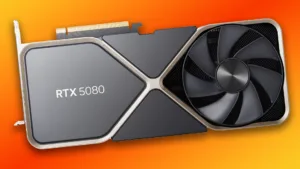
Relief is not scheduled. Micron’s chief executive has stated that memory demand is expected to exceed supply through 2027 and 2028 — a manufacturer forecast, published via Micron investor communications, and one with obvious commercial self-interest attached. The same squeeze shows up in graphics memory, as our RTX 5080 review context makes clear.
Why routers, SSDs and handhelds got hit too
Counterpoint Research found in 2026 that memory moved from 3% to over 20% of a consumer router’s manufacturing cost. The reason is arithmetic: router bills of materials are small, so a commodity spike dominates them in a way it never dominates a flagship phone. Cisco has already passed those costs to buyers, with consumer brands including TP-Link and Ubiquiti following.
The same logic extends to portable consoles and budget SSDs, where memory and flash represent an outsized share of the build. Our Gaming News and Reviews coverage tracks how that pressure is reshaping handheld lineups.
Shipping, Insurance and the Cape of Good Hope Detour
Container surcharges of $1,500–$4,000 per box and war-risk insurance premiums up more than 300% are the measurable logistics layer of this crisis. Maersk, CMA CGM and Hapag-Lloyd rerouted vessels around the Cape of Good Hope because war-risk exposure made the direct route uninsurable at normal rates. A longer route consumes more vessel-days per voyage, which tightens effective capacity even though the global fleet has not shrunk.
The logistics premium, by the numbers
- Container surcharges: $1,500–$4,000 per box on Asia-to-US and Asia-to-Europe lanes.
- War-risk insurance premiums: up more than 300%, and in some cases up to 10x pre-crisis levels for vessels attempting the region.
- Added transit time via the Cape of Good Hope: 10–14 days.
- Electronics transport costs overall: up roughly 20%.
- Shipping’s share of a barrel of oil’s value: over 30%, per Adnoc CEO Sultan Al Jaber, November 3, 2026.
The inventory consequence compounds the freight bill. Ten to fourteen extra transit days compress launch cycles, so retailers hold thinner buffers, and thin buffers produce stockouts. Stockouts in turn mean firmer pricing and far fewer discounts, which is why 2026 promotional periods were noticeably shallower than 2025’s.
Freight alone does not explain a 15% retail increase, because shipping is a modest share of a laptop’s final price. The accurate framing is that logistics costs compound the material and memory increases rather than offsetting them — three rising inputs stacked on top of each other.
Device-by-Device: What You Are Actually Paying Extra For
The increase is not uniform, because each category carries a different exposure to memory, to petrochemical materials and to freight. The working rule is straightforward: the more memory a device carries per dollar of retail price, the larger its proportional increase in 2026.
Price movement by category, 2025 baseline vs late 2026
| Category | 2025 baseline | Late 2026 | Primary cost driver |
|---|---|---|---|
| Mid-range laptop (16GB/512GB) | 2025 pricing, 16GB standard | +10–15%, lower default tiers | DRAM/NAND up to 75% |
| Flagship smartphone | 2025 pricing | +10–15% at retail | Memory plus transport +20% |
| Home game console | Mid-generation pricing | Increase announced April 2, 2026 | GDDR/DRAM contract costs |
| Portable gaming handheld | 2025 pricing | Increase amount not stated | Memory share of small BOM |
| Desktop GPU | 2025 pricing | Increase amount not stated | Capacity reallocated to AI memory |
| DIY RAM kit (32GB DDR5) | 2025 contract levels | Contract prices up to 75% | DRAM contract spike |
| Wi-Fi router | Memory 3% of build cost | Memory over 20% of build cost | Counterpoint Research, 2026 |
Mid-range laptops and handhelds took the worst proportional hit because memory dominates their bills of materials, and because neither category carries the margin cushion to absorb a 75% commodity move. That is why the visible change in those segments arrived as specification cuts as much as price tags — including on devices like the Nintendo Switch 2 pricing and specs buyers have been watching all year.
iPhone 17 Colors: Expected Variants and Themes
Premium phones behaved differently, absorbing more of the increase internally because their gross margins allowed it, which is why flagship increases cluster at the lower end of the 10–15% band. Desktop GPUs sit in a third position: their exposure runs through graphics memory and board components rather than freight, which is why power and thermal design — the kind of detail covered in our analysis of RTX 5080 power consumption — stayed stable while prices did not. For phone buyers, the practical result is that spending decisions now hinge on durable fundamentals such as iPhone 17 battery life rather than on waiting out a discount cycle.
What a Buyer Should Do Right Now
Waiting is only rational if the thing you are waiting for gets cheaper, and memory is not forecast to get cheaper before 2028. Therefore “wait for prices to fall” is the wrong default position in late 2026.
Five decisions, by situation
- If your current machine still works: buy nothing and add an external SSD now rather than later, because NAND pricing is still climbing.
- If you need a laptop within six months: buy now and buy the higher memory tier, because configurations are being cut and the next refresh will offer less for the same money.
- If you build PCs: buy the RAM kit first and the rest of the build later, because DRAM has the steepest forward price curve of any component.
- If you want a console: buy the bundle rather than the bare unit, because bundle pricing is where manufacturers are still absorbing cost.
- If budget is the binding constraint: buy certified refurbished or last-generation stock, because that inventory was priced before the February 2026 shock and is the only pocket of pre-crisis pricing left.
There is one case where waiting still wins. A device whose cost is dominated by display panel and chassis rather than by memory — an entry TV, a basic tablet, a monitor — has limited exposure to the DRAM and NAND spike, which means a seasonal promotion on that category remains a genuine saving rather than a reset of an inflated list price.
How Long This Lasts, and Why Some of It Is Permanent
When will tech prices come down? Freight and insurance costs should normalise within two to three quarters of a durable reopening, because both are spot markets that reprice quickly, but memory pricing will not, because Micron’s guidance places demand above supply through 2027 and 2028.
The two layers need to be separated explicitly. The Hormuz layer — war-risk premiums, rerouting, petrochemical spot costs — is reversible by a policy event. The capacity layer is not, because new memory fabs take years to qualify and no reopening adds wafer starts retroactively. A durable reopening therefore removes perhaps a third of the increase rather than all of it.
The structural shift sets the floor under the rest. Supply chain analysts describe the global economy moving from a model of efficiency to one of resilience, and resilience is expensive by design: dual-sourced helium contracts, buffer inventories measured in months instead of weeks, nearshored packaging and test capacity. Every one of those choices carries a permanent cost that lands in the bill of materials, which is why 2025 pricing is unlikely to return even under calm conditions. We track that rebuild in Tech Trends and Innovations.
Regional exposure amplifies the effect. India imports 85% of its crude oil, so the 2026 spike in Brent crude weakened the Rupee and added roughly another 10% currency-driven increase to imported electronics on top of the manufacturing increase — a reminder that the headline 10–15% figure describes a global average, not a local one.
Frequently Asked Questions
Why are tech prices going up in 2026?
Why are tech prices going up in 2026 comes down to one event and one trend. The February 28, 2026 closure of the Strait of Hormuz cut helium, LNG and shipping capacity, while AI data-center demand absorbed the available memory supply. Consequently, manufacturers raised smartphone and PC retail prices by roughly 10–15% to cover materials, energy and freight.
How does the Strait of Hormuz affect laptop and phone prices?
Through three inputs, not one. Qatar ships roughly one-third of global helium through the Strait, and helium is non-substitutable in chip fabrication. Taiwan sources about 30% of its LNG via the same channel, which raises fab energy costs. Gulf petrochemicals feed device plastics. Rerouting around the Cape of Good Hope then adds 10–14 transit days.
How much more expensive are laptops, phones and consoles now?
Smartphones and PCs are up 10–15% at retail. Consoles saw an explicit mid-generation increase, announced by Sony on April 2, 2026, reversing the usual pattern of consoles getting cheaper with age. Mid-range laptops took the worst proportional hit because memory dominates their build cost. The category table above breaks this down by device type.
Is the RAM shortage caused by AI or by the Hormuz crisis?
Both, in sequence. AI data-center demand set the baseline by absorbing high-margin HBM and DDR5 capacity, so fabs reallocated away from consumer parts. The Hormuz disruption then prevented suppliers from expanding output, because helium and energy inputs tightened simultaneously. The combined result: DRAM and NAND contract prices up as much as 75%, per PPSI’s Q2 2026 report.
When will laptop and console prices come back down?
Not before 2028 for anything memory-heavy. Micron’s chief executive has guided that memory demand exceeds supply through 2027 and 2028, which caps any relief on RAM, SSDs, consoles and GPUs. Freight and insurance normalise much faster — within two to three quarters of a durable reopening — because those are spot-priced markets rather than capacity-constrained ones.
Should I buy a laptop now or wait for prices to fall?
If you need one within six months, buy now and buy the higher memory tier. Default configurations are being cut to protect headline prices, and memory pricing has no forecast relief before 2028. Therefore waiting delivers less machine for the same money rather than the same machine for less. Refurbished stock remains the one pre-crisis-priced option.
Why is helium so important to making chips?
Because it is non-substitutable. Helium works as an inert carrier and cooling gas in lithography, wafer handling and leak detection, and no other gas matches its thermal and chemical properties at the purity fabrication requires. Allocation cuts therefore reduce fab throughput directly rather than just raising costs. Qatar supplies roughly one-third of world supply.
Are new devices shipping with less memory and storage?
Yes, and that is the hidden price increase. Manufacturers protect headline prices by cutting default RAM and storage tiers — 8GB where 16GB was standard in 2025. A 2026 model at last year’s price therefore delivers measurably less, which means the real increase for equivalent specification exceeds the stated 10–15%.
How much have shipping and insurance costs risen for electronics?
Container surcharges run $1,500–$4,000 per box. War-risk insurance premiums surged more than 300%, reaching as much as 10x pre-crisis levels for vessels attempting the region, according to 2026 shipping-market reporting. Electronics transport costs overall rose roughly 20%, and Cape of Good Hope rerouting adds 10–14 days to Asia-to-US and Asia-to-Europe transit.
Will tech prices return to normal if the Strait of Hormuz reopens?
Only partially. Freight, insurance and petrochemical costs fall quickly because they are spot-priced and reprice within quarters. Memory does not, because capacity takes years to add. The new cost of resilience — buffer inventories, dual-sourced helium, nearshored packaging — is structural. Expect roughly a third of the increase to reverse rather than all of it.
Limitations of This Analysis and Competing Explanations
No public dataset separates the Hormuz-driven share of a price increase from the AI-demand share. The 10–15% figure is a pass-through observed at retail, not an audited cost breakdown, and any attempt to apportion it precisely between the two causes would be estimation rather than measurement.
Three competing explanations carry real weight. Tariff and trade-policy changes alter landed costs independently of freight. Currency movements in import-dependent markets add increases that have nothing to do with components — India’s roughly 10% currency effect is the clearest example. And normal product-cycle repricing at launch inflates year-over-year comparisons regardless of input costs.
Source quality also varies. PPSI and Counterpoint Research figures are vendor-surveyed industry estimates rather than peer-reviewed findings, and manufacturer statements — including Micron’s demand forecast and Sony’s stated reasoning — are commercially self-interested. Finally, US prices behave differently from EU and emerging-market prices because of currency structure, import duties and retail tax treatment.
Conclusion
Asked plainly, why are tech prices going up reduces to a chokepoint closure stacked on top of a memory shortage. The February 28, 2026 Strait of Hormuz closure constrained helium, LNG and petrochemical feedstocks while AI demand absorbed the memory industry’s output, and Cape of Good Hope rerouting added freight and insurance costs on top — which together produced the 10–15% increase now visible at retail.
The practical position follows from the forecast rather than from optimism: buy the memory you need now, in the configuration you actually want, because the structural share of this increase is not coming back out of the price.
Read more analysis in Tech Trends and Innovations.
References
- PPSI — Q2 2026 Electronics Supply Chain Risk Report (industry supply-chain survey): https://ppsi.io/
- Counterpoint Research — 2026 consumer router bill-of-materials analysis: https://www.counterpointresearch.com/
- World Economic Forum — Strait of Hormuz chokepoint analysis: https://www.weforum.org/
- Lloyd’s List — 2026 war-risk premium and vessel rerouting data: https://www.lloydslist.com/
- Micron Technology — CEO memory demand guidance, 2026 (manufacturer forecast): https://investors.micron.com/
- National Science Foundation — materials science and critical industrial gas research: https://www.nsf.gov/
- MIT Energy Initiative — LNG trade exposure and energy intensity of advanced manufacturing: https://energy.mit.edu/
- NIST — semiconductor measurement and manufacturing programs: https://www.nist.gov/
- Lawfare — maritime chokepoint closure and naval escort policy analysis: https://www.lawfaremedia.org/
- Sony Interactive Entertainment — PlayStation 5 pricing announcement, April 2, 2026: https://blog.playstation.com/