
Table of Contents
- What Changed in 2026: DALL-E 3 Is Now a Legacy Model
- Timeline: How the Midjourney and DALL-E Lines Diverged
- Midjourney v7 in 2026: Why Omni Reference Keeps It Alive
- Omni Reference: Consistency With a Dial
- Draft Mode: Cheap Exploration Before Expensive Renders
- What Midjourney v7 Does Better Than OpenAI's Generator
- DALL-E 3's Successor: What ChatGPT Images 2.5 Inherited
- Text Rendering: The Gap Midjourney Has Not Closed
- Conversational and Non-Destructive Editing
- Head-to-Head Scorecard: Six Dimensions That Decide the Choice
- Midjourney v7 vs ChatGPT Images 2.5 (Formerly DALL-E 3): Scorecard
- Pricing and Cost Per Image: What You Actually Pay in 2026
- 2026 Pricing: Midjourney Plans vs OpenAI Image Generation
- The Laptop Question: Neither Tool Runs on Your Hardware
- What You Actually Need on the Machine
- Which One Belongs on Your Laptop? Match the Tool to the Job
- Pick by Role
- Frequently Asked Questions
- Limitations, Risks and Alternatives Worth Considering
- What This Comparison Cannot Settle
- The Verdict: Taste or Obedience
- References
- Related Reading
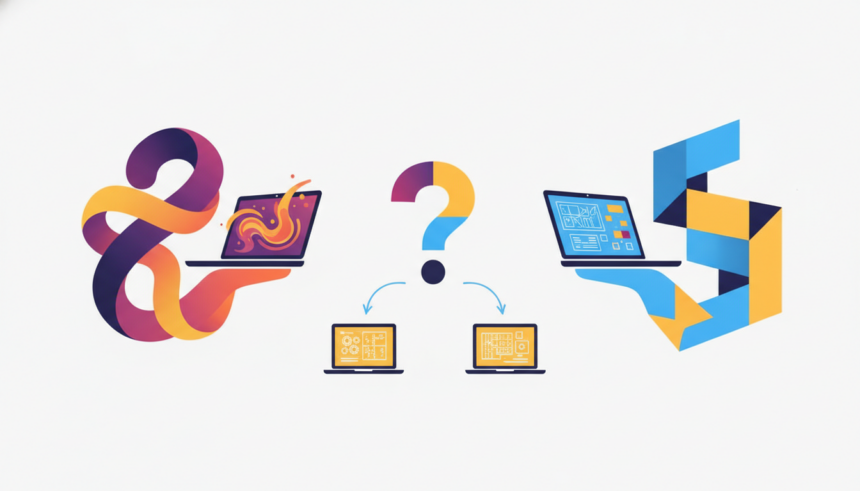
Midjourney v7 vs DALL-E 3 is no longer a fair fight in 2026 — because DALL-E 3 no longer exists as a supported product.
>
- OpenAI shut down the DALL-E 3 API on May 12, 2026 and removed the DALL-E GPT from ChatGPT on August 30, 2026, so “DALL-E 3” today effectively means ChatGPT Images 2.5.
- Midjourney v7, released in April 2025, still runs professional workflows because Omni Reference remains unmatched for character consistency.
- Choose Midjourney for aesthetic control; choose OpenAI for prompt obedience and accurate in-image text.
- Neither runs locally — a mid-range laptop with a browser is enough.
The honest answer to the most-searched AI image comparison of 2026 is that one of the two contenders has been retired. If your work depends on cinematic visuals and repeatable characters, Midjourney wins. If it depends on literal instruction-following and legible text inside the frame, OpenAI’s generator wins. That split holds because the two systems were optimised for different failure modes, not because one is simply better.
Readers still searching Midjourney v7 vs DALL-E 3 are comparing a live product to a decommissioned one. OpenAI retired the DALL-E branding and migrated to an autoregressive GPT Image architecture, consequently the real decision today is between Midjourney’s aesthetic engine and OpenAI’s instruction-following engine — a distinction that matters more than any score sheet.
This article lays out the 2026 deprecation timeline, a six-dimension scorecard, verified 2026 pricing, the hardware you genuinely need, and a profession-by-profession recommendation you can act on today.
About the Author: Written by The Tech ABC Editorial Team, which covers consumer hardware and the AI tools that run on it. Our image-generation testing is hands-on and prompt-set based, run across both platforms on the same briefs.
Everything You Need to Know About the Nintendo Switch 2
Transparency: Prices, quotas and model versions in this article reflect publicly available information as of November 3, 2026 and change frequently. Quality scores reflect editorial judgement on a fixed internal prompt set, not a standardised public benchmark. See our editorial disclaimer for full details.
What Changed in 2026: DALL-E 3 Is Now a Legacy Model
Anyone weighing Midjourney v7 vs DALL-E 3 in late 2026 is really weighing Midjourney v7 against ChatGPT Images 2.5, because DALL-E 3 is a legacy model. OpenAI shut down the DALL-E 3 API on May 12, 2026, and the DALL-E GPT was removed from ChatGPT on August 30, 2026.
Timeline: How the Midjourney and DALL-E Lines Diverged
- April 2025 — Midjourney v7 launches with Draft Mode and Omni Reference.
- November 2025 — OpenAI announces the DALL-E 3 API deprecation.
- May 12, 2026 — The DALL-E 3 API is shut down; GPT Image 1.5/2.0 replaces it.
- June–July 2026 — Midjourney ships v8.1 and v8.2 as default models.
- August 30, 2026 — The DALL-E GPT is removed from ChatGPT.
- September 8, 2026 — ChatGPT Images 2.5 adds non-destructive multi-round editing.
OpenAI retired the branding because the underlying method changed. DALL-E 3 was a diffusion system bolted onto the chat interface; GPT Image is an autoregressive token-to-token model, which means image generation became a native capability of the language model rather than a separate product called by it. That architectural move is what improved editing fidelity, reference handling and instruction compliance simultaneously — they are downstream effects of one design decision, as research on autoregressive image generation across the pre-print literature has traced. Deprecation announcements of this kind now arrive with longer notice periods, partly driven by the model-lifecycle documentation expectations reflected in NIST’s artificial intelligence standards work.
The migration was expensive for developers. Because the API disappeared outright rather than degrading, teams that had built production pipelines on DALL-E 3 were forced onto GPT Image 2.0/2.5 or onto open-source alternatives such as Flux 1.1 Pro at roughly $0.02 per image. The result was measurable fragmentation of image pipelines through mid-2026, with some teams running two generators in parallel simply to hedge against a repeat.
Midjourney faced the mirror-image situation and handled it differently. v8.1 and v8.2 shipped across June and July 2026 as default models, yet v7 did not become irrelevant, because newer versions still fall back to v7 architecture to process Omni Reference requests.
Midjourney v7 in 2026: Why Omni Reference Keeps It Alive
Midjourney v7 remains the working model of choice for art directors and concept artists because Omni Reference delivers character and style consistency that v8.x inherits rather than replaces. Consequently v7 is still where professionals point reference-heavy jobs, even with newer defaults available.
Omni Reference: Consistency With a Dial
Omni Reference replaced the older --cref character-reference flag and added a strength control, which means users dictate how hard a reference image pulls on the output rather than accepting a fixed blend. The practical effect is repeatable characters across a campaign — the same face, the same wardrobe, the same lighting logic across twelve frames. Inconsistency was the single constraint that kept generative art stuck at one-off experiments, therefore a strength dial is worth more to a production team than another point of photorealism.
Draft Mode: Cheap Exploration Before Expensive Renders
Draft Mode generates fast, low-cost previews, therefore GPU minutes are spent only on compositions that already work. The economics are concrete: the $10 Basic plan supplies roughly 200 fast GPU minutes, or about 250 standard jobs. A designer who drafts first and upscales second stretches that allocation considerably further than one who renders every idea at full resolution, which is why draft-first discipline is the difference between a subscription that lasts the month and one that stalls mid-brief.
What Midjourney v7 Does Better Than OpenAI’s Generator
- Cinematic lighting, film-grain texture and material realism without prompt gymnastics
- Omni Reference strength control for repeatable characters across a series
- Style references (
--sref) that transfer a look rather than a subject - Draft Mode previews that cut GPU spend on rejected compositions
- Aspect-ratio and stylisation parameters that behave predictably job to job
Midjourney abandoned free trials entirely, and that pricing decision reshaped its user base. Because there is no free tier, the $10 Basic plan is the real entry price, which means casual experimenters self-select out before they ever generate an image. The remaining audience skews professional, and the product roadmap follows that audience — reference tooling and render quality over onboarding simplicity.
DALL-E 3’s Successor: What ChatGPT Images 2.5 Inherited
ChatGPT Images 2.5, released September 8, 2026, replaced DALL-E 3 inside ChatGPT. It kept DALL-E 3’s defining strength — literal obedience to long natural-language prompts — and added non-destructive editing, which means a correction to one element no longer degrades the rest of the frame.
Text Rendering: The Gap Midjourney Has Not Closed
If the image needs words in it — a sign reading “OPEN 24 HOURS”, a logo lockup, an infographic label — OpenAI’s generator is the only reliable option of the two, because token-level text handling is native to the autoregressive architecture rather than an emergent property of diffusion. Midjourney v7 ranges from poor to inconsistent on typography, therefore designers routinely generate the background in Midjourney and handle typesetting outside the generator in a layout application. That two-step workflow exists purely because the gap has not closed.
Conversational and Non-Destructive Editing
The September 2026 update made editing genuinely iterative. Natural-language instructions and the @Sketch tool target a specific region without re-rolling the whole image, consequently a fourth or fifth round of edits stays as clean as the first. Midjourney’s vary and region workflow re-samples more aggressively, which means each revision introduces drift that accumulates across rounds. For work that arrives with stakeholder feedback attached — and most commercial work does — that difference in edit stability matters more than raw render quality. The scoring behind these prompt-adherence claims aligns with peer-reviewed evaluation of prompt adherence in generative models, which treats instruction compliance as a measurable axis separate from image fidelity.
Because generation now lives inside the chat thread, the prompt, the critique and the revision share one context window. The result is fewer re-prompts written from scratch and a shorter path from brief to usable asset, which is precisely why non-designers adopted the OpenAI route faster than the Midjourney one.
Head-to-Head Scorecard: Six Dimensions That Decide the Choice
On Midjourney v7 vs DALL-E 3, the split is clean: Midjourney v7 wins on visual quality and reference consistency, while OpenAI wins on prompt adherence, in-image text and editing stability. Therefore the honest conclusion is that the two tools are not substitutes — they solve different failure modes.
Midjourney v7 vs ChatGPT Images 2.5 (Formerly DALL-E 3): Scorecard
| Dimension | Midjourney v7 | ChatGPT Images 2.5 (ex-DALL-E 3) | Winner |
|---|---|---|---|
| Visual quality / aesthetics | 9.4/10 — cinematic, textured | 8.0/10 — clean but can read generic | Midjourney |
| Prompt adherence | 7.5/10 — needs parameter tags | 9.2/10 — follows conversational briefs | OpenAI |
| Text inside images | Poor to inconsistent | Highly accurate typography | OpenAI |
| Character & style consistency | Omni Reference with strength dial | Reference image upload | Midjourney |
| Editing model | Vary / region, re-samples more | Non-destructive, @Sketch targeting |
OpenAI |
| Interface | Discord plus web UI | Native ChatGPT plus API | Tie — depends on workflow |
| Current support status | v7 active; v8.2 default | DALL-E 3 retired May 12, 2026 | OpenAI (actively developed) |
The underlying cause of that split is what each model was trained to optimise. Midjourney optimises for aesthetic priors, which means it quietly improves an under-specified prompt and ignores inconvenient parts of an over-specified one — flattering on a vague brief, frustrating on a precise one. OpenAI’s model optimises for instruction compliance, resulting in images that are accurate and occasionally flat. AI workflow builders in 2026 framed the decision bluntly:
“Do I need visual taste, or do I need pixel-level obedience? V7 is strongest in the first case.”
— AI workflow developer, 2026
The commercial stakes behind that question have risen sharply. Venngage’s 2026 State of Visual Content report found that 68% of marketing teams now generate custom visuals in-house using AI, at roughly 3% of traditional stock-photography cost. That shift tracks the broader move from novelty to production tooling documented in Stanford HAI’s research on multimodal AI adoption, which means tool choice is now a production decision with a budget line attached rather than an experiment someone runs on a Friday afternoon.
Pricing and Cost Per Image: What You Actually Pay in 2026
On cost, Midjourney v7 vs DALL-E 3 breaks down this way: Midjourney starts at $10 per month with no free tier, while OpenAI’s generator is free at 2–3 images per 24 hours and bundled with ChatGPT Plus at $20 per month. API image generation runs roughly $0.04 per standard image.
2026 Pricing: Midjourney Plans vs OpenAI Image Generation
| Tier | Price (USD/month) | Output allowance | Notes |
|---|---|---|---|
| Midjourney Basic | $10 | ~200 fast GPU minutes / ~250 jobs | No free trial available |
| Midjourney Mega | $120 | Highest fast-hour allocation | Not stated in detail |
| ChatGPT Free | $0 | 2–3 images per 24 hours | Entry point for testing |
| ChatGPT Plus | $20 | 40–50 images per 3 hours | Bundled with full ChatGPT access |
| OpenAI image API | Pay-as-you-go | ~$0.04 per standard image | Replaced the retired DALL-E 3 endpoint |
| Flux 1.1 Pro (alternative) | Pay-as-you-go | ~$0.02 per image | Open-source alternative |
Per-image cost favours OpenAI, but total cost frequently favours Midjourney for designers, and the reason is the billing unit. Because Midjourney bills GPU minutes rather than finished images, a draft-first user extracts considerably more usable frames per dollar than the headline figure of roughly 250 standard jobs suggests. The calculation inverts at volume: because Flux 1.1 Pro undercuts GPT Image at about $0.02 per image, high-volume programmatic workloads increasingly bypass both headline brands entirely and route to open-source endpoints instead.
The Laptop Question: Neither Tool Runs on Your Hardware
No, you do not need a powerful laptop. Both tools render on remote GPUs, therefore a $500 laptop with a current browser produces output identical to a workstation’s. The only local requirements are a stable connection, storage for exported assets and a reasonably colour-accurate display.
What You Actually Need on the Machine
- A current Chromium, Safari or Firefox build — both platforms are browser-first in 2026
- A Discord account if you want Midjourney’s community-feed workflow
- Reliable upload bandwidth for reference images, which Omni Reference depends on
- A display covering at least sRGB for honest colour judgement
- Local storage or cloud sync for exported PNGs, which accumulate fast at high resolution
Local hardware re-enters the workflow immediately after generation. Because AI output is a starting point rather than a deliverable, the real GPU load sits downstream in Photoshop, Affinity, DaVinci Resolve or a dedicated upscaler, which means discrete-GPU laptops earn their price at the retouching stage and not the generation stage. Readers sizing a GPU for creative work should budget for that downstream load, and the AI editing tools that handle post-generation cleanup are where most of those cycles actually go. The contrast with on-device AI image processing on modern phones is instructive: camera pipelines run locally because latency matters, whereas text-to-image inference migrated to data centres, a trend consistent with NSF-backed research on cloud compute infrastructure. For display selection, independent device testing standards remain the practical reference point for verifying colour coverage claims.
Which One Belongs on Your Laptop? Match the Tool to the Job
For Midjourney v7 vs DALL-E 3, the recommendation splits by profession rather than by preference. Art directors, concept artists and designers should pay for Midjourney because aesthetic control and Omni Reference consistency decide their output. Marketers, writers and developers should use OpenAI’s generator because text accuracy and conversational editing decide theirs.
Pick by Role
- Art director or concept artist — Midjourney v7/v8.2, for aesthetic range and Omni Reference
- Graphic designer producing logos or signage — OpenAI, because the text must be legible
- Content marketer needing brand-consistent blog art — OpenAI, for rigid instruction following
- Developer shipping images programmatically — OpenAI API or Flux 1.1 Pro; Midjourney has no public API
- Hobbyist testing the water — ChatGPT’s free tier, because Midjourney removed free trials
- Film, game or storyboard pre-production — Midjourney, for repeatable characters across shots
Running both is defensible for anyone whose income depends on images. At $30 per month combined, the pairing costs less than a single stock-photography subscription, consequently most working creatives settle into generating hero visuals in Midjourney and typographic assets in ChatGPT Images. Video creators assembling thumbnails and channel art sit in the same position, which is why the AI tools for creators publishing on YouTube stack usually spans both. Avoid the opposite split — pushing text-bearing graphics through Midjourney burns GPU minutes on output you will reject at review.
Frequently Asked Questions
Is DALL-E 3 still available in 2026?
No. The DALL-E 3 API shut down on May 12, 2026, and the DALL-E GPT was removed from ChatGPT on August 30, 2026. Requests now route to ChatGPT Images 2.5, which inherited DALL-E 3’s prompt-adherence strength and added non-destructive editing, therefore the capability survived even though the product name did not.
Is Midjourney v7 still worth using now that v8.2 exists?
Yes, for reference-driven work. Because v8.1 and v8.2 still fall back to v7 architecture to process Omni Reference requests, v7 remains the stable path for character consistency across a series. v8.2 is the default for general prompting, therefore the practical approach is switching models per job rather than committing permanently to one version.
Which AI image generator is better for text inside images?
OpenAI’s generator, decisively. Its autoregressive token handling renders signage, labels and logo text accurately, while Midjourney v7 remains inconsistent on typography. Consequently designers who need legible type either generate directly in ChatGPT or add text in a layout application after producing the background in Midjourney.
How much does each tool cost per month in 2026?
Midjourney runs $10 to $120 per month with no free tier. ChatGPT Plus costs $20 per month and allows 40–50 images per three hours, while the free tier permits 2–3 images per 24 hours. API image generation costs roughly $0.04 per standard image, which makes programmatic use cheaper per asset than any Midjourney plan.
Do I need a powerful laptop or GPU to run these tools?
No. Both generate on remote servers, so any laptop with a modern browser produces identical results. A discrete GPU matters only downstream, because retouching, upscaling and video work are where local compute is actually consumed — generation itself places almost no load on your machine.
Does Midjourney have an API in 2026?
Not a public one. Midjourney remains Discord- and web-only, which means developers automating image generation use OpenAI’s image endpoint at roughly $0.04 per image or open-source models such as Flux 1.1 Pro at about $0.02 per image. That absence is the main reason Midjourney rarely appears in production pipelines.
What is Omni Reference and why does it matter?
Omni Reference is Midjourney v7’s reference system that replaced the --cref character flag and added a strength control. It matters because repeatable characters and styles across many images are what make generative art usable for campaigns, storyboards and product series, therefore it converts the tool from a novelty into production equipment.
Should I subscribe to both instead of choosing one?
Yes, if images are part of your paid work. The combined $30 per month sits below most stock-photography plans, therefore the practical split is Midjourney for hero and concept visuals and ChatGPT Images for text-bearing, brand-constrained assets. For hobby use, start with ChatGPT’s free tier instead.
Are AI-generated images safe to use commercially?
ChatGPT Overload! When Does Daily Use Turn Into Addiction?
Conditionally. Both platforms grant broad commercial usage rights to paying subscribers, but copyright status for purely AI-generated work remains unsettled in US law and platform terms change. Therefore check current terms before publication, disclose AI use where editorial standards require it, and avoid prompts naming living artists or trademarked characters.
Limitations, Risks and Alternatives Worth Considering
This verdict is timestamped, and that caveat deserves to come first. Model versions, prices and quotas changed at least four times across 2025 and 2026, which means a comparison written in November 2026 describes a moving target. The quality scores here reflect editorial judgement on a fixed internal prompt set rather than a standardised public benchmark, therefore readers working in different subject matter — technical diagrams, product photography, illustration — will reasonably arrive at different rankings.
What This Comparison Cannot Settle
- Model behaviour shifts between point releases, so output quality is not stable over time
- Copyright status of AI-generated images remains unresolved in US law
- Neither vendor publishes full training-data provenance, which limits procurement due diligence
- Quota enforcement varies by region and server load, so advertised image limits are not guarantees
- Vendor lock-in carries real cost, as the May 2026 DALL-E 3 API shutdown demonstrated
- Bias and accessibility issues in generated depictions require human review before publication
The field extends well beyond these two names. Flux 1.1 Pro at roughly $0.02 per image undercuts both on programmatic cost; Google’s Imagen line on Android is the default for users already inside the Android and Workspace environment; Adobe Firefly remains the choice where indemnified training data is a procurement requirement. The consequence is straightforward — because no single generator leads on every axis, locking a pipeline to one vendor carried genuine migration cost when the DALL-E 3 API was retired. On the legal side, legal analysis of AI-generated content rights continues to track unresolved US questions, and SPJ ethics guidance on disclosure supports labelling AI imagery in editorial contexts.
The Verdict: Taste or Obedience
On Midjourney v7 vs DALL-E 3, the decisive verdict is this: Midjourney v7 for aesthetic control and reference consistency, OpenAI’s ChatGPT Images 2.5 for prompt obedience and legible text. DALL-E 3 itself is retired as of May 12, 2026, therefore the real choice is between a living aesthetic engine and a living instruction engine — and the two fail in opposite directions, which is why so many professionals stopped treating it as an either/or.
Start on ChatGPT’s free tier and test whether prompt obedience alone solves your problem. If the output reads competent but generic, pay the $10 Midjourney Basic plan and work draft-first, because that is how a 200-minute GPU allocation stretches across a full month of briefs.
Tech Trends and Innovations – The Tech ABC
The 2026 deprecation cycle is the more durable lesson. Vendors retire models on roughly six months’ notice, which means the transferable skill is prompt and reference discipline rather than fluency in one product’s parameter syntax. For continued analysis of the tools reshaping creative work, read more in The Tech ABC’s AI coverage.
References
- National Institute of Standards and Technology — Artificial Intelligence: https://www.nist.gov/artificial-intelligence
- arXiv — research on autoregressive and diffusion image generation: https://arxiv.org/
- Stanford Institute for Human-Centered Artificial Intelligence: https://hai.stanford.edu/
- European Journal of Engineering and Computer Sciences: https://www.ejecs.org/
- National Science Foundation: https://www.nsf.gov/
- Lawfare — AI copyright and governance analysis: https://www.lawfaremedia.org/
- Society of Professional Journalists — Ethics guidance: https://www.spj.org/
- Micom Labs — independent device testing: https://micomlabs.com/
- Venngage, 2026 State of Visual Content report (cited for in-house AI visual production statistics)