
Table of Contents
- Introduction
- What the NVIDIA Jetson Orin Nano 8GB Developer Kit Actually Is
- The December 2024 Super Update: A 67% Performance Jump With No New Silicon
- Why $249 Became $399 in July 2026
- Jetson Orin Nano 2: What You Give Up by Buying Now
- Real Workloads: Local LLMs, Vision Models and Robotics
- The Software Tax: JetPack, TensorRT and Developer Friction
- What $399 Buys Elsewhere: The Alternatives That Now Compete
- The Verdict by Buyer Type and Price Paid
- Frequently Asked Questions
- Limitations, Risks and What This Analysis Cannot Tell You
- Conclusion
- References
- Related Reading
The NVIDIA Jetson Orin Nano 8GB Developer Kit is still worth buying at $249 — but only at $249. Three facts decide it. First, the December 2024 “Super” software update lifted the same 8GB module from 40 TOPS to 67 TOPS and memory bandwidth from 68 GB/s to 102 GB/s, which is why it runs quantized 8-billion-parameter LLMs at roughly 20–30 tokens per second. Second, NVIDIA raised the kit’s MSRP 60% to $399 in July 2026, driven by memory supply constraints, which erodes the value case. Third, the Jetson Orin Nano 2 announced August 25, 2026 delivers 78 TOPS and 40% lower power draw but does not ship until the first half of 2027. The rule: buy at $249 from old stock or used listings, skip at $399 unless you specifically need CUDA plus GPIO on one board.
Introduction
Yes — the NVIDIA Jetson Orin Nano 8GB Developer Kit remains a sound purchase at $249, which is precisely the problem, because $249 is no longer the price NVIDIA charges. The board that rewired the entry-level edge AI market in December 2024 now carries a $399 MSRP, so the buying question in November 2026 is not whether the hardware is good. It is where you source it and what you pay.
Two events reset the calculus. In July 2026, NVIDIA quietly raised prices across the Jetson lineup, pushing this kit from $249 to $399 — a 60% increase driven by severe memory module cost inflation as data-center AI demand absorbed fab and packaging capacity. Then on August 25, 2026, NVIDIA announced the Jetson Orin Nano 2, delivering 78 TOPS and the same performance at 40% less power. Because that successor does not reach buyers until the first half of 2027, the Super remains the only shipping board in its class for roughly two more quarters.
What follows is the specification reality, what the board actually runs, the software friction owners report, the alternatives that $399 now unlocks, and a verdict broken out by buyer type and price paid.
About the author: Written by The Tech ABC editorial team, which covers consumer and developer hardware with a buyer-first focus: what a device does, what it costs, how it compares, and who should buy it.
Transparency: Prices and availability were verified on November 4, 2026 and reflect published MSRPs and widely reported retail conditions. Performance figures are vendor specifications and community-reported benchmarks measured under specific quantization and power settings, not standardized independent tests. See our editorial disclaimer for how we handle pricing and benchmark caveats.
What the NVIDIA Jetson Orin Nano 8GB Developer Kit Actually Is
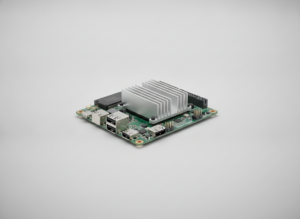
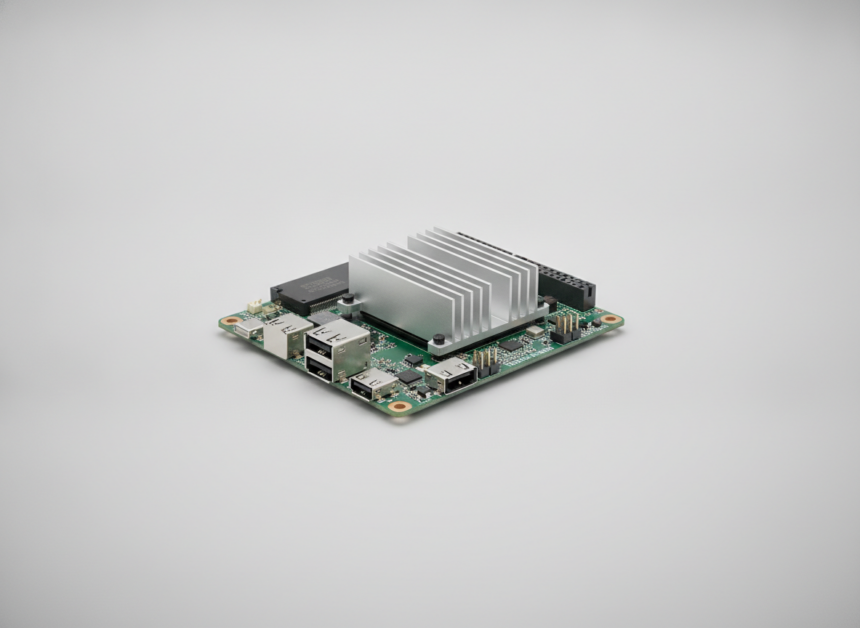
The NVIDIA Jetson Orin Nano 8GB Developer Kit is a carrier board paired with an Orin Nano 8GB module, combining a 1,024-core Ampere GPU and 32 Tensor Cores with a 6-core Arm Cortex-A78AE CPU. It ships as a complete development platform for robotics and edge inference, now priced at $399 following the July 2026 revision.
| Specification | Value |
|---|---|
| AI performance (INT8) | 67 TOPS |
| GPU | 1,024-core NVIDIA Ampere |
| Tensor Cores | 32 |
| CPU | 6-core Arm Cortex-A78AE at 1.7 GHz |
| Memory | 8GB shared CPU/GPU |
| Memory bandwidth | 102 GB/s |
| Power modes | Standard and Super (higher envelope) |
| Launch MSRP (Dec 2024) | $249 |
| Current MSRP (Nov 2026) | $399 |
Figures above follow NVIDIA’s Jetson Orin product documentation, the manufacturer’s primary specification source for the module.
The TOPS number is not why this board matters. Because the module runs the same CUDA, cuDNN and TensorRT stack as NVIDIA’s desktop GPUs, a model trained on an RTX card — the architecture we examined in our RTX 5080 review — deploys to the Jetson without a toolchain rewrite. That software continuity, rather than raw throughput, is the reason the board held its position against cheaper Arm single-board computers that force developers into vendor-specific SDKs and conversion steps.
iPhone 17 Camera AI Features: Smarter Image Processing
The carrier board is what separates it from a mini PC. You get M.2 slots for NVMe storage and Wi-Fi, a 40-pin GPIO header, dual MIPI CSI camera connectors, DisplayPort, Gigabit Ethernet and USB-C power delivery. Robotics builders choose this kit specifically because sensors, I2C devices and motor controllers attach directly to the header while the GPU runs inference on the same silicon — no bridge board, no second computer, no serial bottleneck between perception and actuation.
The December 2024 Super Update: A 67% Performance Jump With No New Silicon
The Super is the same 8GB Orin Nano module running a new higher power mode, not a different chip. Because the uplift arrived as software, NVIDIA shipped it through a JetPack update and simultaneously cut the developer kit price from $499 to $249. The measurable changes: 40 TOPS to 67 TOPS INT8, 68 GB/s to 102 GB/s memory bandwidth, and a CPU clock increase to 1.7 GHz.
| Dimension | Orin Nano 8GB (2023) | Orin Nano 8GB Super (Dec 2024) |
|---|---|---|
| INT8 AI performance | 40 TOPS | 67 TOPS |
| Memory bandwidth | 68 GB/s | 102 GB/s |
| CPU clock | Lower than 1.7 GHz | 1.7 GHz |
| Developer kit MSRP at launch | $499 | $249 |
A 50% price cut paired with a 67% compute increase collapsed the cost per TOPS, resulting in the board becoming the default hobbyist and research platform for local generative AI through 2025. The consequence extended beyond new buyers: existing Orin Nano owners received the uplift free via JetPack, which blurred the line between generations and made 2025-era used listings unusually attractive, because a secondhand “original” module performs identically to a retail Super once flashed. That accessibility matters academically too — NSF-funded research and education programs routinely build teaching labs around low-cost GPU developer kits, and a $249 entry point put CUDA-capable hardware inside course budgets that $499 excluded.
There is a trade-off NVIDIA did not advertise. Because the gain comes from a higher power envelope rather than new silicon, sustained 67 TOPS operation raises thermal output and board power draw, which means battery-powered builds either throttle under load or need a larger pack. That specific weakness is exactly what the Orin Nano 2 was engineered to address.
Why $249 Became $399 in July 2026
The MSRP of the NVIDIA Jetson Orin Nano 8GB Developer Kit rose from $249 to $399 in July 2026 — a 60% increase applied quietly across the Jetson lineup rather than announced as a product repositioning.
- 2023 — Orin Nano 8GB Developer Kit launches at $499 MSRP with 40 TOPS
- December 2024 — Super software update lifts the same module to 67 TOPS and NVIDIA cuts the kit to $249
- July 2026 — MSRP rises 60% to $399 across the Jetson lineup as memory module costs surge
- August 25, 2026 — Jetson Orin Nano 2 announced at 78 TOPS with 40% lower power draw
- First half of 2027 — expected availability window for Orin Nano 2 modules and developer kits
Industry analysts attributed the increase to severe memory supply constraints and surging module costs across HBM and GDDR7 through the first half of 2026, driven by data-center AI demand absorbing fab and advanced packaging capacity. Compute-cost and hardware-demand tracking published by the Stanford Institute for Human-Centered Artificial Intelligence documents how concentrated accelerator demand reshapes hardware economics, and the effect at the low end was direct: a board whose bill of materials is dominated by LPDDR5 could no longer hold a loss-leader price.
That $150 gap changes the competitive picture entirely. At $249 the kit had no genuine competitor — nothing else offered native CUDA and TensorRT at that price. At $399 it competes against entry-level mini PCs carrying 16GB of unified memory and comparable bandwidth, which means the deciding factor shifts from price-performance to whether the buyer actually needs GPIO, CSI camera lanes and CUDA on a single board.
$249 units still exist, but only in three places: remaining retail and distributor old stock, education and maker channels that bought ahead of the revision, and used listings from 2025 buyers. Two cautions apply. Used kits ship without the original power supply far more often than listings admit, and a 19V/45W-class supply plus an NVMe drive add real cost — enough to close much of the gap to a new unit if you are not careful.
Jetson Orin Nano 2: What You Give Up by Buying Now
Wait only if your project is battery-powered and does not ship before mid-2027. Because the Jetson Orin Nano 2 announced on August 25, 2026 does not reach buyers until the first half of 2027, the Super remains the only shipping board in this performance class for roughly another two quarters.
| Dimension | Orin Nano 8GB Super | Jetson Orin Nano 2 |
|---|---|---|
| INT8 AI performance | 67 TOPS | 78 TOPS |
| Power draw at matched performance | Baseline | 40% lower |
| CPU core count | 6-core Arm | 8-core Arm |
| Availability status (Nov 2026) | Shipping | Announced; H1 2027 expected |
| JetPack support track | JetPack 6 (sustaining) | JetPack 7 |
Read the headline numbers carefully. 78 TOPS versus 67 TOPS is a modest 16% compute gain and will not transform what the board can run. The meaningful change is the 40% power reduction at matched performance combined with an 8-core Arm CPU, which directly extends runtime for autonomous mobile robots and delivery drones. This is an efficiency generation, not a performance generation. Efficiency research from the MIT Energy Initiative explains the mechanism plainly: on battery-constrained platforms, every watt removed from the compute budget converts into flight time or mission duration, because the energy stored on board is fixed. That dynamic is the inverse of desktop GPUs, where a part like the RTX 5080 power consumption profile runs into the hundreds of watts and nobody counts milliamp-hours.
The cost of waiting is concrete. First-run Jetson modules have historically launched above the outgoing generation’s price and arrived with immature JetPack support, which means early adopters absorb both a premium and a debugging burden. Given the 2026 memory cost environment that produced the July hike, an Orin Nano 2 kit priced at or above $399 is the reasonable expectation. The result is a long window in which a $249 Super is the cheapest available path to CUDA at the edge.
Real Workloads: Local LLMs, Vision Models and Robotics
The board runs quantized 8-billion-parameter models such as LLaMA 3.1 8B at roughly 20–30 tokens per second, real-time YOLO-class object detection across multiple camera streams, and full ROS 2 navigation stacks. The reason token generation lands in that range is bandwidth, not compute: 102 GB/s is the binding constraint on how fast weights move for each generated token, which is why the Super’s bandwidth jump from 68 GB/s mattered more to LLM users than the TOPS headline did.
- Quantized 8B-parameter LLMs at roughly 20–30 tokens per second for offline assistants and RAG prototypes
- Real-time object detection and segmentation on one to four CSI or USB camera streams
- ROS 2 robotics stacks with simultaneous perception, localization and planning nodes
- Speech-to-text and small diffusion image models at interactive, not production, latency
- Stops short of: 13B-plus language models, multi-stream 4K video analytics, and any training workload beyond light fine-tuning
The 8GB figure is the real ceiling, and it is stricter than it looks because memory is shared between CPU and GPU. A 4-bit 8B model plus the operating system, camera pipelines and middleware consumes most of the pool, therefore 13B-class models and larger vision-language models either swap to NVMe at unusable latency or fail to load outright. Quantization research distributed through arXiv documents how 4-bit and 8-bit weight compression brings 8B-parameter models inside an 8GB footprint while shifting the bottleneck onto memory bandwidth — which is exactly the behaviour owners observe. This single limitation is what pushes serious builders toward the 16GB Orin NX, and it is worth planning around before you commit to a model family. Our broader AI coverage tracks how these model families evolve.
Where the board genuinely outperforms its price class is throughput per watt. Because TensorRT quantization and NVIDIA’s model optimization tooling target this silicon directly, inference efficiency comfortably exceeds generic Arm SBCs running CPU or vendor-NPU paths. One caveat belongs with every number above: published throughput figures come from vendor documentation or community benchmarks under specific quantization and cooling settings. The National Institute of Standards and Technology has emphasized standardized evaluation precisely because vendor-reported AI performance claims are not directly comparable across platforms, so treat these figures as ceilings rather than promises.
The Software Tax: JetPack, TensorRT and Developer Friction
The hardware is the easy part. Developers on forums including Reddit have consistently reported through 2025 and 2026 that flashing JetPack, resolving Python package dependencies against NVIDIA’s pinned CUDA builds, and coaxing TensorRT conversions into producing working engines consume more hours than the modelling work itself. Several described the dependency experience in distinctly unflattering terms.
- Initial flashing via SDK Manager, which requires a separate x86 Ubuntu host for some paths
- Python dependency conflicts against NVIDIA’s pinned CUDA and cuDNN builds
- TensorRT engine conversion failures on unsupported layers or opsets
- NVMe boot setup, because the microSD path throttles model load times
- Thermal management under the Super power mode, which requires the active cooler to sustain 67 TOPS
The friction has a structural cause. Jetson runs a vendor-patched Linux with NVIDIA-specific CUDA, cuDNN and TensorRT builds, therefore standard PyPI wheels compiled for x86 or generic Arm frequently refuse to install or silently link against the wrong runtime, forcing source builds or a retreat to NVIDIA’s container images. The effect is a steep first week for anyone arriving from desktop Linux. Peer-reviewed work on embedded deep-learning deployment published in the European Journal of Engineering and Computer Sciences reaches a similar conclusion: toolchain and dependency management, not model accuracy, dominates engineering effort on edge platforms.
TikTok’s New Edit Feature: Delete and Re-Edit Videos
The 2026 support picture matters for anyone starting a long-lived project. JetPack 6 has moved into sustaining mode for the Orin series, while JetPack 7 — built on Ubuntu 24.04 LTS with kernel 6.8 — targets Jetson Thor and the 2026 generation. Which means Orin Nano owners should expect maintenance and security updates rather than new feature tiers, and should verify framework compatibility against JetPack 6 before committing. Starting from NVIDIA’s published container images rather than pip installs removes most of the dependency breakage, because the runtime versions are already matched.
What $399 Buys Elsewhere: The Alternatives That Now Compete
At $399, the kit’s closest competitors are an entry Apple Mac mini for pure LLM inference, a Raspberry Pi 5 with an AI accelerator HAT for cheap vision work, and the Jetson Orin NX 16GB for anyone already hitting the memory wall. At $249, none of those three wins.
| Option | Approx. price | Memory | AI stack | GPIO / camera I/O | Best fit |
|---|---|---|---|---|---|
| Jetson Orin Nano 8GB Super | $399 MSRP ($249 old stock) | 8GB shared, 102 GB/s | CUDA, TensorRT | 40-pin GPIO, dual CSI | Robotics and edge vision |
| Jetson Orin NX 16GB | Higher than Orin Nano | 16GB shared | CUDA, TensorRT | Carrier-dependent | Larger models, VLMs |
| Apple Mac mini (base) | Entry tier | 16GB unified, 120 GB/s | Metal / Core ML | None | Desk-bound LLM inference |
| Raspberry Pi 5 + AI accelerator HAT | Below $399 | 4–16GB (no GPU share) | Vendor NPU SDK | 40-pin GPIO, CSI | Occasional, low-power vision |
The table rewards careful reading. The Mac mini’s 16GB of unified memory and higher bandwidth produce better token rates on larger models, but it has no GPIO, no CSI camera lanes and no CUDA, which means it cannot drive a robot or read a sensor without additional hardware. The Raspberry Pi 5 route costs less and draws less power, but it fragments the toolchain across vendor SDKs and conversion tools, resulting in more integration work for less GPU inference performance.
So the decision rule is simple and it is not about TOPS. If the project physically moves or reads sensors, choose Jetson. If the project only answers queries on a desk, the money goes further elsewhere. That rule — not the specification sheet — is what the $399 price change actually tests.
The Verdict by Buyer Type and Price Paid
The NVIDIA Jetson Orin Nano 8GB Developer Kit is a clear buy at $249 and a conditional pass at $399, because that $150 difference is exactly what separates “no competitor in its class” from “several credible competitors.” The hardware did not change in July 2026; only its position against alternatives did.
- Buy at $249 — students, hobbyists and anyone learning the CUDA and TensorRT toolchain on real hardware
- Buy at $249 or $399 — robotics builders who need GPIO, I2C and CSI camera lanes alongside GPU inference
- Consider alternatives at $399 — desk-bound local LLM experimenters, who get more memory bandwidth per dollar from a mini PC
- Step up to Orin NX 16GB — teams already hitting the 8GB shared-memory ceiling with vision-language models
- Wait for Orin Nano 2 — battery-powered drone and AMR projects shipping after the first half of 2027, where the 40% power reduction changes runtime
Each case turns on one constraint. Students buy for toolchain experience, which the $249 unit delivers identically to a $399 one. Robotics builders pay either price because the GPIO and CSI lanes have no substitute at this performance level. Desk-bound LLM users lose at $399 because their only constraint is memory bandwidth, where mini PCs now compete directly. Battery-powered teams should wait because power draw, not compute, governs whether their product works at all.
Before paying — especially on the used market — verify three things. Confirm the listing is the 8GB Super SKU and not a 4GB module, which appears at similar prices and cannot run 8B-parameter models at usable speed. Confirm a compatible power supply and the active cooler are included, because the Super power mode depends on active cooling to sustain 67 TOPS. And expect to reflash: sellers frequently leave an obsolete JetPack image behind, which complicates the first boot more than a clean flash would.
Frequently Asked Questions
Is the Jetson Orin Nano Super still $249 in 2026?
No — NVIDIA raised the MSRP to $399 in July 2026, a 60% increase. The hike was driven by memory module cost inflation and applied across the Jetson lineup. $249 units still surface in remaining retail old stock, education channels and used listings. Used kits frequently ship without the power supply, which adds real cost to the headline price.
What is the difference between the Jetson Orin Nano and the Orin Nano Super?
The Super is the same 8GB module running a new high-power software mode, not new silicon. The December 2024 update raised INT8 performance from 40 TOPS to 67 TOPS, memory bandwidth from 68 GB/s to 102 GB/s, and the CPU clock to 1.7 GHz. Existing Orin Nano owners received the uplift free through a JetPack update.
Can the Jetson Orin Nano 8GB run large language models locally?
Yes — up to quantized 8-billion-parameter models at roughly 20–30 tokens per second. Generation speed is limited by the 102 GB/s shared memory bandwidth rather than by TOPS. Because 8GB is shared between CPU and GPU, 13B-class models do not fit without aggressive quantization or NVMe offload, and the latter pushes latency out of interactive range.
Should I wait for the Jetson Orin Nano 2 instead?
Only if your project is battery-powered and ships after mid-2027. NVIDIA announced it on August 25, 2026 with 78 TOPS and 40% lower power at matched performance, but availability is expected in the first half of 2027. Until then the Super is the only shipping option in its class, and first-run pricing in the 2026 memory market will likely sit at or above $399.
Is the Jetson Orin Nano better than a Raspberry Pi 5 for AI projects?
Yes for GPU inference, because native CUDA and TensorRT support means desktop-trained models deploy without a toolchain rewrite. The trade-off is real: the Pi 5 costs substantially less, draws less power and has a broader accessory ecosystem. It remains the better choice for projects where inference is occasional rather than continuous.
How hard is the Jetson Orin Nano to set up for a first-time user?
Expect several hours to a full weekend. The friction concentrates in SDK Manager flashing, Python dependency conflicts against NVIDIA’s pinned CUDA builds, TensorRT engine conversion failures and NVMe boot migration. Starting from NVIDIA’s container images rather than pip installs removes most dependency breakage, because runtime versions are already matched to the JetPack release.
Does the 4GB Orin Nano get the Super performance boost?
No — the Super power mode and the $249 developer kit applied to the 8GB module. Buyers scanning used listings should confirm the SKU explicitly, because 4GB modules appear at similar asking prices and cannot run 8B-parameter language models at usable speed.
Will the Orin Nano keep getting software updates after JetPack 7?
Yes, but as maintenance rather than new feature tiers. JetPack 6 has entered sustaining mode for the Orin series, while JetPack 7 with Ubuntu 24.04 LTS and kernel 6.8 targets Jetson Thor and the 2026 generation. Verify framework compatibility against JetPack 6 before starting a long-lived project.
Limitations, Risks and What This Analysis Cannot Tell You
TOPS and bandwidth figures in this article are vendor specifications measured under specific quantization and power settings, therefore real throughput depends on your model, batch size, cooling solution and JetPack version. Token-rate figures circulating in developer communities are not standardized benchmarks and were not produced under controlled conditions, which means a build that differs in any of those variables will differ in results.
Pricing carries its own uncertainty. The $399 figure reflects the July 2026 MSRP revision, and memory market conditions could move retail pricing in either direction before the Orin Nano 2 ships. Prices and availability described here were verified on November 4, 2026.
- 8GB shared CPU/GPU memory caps model size well below 13B parameters
- Sustained 67 TOPS requires the active cooler and a higher power envelope, which shortens battery runtime
- JetPack 6 is in sustaining mode, so new framework versions arrive late or need source builds
- No official NVIDIA price rollback has been announced, so $249 depends entirely on old stock and used supply
- Developer kits are evaluation hardware, not production modules, which matters for commercial deployment and certification
Everything You Need to Know About the Nintendo Switch 2
The counterargument deserves a fair hearing: a reasonable buyer looks at an announced successor plus a 60% price increase and concludes the entire Orin Nano line is now a poor purchase, because that combination usually signals end-of-cycle. The response is the availability gap, not a dismissal — nothing in this class ships until the first half of 2027. On the certification point, accredited test labs such as Micom Labs handle the FCC and CE testing that commercial products require, and developer kits are not designed to pass it, so any product intent means budgeting for a production module and compliance work.
Conclusion
The NVIDIA Jetson Orin Nano 8GB Developer Kit is a clear buy at $249 and a narrow buy at $399 — justified at the higher price only when CUDA inference and GPIO on a single board is a hard project requirement rather than a convenience.
The causal arc is tidy. The December 2024 software uplift created extraordinary value by pairing a 67% compute increase with a 50% price cut; the July 2026 memory-driven price hike consumed most of that value by raising the kit 60% to $399; and the Orin Nano 2’s first-half-2027 availability window is the only reason the Super still holds the category through the remainder of 2026.
If you are buying, do three things first: verify the SKU is the 8GB Super and that a power supply and active cooler are included, budget for an NVMe drive because the microSD boot path throttles model loading, and plan your framework versions around JetPack 6 rather than JetPack 7. Read more of our coverage on tech trends and innovations to follow how the edge AI hardware cycle develops into 2027.
References
- NVIDIA Jetson Orin product documentation — manufacturer primary specifications
- National Institute of Standards and Technology — Artificial Intelligence — standardized AI evaluation
- arXiv — quantization and on-device LLM inference research — academic preprint archive
- Stanford Institute for Human-Centered Artificial Intelligence — AI Index compute cost and hardware demand tracking
- MIT Energy Initiative — energy efficiency and battery research
- National Science Foundation — research and education program funding
- European Journal of Engineering and Computer Sciences — peer-reviewed embedded deep-learning deployment research
- Micom Labs — independent compliance and certification testing