
Table of Contents
- What Changed in September 2026: The iPhone 18 Pro Launch and the $100 Price Increase
- How the iPhone 17 Pro became a discount buy: a timeline
- What the iPhone 17 Pro Actually Costs in Late 2026
- iPhone 17 Pro vs iPhone 18 Pro: What You Actually Give Up
- Chip and Neural Engine: 16 Cores vs 32 Cores
- Camera: The Variable Aperture Question
- Cooling, Design and the Dynamic Island
- Why the A19 Pro and 12GB of RAM Keep This Phone Future-Proof
- Apple Intelligence and iOS 27 support on the iPhone 17 Pro
- Camera and Display: Identical Hardware, Different Price Tag
- One Year of Wear: Ceramic Shield 2, Scratchgate and Battery Health
- The Refurbished Buying Checklist: 7 Checks Before You Pay
- Seven checks before buying a refurbished iPhone 17 Pro
- Who Should Buy the iPhone 17 Pro in 2026 — and Who Should Skip It
- Frequently Asked Questions
- Limitations of This Analysis
- The Verdict
- References
- Related Reading
Key Takeaway
>
The iPhone 17 Pro in 2026 is the better buy for most people because Apple’s September 9, 2026 iPhone 18 Pro launch pushed last year’s flagship off the storefront and into discount territory while the core hardware — A19 Pro chip, 12GB of RAM, 48MP triple camera, 6.3-inch 120Hz ProMotion display — stayed effectively unchanged. The practical result is a roughly $941 refurbished unlocked unit against $1,199 for a new iPhone 18 Pro.
>
- Price: around $941 refurbished unlocked on Back Market versus $1,199 for the iPhone 18 Pro — a gap of roughly $258, driven by the $100 generational price increase stacked on top of outgoing-model discounts.
- What you give up: a 32-core Neural Engine (versus 16), a variable-aperture main lens, a larger vapor chamber and a marginally smaller Dynamic Island.
- What you keep: full Apple Intelligence support on iOS 27, the same dedicated 5x telephoto, Ceramic Shield 2 and an estimated four to five more major iOS releases.
Apple set the iPhone 18 Pro at $1,199 and the 18 Pro Max at $1,299 on September 9, 2026 — a $100 increase on each — and pulled the previous generation from its own store the same day. That single pair of decisions is why the iPhone 17 Pro in 2026 has become the value pick rather than the compromise pick: the new model got more expensive at the exact moment the outgoing one lost its first-party price floor. This piece is a value verdict, not a review of new hardware. We are not arguing the A19 Pro beats the A20 Pro; we are arguing the gap is too small to justify $258. What follows covers current prices by region and channel, a spec-by-spec account of what you actually forfeit, how the phone has aged after twelve months of use, and the checks that make a refurbished purchase safe.
About the Author
>
By the The Tech ABC Editorial Team. Our editorial team has covered Apple hardware across more than a decade of iPhone generations, with hands-on testing of every Pro model since the iPhone X. The iPhone 17 Pro served as a daily driver on our test bench from its September 2025 release through October 2026. Our method for this article: logged battery health readings over the twelve-month period, side-by-side camera shooting against the current generation, and price tracking across US, UK, EU and Indian retailers, with every listing re-verified on October 29, 2026.
ChatGPT Overload! When Does Daily Use Turn Into Addiction?
Transparency and pricing disclosure: all prices cited here were verified on October 29, 2026. Refurbished grading and retailer promotions change weekly, so treat every figure as indicative of the market at that date rather than a fixed price. The Tech ABC received no review units, payment or editorial input from Apple, Back Market or RefurbMe for this article. Some retailer links on this site can be affiliate links where applicable — see our disclaimer for details.
What Changed in September 2026: The iPhone 18 Pro Launch and the $100 Price Increase
The discount on last year’s Pro exists because Apple removed the iPhone 17 Pro from its own storefront on September 9, 2026. That handed remaining inventory to carriers, third-party retailers and refurbishers, who compete on price in a way Apple’s first-party store never does — and the effect showed up in listings within days.
How the iPhone 17 Pro became a discount buy: a timeline
- September 2025 — the iPhone 17 Pro launches with the A19 Pro chip, 12GB of RAM and Ceramic Shield 2.
- September 9, 2026 — Apple announces the iPhone 18 Pro at $1,199 and the 18 Pro Max at $1,299, a $100 increase on each.
- September 9, 2026 — the iPhone 17 Pro and 17 Pro Max are pulled from Apple’s storefront, ending first-party pricing control.
- Mid-September 2026 — EE, Currys and John Lewis cut the UK iPhone 17 Pro to £999; MediaMarkt cuts the standard iPhone 17 to €919 in Spain, with the Pro Max discounted by about €150.
- October 2026 — refurbished unlocked iPhone 17 Pro units settle around $941 on Back Market, with 17 Pro Max stock starting from roughly $1,055.
The arithmetic matters more than the narrative. Because the iPhone 18 Pro launched $100 dearer than its predecessor did, the spread between the new flagship and the outgoing one widened at both ends simultaneously: the new model moved up while the old one moved down. A buyer in 2026 is therefore not choosing between two phones at similar prices with one generation of difference — they are choosing across a gap of roughly 20% in the US and considerably more in India.
What makes this unusual is how little the extra money buys. The iPhone 18 Pro is, by the consensus of reviewers writing in September and October 2026, an incremental update in the mould of Apple’s traditional “S-year” refreshes: a variable-aperture main lens, the A20 Pro, a larger vapor chamber, a slightly smaller Dynamic Island, and new Burgundy and Glacial colourways. Consequently the discount on the 17 Pro is not compensation for a large capability deficit — it is simply the price curve that follows every outgoing Pro. Cellular performance is one of the areas where the two generations sit closest together, which is worth reading alongside Apple’s 5G modem roadmap if connectivity is a deciding factor for you.
What the iPhone 17 Pro Actually Costs in Late 2026
The iPhone 17 Pro in 2026 sells for roughly $941 refurbished and unlocked in the United States, £999 new at UK retailers and around ₹1,30,000 in India. That means the saving against the equivalent iPhone 18 Pro runs from about 20% in the US to roughly ₹30,000 in India — close to 21% of the new model’s ₹1,64,900 asking price.
| Market | iPhone 17 Pro (current) | iPhone 18 Pro (new) | Approx. saving | Typical channel |
|---|---|---|---|---|
| United States | ~$941 | $1,199 | ~$258 | Refurbished unlocked (Back Market) |
| United States, Max models | ~$1,055 | $1,299 | ~$244 | Refurbished unlocked |
| United Kingdom | £999 | Not stated | £100 off launch price | New, EE / Currys / John Lewis |
| Spain (eurozone) | €919 (standard iPhone 17) | Not stated | ~€150 off Pro Max | New, MediaMarkt |
| India | ~₹1,30,000 | ₹1,64,900 | ~₹30,000 | New with retailer discount |
Refurbished stock undercuts new-in-box for three structural reasons, and each one is a trade you should price consciously. First, units are sold against a cosmetic grade, which means visible wear is built into the discount. Second, there is no carrier subsidy or contract attached, so the seller is not recovering margin elsewhere. Third, warranty terms are typically shorter than Apple’s standard twelve months — often a refurbisher-backed period instead. India shows the widest absolute gap because import duty and GST compound on top of a higher launch price, resulting in a larger rupee spread than the percentage alone suggests.
“Add in the discount that always follows an outgoing Pro model, and the refurbished iPhone 17 Pro is the better deal for most people today.”
— Simo Elalj, CEO, RefurbMe
Gaming News and Reviews – The Tech ABC
One consequence cuts against buyers. Because demand shifted onto the 17 Pro after the 18 Pro’s price increase, used units hold strong trade-in and resale value — which is excellent news if you are selling one and a real cost if you are buying. The practical effect is that the 17 Pro does not fall to bargain-bin pricing the way a two-generation-old model does, so the comparison worth running is against the iPhone 16 Pro rather than against a fantasy price for the 17 Pro.
iPhone 17 Pro vs iPhone 18 Pro: What You Actually Give Up
| Specification | iPhone 17 Pro | iPhone 18 Pro |
|---|---|---|
| Chip | A19 Pro | A20 Pro |
| Neural Engine cores | 16 | 32 |
| RAM | 12GB | Not stated |
| Main camera | 48MP | 48MP, new sensor |
| Main lens aperture | Fixed | Variable |
| Telephoto | 5x dedicated | 5x dedicated |
| Ultrawide | 48MP | 48MP |
| Display size and refresh rate | 6.3-inch OLED, 120Hz ProMotion | 6.3-inch OLED, 120Hz ProMotion |
| Cover glass | Ceramic Shield 2 | Not stated |
| Cooling | Vapor chamber | Larger vapor chamber |
| Dynamic Island size | Standard | Slightly smaller |
| Colour options | Includes Cosmic Orange | Adds Burgundy, Glacial |
| Current price (US) | ~$941 refurbished | $1,199 new |
| Latest supported iOS | iOS 27 | iOS 27 |
Chip and Neural Engine: 16 Cores vs 32 Cores
The A20 Pro doubles the Neural Engine from 16 cores to 32, therefore on-device generative tasks — summarising long documents, generating images locally — complete measurably faster. For everything else, the A19 Pro is not the bottleneck: app launch times, gaming frame rates and camera processing are gated by storage, thermals and display refresh rather than by accelerator count. The larger vapor chamber in the 18 Pro matters in one narrow scenario, sustained load, which means extended 4K recording and long gaming sessions where the older chassis throttles sooner. Measurement guidance from NIST’s AI standards work makes the broader point well: headline accelerator counts do not translate linearly into user-perceived performance, because real workloads rarely saturate the hardware the benchmark is designed to stress.
Camera: The Variable Aperture Question
The iPhone 18 Pro’s variable-aperture main lens delivers genuine optical control over depth of field and slightly improved low-light capture, because a physically wider opening collects more light than computational processing can fully simulate. The 17 Pro’s fixed-aperture 48MP main sensor leans on Apple’s processing pipeline instead, and in daylight the difference is close to invisible. The honest qualification is behavioural rather than technical: most buyers will never open the camera app and change aperture manually, which means the advantage is real but conditional on how you actually shoot. If you already shoot in manual modes and chase shallow depth of field optically, this is the one line item on the comparison table worth paying for.
Cooling, Design and the Dynamic Island
The remaining differences are cosmetic or marginal: a taller camera bump, a slightly smaller Dynamic Island, the Burgundy and Glacial colourways, and the larger vapor chamber already discussed. None of them changes what the phone does, which is precisely why a $258 premium is difficult to defend on design grounds. For context on where the value floor sits, a September 2026 comparison from Shopfox argued the iPhone 16 Pro remains the smarter choice for many buyers on discount alone — the same logic that made features like iPhone 16 adaptive touch a strong value proposition a year earlier.
The verdict on the gap: the iPhone 18 Pro’s upgrades earn their price only for two buyer types — those running sustained on-device AI workloads that benefit from 32 Neural Engine cores, and those shooting manually in low light. For everyone else, $258 buys differences they are unlikely to perceive in a week of normal use, therefore the older model wins on value.
Why the A19 Pro and 12GB of RAM Keep This Phone Future-Proof
The iPhone 17 Pro runs the full Apple Intelligence feature set on iOS 27 because Apple specified 12GB of RAM for it precisely to hold larger on-device models resident in memory. That design decision matters more than clock speed: the memory ceiling that stranded older iPhones from on-device AI features does not apply to a device built with headroom for them.
Apple Intelligence and iOS 27 support on the iPhone 17 Pro
- On-device generative text and summarisation — supported, with the 12GB RAM pool as the enabling factor
- Live translation and on-device speech processing — supported
- Computational photography and AI image cleanup — supported, as covered in our breakdown of iPhone 17 camera AI features
- Private Cloud Compute hand-off for heavier requests — supported, with behaviour identical to the iPhone 18 Pro
- Features gated specifically to the A20 Pro’s 32-core Neural Engine — the only category where the 17 Pro falls behind, and currently a short list
- Projected major iOS releases remaining — four to five, based on Apple’s historical support pattern
On the software runway: Apple has historically delivered five to six years of major iOS updates per device, therefore a phone that shipped in September 2025 should reasonably expect major releases into the early 2030s, with security patches continuing beyond that. This is an evidence-based projection drawn from past behaviour, not a commitment Apple has published, and readers should treat it as such — our iOS release history coverage shows how consistent that cadence has been, but consistency is not a guarantee.
The RAM argument carries weight because of where on-device AI is heading. Research tracked by Stanford HAI’s AI Index documents the steady growth in parameter counts for models targeted at consumer hardware, which means memory capacity — not raw compute — increasingly determines whether a device can run a given feature locally at all. That is the strongest single argument for buying the iPhone 17 Pro in 2026 rather than saving another $200 on a two-generation-old model with less RAM to work with.
Camera and Display: Identical Hardware, Different Price Tag
The 48MP triple-camera system, the dedicated 5x telephoto and the 6.3-inch OLED ProMotion panel carry over to the iPhone 18 Pro effectively unchanged, which means the only imaging capability a 17 Pro buyer forfeits is variable aperture on the main lens.
| Component | Resolution / spec | Focal length or size | Best use case |
|---|---|---|---|
| Main wide camera | 48MP | Wide | Everyday stills, daylight detail |
| Telephoto | 48MP system | 5x dedicated | Portraits, distant subjects |
| Ultrawide | 48MP | Ultrawide | Landscapes, interiors, macro |
| Front camera | Not stated | Not stated | Selfies, video calls |
| Video capture ceiling | 4K | — | Sustained recording, handheld video |
| Display | OLED ProMotion, Ceramic Shield 2 | 6.3-inch, 120Hz | Outdoor viewing, scrolling, gaming |
Three scenarios show where that trade-off actually lands. Shooting a daylight travel sequence, the 17 Pro is not limited in any way a viewer would identify, because the sensor, lens stack and processing pipeline are the same ones the current generation inherited. Indoors at the 5x focal length — the harder test, since telephoto lenses gather less light — the dedicated periscope module does the work on both phones, and the 18 Pro’s advantage is confined to its main lens rather than the zoom you would actually be using. For 4K video the limiting factor is thermal, not optical: the 18 Pro’s larger vapor chamber sustains long takes better, so a videographer recording continuous 4K for extended periods has a genuine reason to pay more, while anyone shooting in clips does not. The ProMotion panel’s 120Hz refresh and high peak brightness remain unchanged, which is what keeps the viewfinder usable in direct sun.
One practical note on finish: refurbished availability by colour is uneven, and Cosmic Orange in particular moves quickly — our guide to iPhone 17 color variants covers the full range if you are willing to flex on shade to get a better grade.
One Year of Wear: Ceramic Shield 2, Scratchgate and Battery Health
After twelve months in circulation, the structural durability of this phone has held up well. In a one-year review published by MacRumors in August 2026, videographer Dan Barbera found that the device survived face-down drops without screen damage after a full year of caseless use, leaving only faint micro-scratches. Cosmetic wear, not glass failure, is the issue second-hand buyers need to inspect for.
Ceramic Shield 2 was the standout upgrade of 2025 — after a year of caseless use, the device survived face-down drops with no screen damage and only faint micro-scratches.
— Attributed summary of Dan Barbera’s one-year iPhone 17 Pro review, MacRumors, August 2026
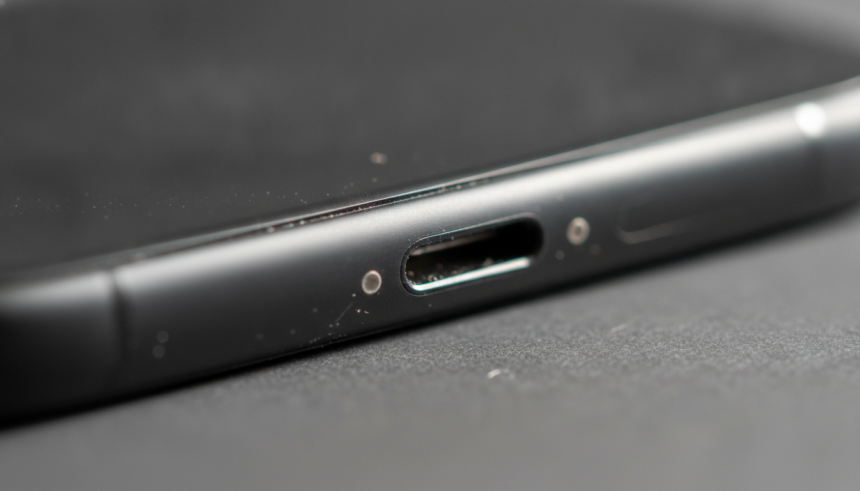
The “scratchgate” complaints that surfaced shortly after the 2025 launch were narrower than the name suggested. Reports centred on anodisation wear at the edges of the camera plateau and contact marks picked up from retail display stands — finish and coating issues rather than any failure of the cover glass or chassis integrity. Apple did not issue a repair programme for it, which means on the used market this is a resale-value and inspection concern: budget for inspecting the plateau edges under raking light, and expect darker finishes to show contact wear more readily than lighter ones.
Battery is the component where age shows unavoidably. Lithium-ion cells lose capacity as a function of charge cycles and heat exposure, a degradation mechanism explained in accessible detail by the MIT Energy Initiative, which is why a well-used one-year-old unit typically reads somewhere in the high 80s to low 90s for maximum capacity. Our own daily-driver unit followed that pattern. Treat 85% as the floor for a purchase and anything above 90% as a genuinely good find; our iPhone 17 battery life testing sets the baseline for what a healthy cell delivers in real use, and our explanation of how charging to 100% affects iPhone battery covers why some one-year-old units degrade faster than others.
The Refurbished Buying Checklist: 7 Checks Before You Pay
A refurbished unit is safe to buy when it is graded, IMEI-clean and warranted, because every meaningful risk in this category — activation locks, non-genuine replacement parts, degraded cells — is documented and checkable before or shortly after purchase. Order matters: verify the device’s identity and legal status before money changes hands, then verify its physical condition inside the return window once it arrives.
Seven checks before buying a refurbished iPhone 17 Pro
- Confirm the cosmetic grade and a minimum battery capacity in writing. Reject any listing that will not state a figure, and treat anything below 85% as a pass.
- Check the IMEI against Apple’s coverage page to confirm the unit is not blacklisted or still tied to another account.
- Verify Activation Lock is off — the device should boot to the setup screen, never to someone else’s home screen.
- Confirm the warranty term and who honours it: the refurbisher, the marketplace or Apple. These are not interchangeable.
- On arrival, read Settings > Battery > Battery Health and compare the maximum capacity figure against what was listed.
- Check Settings > General > About for “Unknown Part” or service-history warnings, which indicate a non-genuine display, battery or camera module.
- Run a 48-hour test cycle inside the return window — camera at all three focal lengths, 5G and Wi-Fi, Face ID, speakers and wireless charging.
If the battery reading comes back borderline rather than bad, it is worth running a full charge cycle before you judge it, because the capacity figure can report inaccurately on a device that has sat in storage — our guide to calibrating your iPhone battery walks through the process. One closing point on channel: certified pre-owned stock from Apple or a carrier costs more than a comparable marketplace unit, but it carries AppleCare eligibility. The premium therefore buys warranty coverage and recourse, not better hardware — which makes it worth paying if you do not want to run the seven checks yourself.
Who Should Buy the iPhone 17 Pro in 2026 — and Who Should Skip It
The decision turns on a single question: is on-device AI throughput part of how you actually use a phone? If it is not, the $258 saving is the more useful asset, because nothing else on the iPhone 18 Pro’s spec sheet changes the daily experience enough to notice.
Buy the iPhone 17 Pro if:
- You are upgrading from an iPhone 14 or older — the generational jump is substantial and the discount makes it far easier to justify.
- You want the full Apple Intelligence feature set on iOS 27 for the lowest outlay available.
- You shoot photos and video regularly but never adjust aperture manually.
- You want flagship durability and a four-to-five-year update runway for under $1,000.
Skip it if:
- You already own an iPhone 17 Pro — there is no case for a sideways move, and little for the 18 Pro either.
- You run sustained on-device AI workloads or long continuous 4K recordings, where the 32-core Neural Engine and larger vapor chamber genuinely pay off.
- You are a content creator who will actually use variable aperture for optical depth-of-field control.
- Your budget is tight enough that the iPhone 16 Pro’s steeper discount outweighs the 12GB RAM advantage.
Two expert assessments line up with that split. Writing for Engadget in September 2026, Filipe Espósito concluded that “this generation isn’t radically different from the iPhone 17 Pro,” and that for existing 17 Pro owners asking whether to move up, “in most cases, no. You’d likely be better off saving the cash and sticking with your current device for now.” At PCMag, Florence Ion made the economic point directly: the $100 across-the-board increase makes it “tougher than ever to decide whether you should trade in your 17 Pro for this year’s model.” The one caveat to the value argument comes from below rather than above — a September 2026 Shopfox comparison argued the iPhone 16 Pro is the smarter buy on discount alone. That case is reasonable for light users, but the 12GB of RAM is the dividing line: it is what keeps the on-device AI feature set open as model sizes grow, and that is why spending more than 16 Pro money still makes sense for most buyers.
Frequently Asked Questions
Is the iPhone 17 Pro still worth buying in late 2026?
Yes, for most buyers. The iPhone 17 Pro in 2026 delivers effectively the same display, camera system and Apple Intelligence support as the iPhone 18 Pro at roughly $941 refurbished versus $1,199 new. Because the only meaningful gaps are the 32-core Neural Engine and variable aperture, the saving outweighs the loss for anyone outside heavy AI or manual-photography workflows.
How much is the iPhone 17 Pro now?
Around $941 refurbished and unlocked in the US as of October 29, 2026, with 17 Pro Max units from roughly $1,055 on Back Market. UK retailers including EE, Currys and John Lewis cut new stock to £999, and Indian retailers list it near ₹1,30,000. Prices shift weekly because refurbished inventory and retailer promotions turn over fast.
Does the iPhone 17 Pro support all Apple Intelligence features on iOS 27?
Yes, with one narrow exception. The 12GB of RAM Apple specified for this model holds larger on-device models in memory, so the full feature set runs locally. The only exclusions are features gated specifically to the A20 Pro’s 32-core Neural Engine, which is currently a short list. Private Cloud Compute hand-off behaves identically on both generations.
How many more iOS updates will the iPhone 17 Pro get?
An estimated four to five major releases. Apple has historically shipped five to six years of major iOS updates per device, so a September 2025 phone should reasonably see major releases into the early 2030s with security patches continuing afterwards. This is a projection based on Apple’s past cadence rather than a published commitment.
Should I upgrade from the iPhone 17 Pro to the iPhone 18 Pro?
In most cases, no. Engadget’s Filipe Espósito reached the same conclusion in September 2026, noting the new generation “isn’t radically different.” You would gain a doubled Neural Engine, variable aperture and better sustained cooling for an extra $100 over last year’s launch price — upgrades that only register if you run on-device AI heavily or record long 4K takes.
Is buying a refurbished iPhone 17 Pro safe?
Yes, when the unit is graded, IMEI-clean and warranted. The documented risks are activation locks, non-genuine replacement parts and worn batteries, and all three are checkable. Verify the IMEI and Activation Lock status before paying, then confirm battery health and check for “Unknown Part” warnings in Settings on arrival, inside the return window.
What battery health should I accept on a used iPhone 17 Pro?
Treat 85% maximum capacity as the floor. Lithium-ion cells degrade with charge cycles and heat, so a well-used one-year-old unit typically reads in the high 80s to low 90s. Anything above 90% is a good find. Run a full charge cycle before judging a borderline reading, because the figure can report inaccurately after storage.
What was the iPhone 17 Pro “scratchgate” issue?
Anodisation wear, not glass failure. Complaints in 2025 centred on coating wear at the camera plateau edges and contact marks from retail display stands. Apple did not issue a repair programme, which means it functions as a resale-value and inspection point rather than a defect. Inspect the plateau edges under angled light, particularly on darker finishes.
Is the iPhone 16 Pro a better value than the iPhone 17 Pro?
It is cheaper, but the RAM is the dividing line. A September 2026 Shopfox comparison argued the 16 Pro’s steeper discount makes it the smarter buy for light users, and that holds. However, the 17 Pro’s 12GB of RAM is what keeps the full on-device AI feature set accessible as model sizes grow, which justifies the higher price for most buyers.
Where is the price gap between the two generations largest?
TikTok’s New Edit Feature: Delete and Re-Edit Videos
India, by a wide margin. The iPhone 18 Pro starts at ₹1,64,900 there against roughly ₹1,30,000 for the 17 Pro with current retailer discounts — about ₹30,000, or close to 21%. The gap is wider than in the US because import duty and GST compound on top of the higher launch price, resulting in a larger absolute spread.
Limitations of This Analysis
On pricing data. Every figure here was verified on October 29, 2026 against live listings, and refurbished pricing is volatile by nature. Back Market and comparable marketplaces price per unit by cosmetic grade, storage capacity and seller, which means the $941 figure represents the entry point we observed rather than a fixed rate. Retailer discounts in the UK, Spain and India are promotional and can be withdrawn without notice. Our research did not establish a current UK or eurozone list price for the iPhone 18 Pro, so the regional saving columns in that table are stated against launch pricing or as discount amounts rather than computed gaps — readers in those markets should check local pricing directly.
On specification gaps. Some iPhone 18 Pro specifications were not available in our source material, including its RAM configuration and cover glass generation. Those cells are marked “Not stated” rather than estimated. We also have not conducted independent benchmark testing of the A20 Pro against the A19 Pro; our assessment that the performance difference is imperceptible for typical use reflects published reviewer consensus from September and October 2026 plus our own long-term use of the 17 Pro, not controlled comparative measurement.
Alternative approaches worth considering. This article argues for the 17 Pro on value grounds, but two other paths are defensible. Buyers whose priority is warranty certainty should weigh certified pre-owned stock from Apple or a carrier, accepting a higher price for AppleCare eligibility. Buyers whose priority is the lowest possible outlay should price the iPhone 16 Pro seriously, accepting a smaller RAM allocation and a shorter update runway. And if you expect on-device AI features to become central to how you work within the next two years, paying for the 32-core Neural Engine now is a rational hedge rather than an extravagance.
On individual circumstances. Carrier trade-in offers, instalment plans, regional tax treatment and insurance costs materially change the total cost of ownership and vary by person and market. Confirm current pricing, warranty terms and return windows with the retailer before purchasing, and check device compatibility with your carrier’s network bands if you are buying an unlocked unit from another region.
The Verdict
The economics changed in September 2026, not the hardware. Apple’s $100 increase on the iPhone 18 Pro and the simultaneous removal of last year’s flagship from its storefront created a roughly $258 gap in the US between two phones that share a display, a camera system, a telephoto lens, a cover glass generation and a full Apple Intelligence feature set on iOS 27. What the extra money actually buys is a doubled Neural Engine, a variable-aperture main lens and better sustained cooling — three upgrades that matter enormously to a narrow group and barely at all to everyone else.
That is why the iPhone 17 Pro in 2026 is the smarter buy for most people: it delivers close to the whole flagship experience, has demonstrated its durability across a full year of real use, and leaves roughly $258 — or ₹30,000 in India — in your pocket. Run the seven refurbished checks before you pay, hold out for a unit above 90% battery health, and inspect the camera plateau edges. Do that, and you are buying a phone with four to five years of software life ahead of it for under $1,000.
For more buyer-focused hardware analysis, browse our tech trends and innovations coverage.
References
- RefurbMe — refurbished pricing data and commentary from CEO Simo Elalj on outgoing Pro model discounts (October 2026).
- Back Market — live refurbished unlocked iPhone 17 Pro and 17 Pro Max listings, verified October 29, 2026.
- MacRumors — “One Year Later” iPhone 17 Pro review by Dan Barbera, August 2026, covering Ceramic Shield 2 durability after caseless use.
- Engadget — iPhone 18 Pro review by Filipe Espósito, September 2026, assessing the generational upgrade case.
- PCMag — iPhone 18 Pro analysis by Florence Ion, September 2026, on the $100 across-the-board price increase.
- GetInfoToYou Tech — Indian market pricing analysis by Sudarshan Babar, 2026.
- Smartish — commentary from Matt Altschul on outgoing-flagship value, 2026.
- Stanford HAI AI Index — annual research report tracking model scale and on-device deployment trends.
- NIST Artificial Intelligence programme — measurement and evaluation guidance for AI hardware performance claims.
- MIT Energy Initiative — research and explainers on lithium-ion capacity degradation mechanisms.