
Table of Contents
- Key Takeaways: The 2026 Salary-to-Spec Ratio
- The 2026 Tech Paycheck, in Numbers
- US Salary Bands: Entry, Mid, Senior and the AI Premium
- Europe Comparison: Why €60,098 Buys Less Hardware Than $130,463
- Net Pay Is the Only Number That Matters for Buying
- PC Build Cost 2026: Four Tiers and What Each One Now Demands
- The $500 Build Is Dead: Entry Now Starts at $800–$900
- The $1,500 1440p Sweet Spot
- The Enthusiast Tier: From $4,000 to $7,400+
- What Each Tier Costs in Weeks of Net Pay
- Why Components Cost What They Cost: The AI Tax Explained
- DDR5: $140 in 2025, Past $300 in 2026
- GPUs: RTX 50 Series Up 66% in Europe, 5090 Up 132%
- SSDs and the 2028–2029 Supply Warning
- Laptops Became the Refuge of 2026
- Phones Are Still the Cheapest Flagship You Own
- Cheaper Routes to the Same Games: Consoles and Handhelds
- The Verdict: How to Spend a 2026 Tech Paycheck
- Frequently Asked Questions
- Limitations of This Analysis and Where It Could Be Wrong
- Conclusion
- References
- Related Reading
Key Takeaways: The 2026 Salary-to-Spec Ratio
- $800–$900 is the entry-level 1080p PC build cost 2026 figure, because the old $500 starter budget no longer covers a DDR5 kit plus a graphics card (Tom’s Hardware build coverage, August–October 2026).
- $130,463 is the average US software engineer base salary in 2026, which works out to roughly $8,000 per month net for a mid-level engineer (Indeed/DataCamp 2026 salary data).
- $7,400+ is the current cost of a top-tier 4K enthusiast rig, up from a historical average near $4,000 — close to one full month of mid-level net pay.
- $140 to $300+ is the price path of a DDR5 kit between late 2025 and late 2026, driven by memory makers reallocating capacity to AI data centers.
- 66% and 132% are the European price increases for the RTX 50 series overall and the RTX 5090 specifically, resulting in scalped listings near $10,000.
In 2020, a senior software engineer could buy a top-tier enthusiast rig with roughly a quarter of one month’s pay. In October 2026, the same class of machine swallows close to a full month of net income — and salaries did not fall. The pc build cost 2026 reality is that the AI buildout bought the memory and the silicon first, and consumer buyers are bidding on what is left. The average US software engineer base salary sits at $130,463 according to Indeed and DataCamp 2026 data, while Tom’s Hardware’s build coverage from August through October 2026 puts a flagship 4K rig at $7,400 or more. That is a purchasing-power collapse confined to a single product category, because smartphone MSRPs barely moved and laptop pricing absorbed the shortage far more slowly. This analysis resolves the only question that matters at the till: which category to buy right now, and which one to leave on the shelf until 2027.
About the Author
Written by The Tech ABC Editorial Team, which covers smartphones, laptops, self-built PCs and components with a buyer-first, analytical focus. Our build-cost coverage is grounded in published component pricing and named salary aggregates rather than vendor briefings.
Transparency
All prices and salary figures in this article are a snapshot dated October 17, 2026, drawn from the sources named inline and listed in the References section. Net-pay math uses a stated assumption disclosed in the methodology subsection below. The Tech ABC does not receive compensation for the products discussed. See our disclaimer for details.
The 2026 Tech Paycheck, in Numbers
The average US software engineer earns $130,463 in base salary in 2026, according to Indeed and DataCamp salary data compiled this year. That single average understates the spread badly, because AI-adjacent and infrastructure roles carry a total-compensation premium that drags the top of the distribution far above any base figure. Reporting the mean without the bands therefore misleads anyone trying to work out what they can afford.
The 2026 market is bifurcated. Generalist engineering roles have settled into predictable bands, while senior and staff engineers working on AI and infrastructure at top-tier firms reach $300,000 to $500,000 or more in total compensation once restricted stock and bonuses are counted. The irony is structural rather than coincidental: the data-center demand funding those compensation packages is the same demand consuming the memory and advanced packaging capacity that sets component prices. Engineers are being paid more by the AI boom and charged more by it in the same quarter.
Europe tells a sharper version of the story. PayScale and WBS Coding School put the average German software engineer at €60,098, with Munich seniors between €85,000 and €110,000 and Berlin averaging €73,000. Because hardware MSRPs sit at near-parity in dollars and euros before tax, and because European RTX 50 series pricing climbed 66%, a German engineer surrenders two to three times as many weeks of pay for an identical build. Lower nominal pay plus VAT-inclusive retail pricing compounds rather than cancels.
Gross salary is the wrong denominator for a purchase decision. US federal, state and payroll deductions remove roughly 30–40% of gross in high-tax tech hubs, which means a mid-level engineer on $140,000–$200,000 takes home around $8,000 per month. That $8,000 net figure is the working denominator for every percentage and every weeks-of-work calculation in the rest of this article, and the assumption is stated here so readers can substitute their own.
| Level / Region | Base Salary (2026) | Est. Monthly Net | Source |
|---|---|---|---|
| US entry-level (0–2 yrs) | $90,000–$140,000 | ~$5,000–$7,500 | Indeed / DataCamp |
| US mid-level (3–5 yrs) | $140,000–$200,000 | ~$8,000 (working figure) | Indeed / DataCamp |
| US senior/staff, AI-adjacent | $180,000–$250,000 base | Not stated | Indeed / DataCamp |
| US average, all levels | $130,463 | Not stated | Indeed / DataCamp |
| Germany average | €60,098 | Not stated | PayScale, WBS Coding School |
| Munich senior | €85,000–€110,000 | Not stated | PayScale, WBS Coding School |
US Salary Bands: Entry, Mid, Senior and the AI Premium
Entry-level engineers with zero to two years of experience earn $90,000 to $140,000 in base salary, mid-level engineers at three to five years earn $140,000 to $200,000, and senior or staff engineers reach $180,000 to $250,000 base per Indeed and DataCamp 2026 figures. Above that line, total compensation at top-tier AI and infrastructure employers runs from $300,000 to beyond $500,000. The premium exists because 2026 salary surveys consistently report employers paying extra for hybrid profiles — technical depth combined with adjacent competencies — and AI capability is the adjacent competency commanding the largest markup this year. As a result, the gap between the median engineer and the AI-specialist engineer widened rather than narrowed through 2026.
Europe Comparison: Why €60,098 Buys Less Hardware Than $130,463
A German engineer on the €60,098 average faces a triple disadvantage when buying components. Nominal pay is roughly half the US average; European retail prices are quoted VAT-inclusive, which adds a double-digit percentage before any shortage premium; and the RTX 50 series specifically rose 66% across European retail, per reporting collated by Tom’s Hardware and eTeknix. Consequently a graphics card that consumes a week of a US mid-level engineer’s net pay consumes closer to three weeks for a Berlin counterpart on €73,000. The spec sheet is identical; the labour price of owning it is not.
Net Pay Is the Only Number That Matters for Buying
The methodology behind every weeks-of-work figure in this article is deliberately simple, because a transparent assumption is more useful than a precise-looking black box. Monthly net pay of $8,000 divided by four produces a weekly net figure of $2,000. Each build price is then divided by that $2,000 to express cost in weeks of work. A $1,500 build is therefore three-quarters of a week; a $7,400 build is 3.7 weeks. Readers in states with no income tax, or with dependents reducing effective deduction rates, will land above $8,000 net and should scale the results downward accordingly.
PC Build Cost 2026: Four Tiers and What Each One Now Demands
PC build cost 2026 runs $800–$900 for entry-level 1080p, about $1,500 for 1440p, $2,500–$3,500 for high-end 4K, and $7,400 or more for an enthusiast build, based on Tom’s Hardware component and build coverage from August through October 2026. Every one of those tiers moved upward for a single reason: memory and GPU pricing. CPU, case, motherboard and cooler pricing tracked normal cycles, which means the inflation is concentrated in exactly two line items.
The entry tier is where the damage is most visible. A 32GB DDR5 kit now passes $300, and an entry-level graphics card absorbs most of what remains, so the two components that used to leave room for a CPU, board, storage and power supply inside $500 now consume the entire old budget by themselves. The practical floor for a working 1080p machine therefore moved to $800–$900 — a 60% to 80% increase on the long-standing budget benchmark.
The mid tier holds the best performance-per-dollar position in 2026. Roughly $1,500 assembles a Ryzen 7 7800X3D-class CPU, an RTX 5060 Ti-class GPU, 32GB of DDR5 and a 1TB NVMe drive. That configuration sits deliberately below the high-VRAM product band where data-center buyers and local-AI hobbyists are competing for the same silicon, which is why its pricing inflated least in percentage terms.
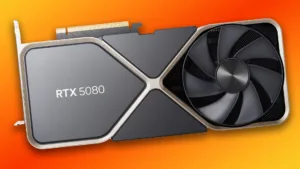
High-end and enthusiast builds are a different market entirely. Competent 4K gaming starts around $2,500 and runs to $3,500, while a 9950X3D-class and 5090-class flagship build reaches $7,400 or more against a historical enthusiast average nearer $4,000. Before committing at that level, read our RTX 5080 review for the generational performance context, because the step from an 80-class to a 90-class card in 2026 carries a price delta far larger than the frame-rate delta.
Running costs compound the sticker price. A 1,000W-class power supply under sustained gaming or inference load draws real electricity, and our breakdown of how many watts the RTX 5080 needs shows how quickly a flagship card’s draw accumulates over a year. Research from the MIT Energy Initiative on computing energy consumption supports the broader point: sustained high-wattage compute is a recurring operating expense, which means total cost of ownership at the enthusiast tier exceeds its purchase price by a measurable margin.
Converting those prices into labour time is where the argument lands. Using the stated assumption of $8,000 monthly net and $2,000 weekly net for a mid-level US engineer, each tier carries a price in weeks of work rather than dollars alone.
Gaming News and Reviews – The Tech ABC
| Tier | 2026 Cost | Representative GPU | Weeks of US Mid-Level Net Pay |
|---|---|---|---|
| Entry 1080p | $800–$900 | Entry-level current-gen card | ~0.4–0.45 weeks |
| Mid-range 1440p | ~$1,500 | RTX 5060 Ti class | ~0.75 weeks |
| High-end 4K | $2,500–$3,500 | Not stated | ~1.25–1.75 weeks |
| Enthusiast 4K | $7,400+ | RTX 5090 class | ~3.7 weeks |
The $500 Build Is Dead: Entry Now Starts at $800–$900
The extra $300 to $400 at the bottom of the market is traceable almost entirely to two components. DDR5 memory that cost $140 in late 2025 passed $300 by late 2026, adding roughly $160 on its own. Graphics card pricing added the rest, because AMD lifted Radeon pricing by 10% and Nvidia’s RTX 50 series carries markups that propagate down to the cheapest SKUs. Storage contributed a smaller increase. CPU, motherboard, case and power supply pricing stayed broadly flat, which is why the entry floor settled at $800–$900 rather than rising proportionally across the whole bill of materials. Anyone shopping a budget gaming PC in 2026 should budget for the memory first.
The $1,500 1440p Sweet Spot
Buy this tier. The $1,500 1440p build is the correct purchase for the overwhelming majority of buyers in 2026, and the reason is competitive rather than technical. Cards in the RTX 5060 Ti class carry VRAM capacities below the 16GB-and-above band that local-AI users, small-scale model hosts and data-center-adjacent buyers are actively bidding up, which means demand pressure on this tier comes from gamers alone. Consequently its price increase since 2025 is the mildest in the stack, and the performance it delivers at 1440p is close enough to 4K-tier output that the remaining gap costs several thousand dollars to close.
The Enthusiast Tier: From $4,000 to $7,400+
The enthusiast tier nearly doubled, from a historical average near $4,000 to $7,400 or more, and retail availability is the secondary problem. Some RTX 5090 models disappeared from shelves entirely and resurfaced on resale channels near $10,000, which means a portion of what buyers pay at this tier is a scarcity premium rather than a performance purchase. There is also an unresolved hardware risk that belongs in the buying decision, not a footnote: the RTX 5090 cable melting risk is a documented connector failure mode on the exact card class anchoring this tier. Spending 3.7 weeks of net pay on a build whose power connector has a known failure discussion attached to it is a materially different proposition from spending it on the mid-range, and prospective buyers should price the risk accordingly.
What Each Tier Costs in Weeks of Net Pay
The table above reframes the whole market. An entry 1080p machine costs a mid-level US engineer less than half a week of work, which is historically unremarkable even at the inflated $800–$900 floor. The mid-range lands at roughly three-quarters of a week — still a routine discretionary purchase. The enthusiast tier is the break: at 3.7 weeks it approaches a full month of net income, a threshold that in 2020 bought the same class of machine for about a quarter of a month. The purchasing-power loss is therefore not spread across the market; it is concentrated almost entirely at the top.
Why Components Cost What They Cost: The AI Tax Explained
The AI tax is the price premium consumer buyers pay for RAM, SSDs and GPUs because memory and foundry capacity has been reallocated to AI data-center contracts. That is the single mechanism behind every figure in the previous section. Reporting from eTeknix and Tom’s Hardware describes Samsung, SK Hynix and Micron shifting production heavily toward data-center customers, and because roughly half of global memory capacity is committed to long-term cloud contracts, consumer retail channels are left bidding for residual supply. The National Institute of Standards and Technology treats AI compute and infrastructure as a sustained national capability priority rather than a passing product cycle, which supports reading this demand as structural.
DDR5 is the clearest case. Kits selling for $140 in late 2025 passed $300 by late 2026, and the consequence shows up directly in build sheets: memory is now a line item that rivals the CPU in a mid-range configuration. Builders who once treated RAM as the cheap afterthought of a parts list now budget for it second, immediately after the graphics card.
Graphics cards compounded the problem. European RTX 50 series pricing rose 66% overall and RTX 5090 pricing rose 132%, while AMD raised Radeon pricing by 10% and some SKUs vanished from retail into resale listings near $10,000. The cause sits upstream of the retail channel: high-bandwidth memory and advanced packaging capacity serve data-center accelerators first, therefore consumer graphics SKUs are produced from residual capacity. When the residual shrinks, consumer prices rise regardless of nominal MSRP.
Storage follows the same curve with a longer horizon. Micron and YMTC guidance — and this is manufacturer guidance rather than an independent forecast, which readers should weigh accordingly — points to constrained memory supply persisting into 2028 or 2029. Capacity expansion is slow because fabrication plants take years to build and qualify, a timeline reflected in National Science Foundation semiconductor research investment programmes that measure returns in years rather than quarters. Which means anyone waiting for a correction is placing a multi-year bet, not a seasonal one. This is why pc build cost 2026 reads as a structural number rather than a temporary spike.
One corrective is worth stating plainly: not every component inflated. CPUs, motherboards, cases, coolers and power supplies have tracked broadly normal pricing through 2026. Consequently the realistic defence is component selection rather than patience — building around the parts that did not inflate, and accepting a tier below the VRAM band that AI buyers are competing for.
| Component | Late 2025 Price | October 2026 Price | Change |
|---|---|---|---|
| 32GB DDR5 kit | ~$140 | $300+ | More than doubled |
| RTX 50 series (Europe avg) | Not stated | Not stated | +66% |
| RTX 5090 flagship (Europe) | Not stated | Scalped near $10,000 | +132% |
| AMD Radeon GPUs | Not stated | Not stated | +10% |
| 1TB NVMe SSD | Not stated | Not stated | Rising, supply constrained |
| CPU / motherboard / PSU | Not stated | Not stated | Broadly flat |
DDR5: $140 in 2025, Past $300 in 2026
A 32GB DDR5 kit more than doubled inside twelve months, from roughly $140 in late 2025 to above $300 in late 2026. The driver is allocation, not manufacturing cost: because memory makers earn substantially more per wafer serving AI data-center contracts, consumer DIMM production became the lower-priority output. The effect on a build sheet is disproportionate at the low end, where $160 of additional memory cost represents a third of the old entry budget, and comparatively modest at the top, where it is 2% of a $7,400 total. Memory inflation therefore hit budget builders hardest in percentage terms, which is precisely why the $500 tier disappeared rather than merely shrinking.
GPUs: RTX 50 Series Up 66% in Europe, 5090 Up 132%
The European RTX 50 series increase of 66%, and the 132% increase on the RTX 5090 specifically, is the steepest single-category move in this analysis. The asymmetry between those two figures is informative: the flagship rose roughly twice as fast as the series average because it is the SKU closest in specification to the accelerators data-center buyers want, which means it competes most directly for high-bandwidth memory and packaging capacity. Scalping amplified the retail outcome, with listings approaching $10,000 once stock cleared shelves. AMD’s 10% Radeon increase looks almost restrained by comparison, and that gap is itself a reason to price Radeon options into any 2026 build before defaulting to Nvidia.
SSDs and the 2028–2029 Supply Warning
NAND storage sits under the same allocation pressure as DRAM, because the data-center buildout consumes high-capacity drives alongside memory modules. Micron and YMTC guidance points to constrained supply through 2028 or 2029, which reframes the storage purchase decision entirely: a 1TB NVMe drive bought today is unlikely to be cheaper in twelve months, and the downside risk of buying early is small relative to the downside risk of waiting. For buyers who intend to build at any point before 2028, storage and memory are the two components to acquire first.
Laptops Became the Refuge of 2026
At a $2,000 budget in 2026, a prebuilt laptop delivers more usable performance per dollar than a self-built desktop, because OEMs bought their memory and GPU allocation on contracts signed before the shortage. Apple and the major Windows manufacturers negotiate component volume years in advance, which means their bill-of-materials costs absorbed the memory and GPU squeeze far more slowly than spot-priced retail components did. That timing difference, not superior engineering, is the source of the advantage.
The honest counterweight matters. Laptop pricing is rising too, and soldered memory in most 2026 designs removes the single most valuable response to a component shortage: buying the machine now and upgrading the memory later when prices normalise. A desktop builder can live with 16GB in 2026 and add 32GB in 2029; a laptop buyer is locked into whatever configuration they purchase. The substitution is a genuine trade-off rather than a free win.
The prebuilt-versus-custom calculation has also flipped. System integrators buy components at contract pricing, so a prebuilt desktop in 2026 frequently undercuts the retail sum of its own parts — a reversal of the DIY cost advantage that held for most of the past decade. Builders motivated by component choice and repairability still have a case; builders motivated purely by dollars per frame increasingly do not.
Spec floors moved with the market. For a developer running containers alongside a mid-size local model, 32GB is now the minimum rather than the comfortable choice, a conclusion consistent with published memory-footprint research for local large-model inference on arXiv. The following floors reflect what 2026 workloads actually demand.
- 32GB unified or system memory as the minimum, because 16GB no longer holds a container stack plus a mid-size local model simultaneously
- 1TB NVMe storage minimum, since model weights and build caches routinely consume 200–400GB
- 16GB or more VRAM for anything running local inference — which is exactly the tier AI buyers are bidding up, so expect to pay the premium
- Eight performance cores or better for compile-heavy workloads, where core count translates directly into build time
- A 90Wh-class battery or an external power plan, because sustained local inference drains a laptop battery in under two hours
| Route | What $2,000 Buys | Upgrade Path | Best For |
|---|---|---|---|
| Self-built desktop | Mid-range 1440p build plus margin | Full — every part replaceable | Builders wanting upgrade flexibility |
| Prebuilt desktop | Often more than parts at retail | Partial — GPU, RAM, storage | Value buyers skipping assembly |
| High-end Windows laptop | Strong performance per dollar | Limited — memory often soldered | Portability plus GPU workloads |
| MacBook Pro M-series | High unified memory, strong efficiency | None — fixed configuration | Dev work, battery life, quiet operation |
Phones Are Still the Cheapest Flagship You Own
A $1,299 Galaxy S26 Ultra costs a mid-level US engineer roughly 16% of one month’s net pay, which makes smartphones the only major tech category that did not lose purchasing power in 2026. The cause is contractual and architectural: phone memory volumes are committed years ahead, and phone bills of materials use LPDDR tiers less exposed to data-center demand than desktop DIMMs. Consequently flagship MSRPs held roughly steady while desktop memory more than doubled.
The ultra-premium tier is well populated at $1,000 to $1,300 and above. The Samsung Galaxy S26 Ultra starts at $1,299, the iPhone 18 Pro Max anchors Apple’s top end, and the Xiaomi 17 Ultra lands at $1,000. Buyers who do not need the newest silicon will find the previous Apple generation the stronger value purchase — our analysis of iPhone 17 battery life covers the practical difference that actually shows up in daily use, which for most people matters more than a camera revision.
The $500–$950 mid-range band is where 2026 value lives, and that is a position rather than a hedge. The standard iPhone 17 at $929, the Samsung Galaxy S25 FE at $649 and the Google Pixel 10a at $500 collectively cover almost every real-world requirement at between 6% and 12% of a mid-level monthly net income. Buyers choosing within that band are deciding on ecosystem and finish rather than capability, and our guide to iPhone 17 colors and variants is more relevant to that decision than any spec comparison.
Set the two categories side by side and the asymmetry of the AI tax becomes impossible to miss. A tech worker spends close to two weeks of net pay on an enthusiast-class GPU alone and under two days of net pay on a flagship phone. The same paycheck, the same year, the same industry boom — and radically different purchasing power depending on which supply chain the product sits in.
iPhone 17 Camera AI Features: Smarter Image Processing
| Device | US MSRP | % of $8,000 Monthly Net | Days of Net Pay |
|---|---|---|---|
| Samsung Galaxy S26 Ultra | $1,299 | ~16% | ~4.9 days |
| Xiaomi 17 Ultra | $1,000 | ~13% | ~3.8 days |
| iPhone 17 (standard) | $929 | ~12% | ~3.5 days |
| Samsung Galaxy S25 FE | $649 | ~8% | ~2.4 days |
| Google Pixel 10a | $500 | ~6% | ~1.9 days |
Cheaper Routes to the Same Games: Consoles and Handhelds
A console delivers 4K gaming for under $800 in 2026, roughly one-ninth the cost of an equivalent enthusiast PC build, because console hardware is sold at or near cost and subsidised by software margins. Platform holders recover thin or negative hardware margins through game sales and subscriptions, which means they absorbed component inflation that an individual DIY builder has no mechanism to absorb. The result is the widest console-to-PC price gap in recent memory.
The comparison breaks in specific, predictable places. A console runs no development environment, hosts no local inference workload, restricts storage expansion to approved drives and limits you to a closed software library. For the engineer who builds a PC to work on it as well as play on it, none of that is acceptable. For the engineer who builds a PC purely to play, the $6,600 saving is difficult to argue with.
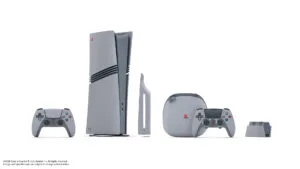
Both concrete alternatives are worth pricing before committing to a build. Our breakdown of the PS5 Pro disc drive details suits the buyer who wants high-fidelity output on a television with physical media support, while everything to know about the Nintendo Switch 2 suits the buyer who values portability and a distinct library over raw resolution.
The Verdict: How to Spend a 2026 Tech Paycheck
The resolved position is narrow and specific: pc build cost 2026 has decoupled from salary growth at the top tier, and only at the top tier, therefore the correct response is tier discipline rather than abstinence. Entry and mid-range builds still cost a routine fraction of a week’s net pay. The enthusiast tier is where the scarcity premium concentrates, and that is where buyers should stop.
- Cap any single build at two weeks of net pay — about $4,000 for a mid-level US engineer — because above that line you are paying the AI tax rather than buying performance.
- Buy the $1,500 1440p tier, not the $7,400 enthusiast tier, because the mid-range sits below the 16GB-VRAM band that data-center and local-AI buyers are bidding up.
- Buy memory and storage before the GPU, since Micron and YMTC guidance points to constrained supply through 2028–2029 while GPU pricing has at least a chance of correcting with the next product cycle.
On timing: buy the $1,500 1440p build or the laptop now, because memory guidance points to constrained supply through 2028–2029 and waiting carries no expected saving. Delay the 5090-class enthusiast build until 2027 at the earliest, because that is where scalping premiums are concentrated and where the connector failure question remains unresolved. Readers tracking how the supply picture develops will find our ongoing coverage of tech trends and innovations the place that story continues.
Frequently Asked Questions
How much does a gaming PC cost to build in 2026?
Pc build cost 2026 runs $800–$900 for entry 1080p, about $1,500 for 1440p, and $7,400 or more for enthusiast 4K, per Tom’s Hardware build coverage from August–October 2026. Every tier moved upward because DDR5 memory and graphics card pricing inflated while CPU, board and chassis pricing stayed broadly flat.
Why are PC parts so expensive in 2026?
DDR5 kits rose from roughly $140 in late 2025 to over $300 by late 2026. Samsung, SK Hynix and Micron reallocated production capacity toward AI data-center contracts, and because roughly half of global memory capacity is committed to long-term cloud agreements, consumer retail channels compete for the residual supply that remains.
What is the average tech salary in 2026?
The average US software engineer base salary is $130,463, according to Indeed and DataCamp 2026 data, with bands running $90,000–$140,000 entry, $140,000–$200,000 mid and $180,000–$250,000 senior. Germany averages €60,098. The top of the US distribution stretches to $500,000+ total compensation because AI-adjacent skills carry a premium.
Is it still worth building a PC in 2026?
Yes at the $1,500 1440p tier, no at $7,400. Mid-range parts sit below the high-VRAM band that AI and local-inference buyers are bidding up, so that tier inflated least. Note that prebuilt desktops now sometimes undercut the retail sum of their parts, because integrators buy at contract pricing.
How long will the RAM and SSD shortage last?
Micron and YMTC guidance points to constrained supply into 2028–2029. That is manufacturer guidance rather than independent forecasting, but the consequence for buyers is the same: waiting for a price correction is a multi-year bet rather than a seasonal one, which argues for buying memory and storage now.
What percentage of a tech salary does a flagship phone cost?
A $1,000–$1,300 flagship costs 12–16% of one month’s net pay at an $8,000 monthly net income. Contrast that with the $7,400+ enthusiast PC build, which consumes close to 100% of the same figure — the clearest single measure of how unevenly the AI tax landed across categories.
Are laptops cheaper than desktops in 2026?
At a $2,000 budget, laptops deliver more usable performance per dollar. OEM bulk memory and GPU contracts predate the shortage, so laptop bill-of-materials costs absorbed the squeeze more slowly than spot-priced retail components. The counterweight: soldered memory removes the upgrade path a desktop retains.
How much should you spend on a PC based on your salary?
Cap a build at two weeks of net pay — roughly $4,000 for a mid-level US engineer against the $130,463 average base salary. Spending above that line in 2026 largely purchases scarcity premium rather than additional performance, because the price increases above it are concentrated in supply-constrained SKUs.
Did GPU prices really go up 132% for the RTX 5090?
Yes — European RTX 5090 pricing rose 132% while the RTX 50 series overall rose 66%, with scalped listings approaching $10,000 after stock cleared retail shelves. The flagship rose fastest because it shares high-bandwidth memory and advanced-packaging capacity with data-center accelerators.
What is the “AI tax” on consumer hardware?
How Does Keeping Your iPhone at 100% Kill Its Battery?
The AI tax is the premium consumers pay because roughly half of global memory capacity is committed to long-term cloud contracts, per eTeknix and Tom’s Hardware reporting. That reallocation more than doubled DDR5 pricing inside twelve months and pushed graphics card pricing well above nominal MSRP.
Limitations of This Analysis and Where It Could Be Wrong
Every price here is a snapshot dated October 17, 2026. During an active shortage, retail pricing moves weekly, which means the weeks-of-pay math shifts with it and readers should verify current prices before buying.
The salary data carries its own caveats. Indeed, DataCamp and PayScale aggregates are built from self-reported figures, which skews toward respondents who choose to report, and they exclude equity — a material omission that understates total compensation at senior AI-adjacent levels by a wide margin.
The net-pay assumption is deliberately conservative. The $8,000 monthly figure assumes a single filer in a high-tax US tech hub at roughly a 38% effective deduction rate. Readers in states with no income tax, or with dependents, will land materially above it, which makes every build cheaper in weeks of work than this article suggests.
Regional comparisons have hard limits. US MSRP figures do not transfer cleanly to markets with VAT-inclusive pricing, import duties or currency exposure, so the European figures are indicative rather than exact.
Several alternatives go unpriced here: used and ex-lease hardware, previous-generation GPUs bought secondhand, cloud gaming subscriptions, and rented cloud GPU capacity for local-AI workloads. Each sidesteps the AI tax, at the cost of ownership, latency or higher long-run spend.
Finally, what would change the verdict: memory capacity expansion landing earlier than Micron’s guidance suggests, or a next-generation GPU launch priced against the current inflated baseline rather than above it. Either development would make delaying the mid-range build rational rather than costly.
Conclusion
Buy the $1,500 1440p build or the laptop now. Delay the 5090-class enthusiast rig until 2027 at the earliest, because that tier is where the scalping premium and the unresolved connector risk both sit, and because $7,400 represents close to a full month of mid-level net income for performance a cheaper tier substantially matches. The AI boom did two things simultaneously: it raised tech salaries, with the US average base reaching $130,463 and AI-adjacent total compensation stretching past $500,000, and it raised component prices faster by claiming the memory and packaging capacity first. Purchasing power therefore fell only at the top of the stack — phones held, laptops held better than desktops, and the mid-range build remains a routine purchase on a 2026 engineering salary. For readers tracking how the supply constraint develops from here, our coverage of tech trends and innovations follows it.
References
- Tom’s Hardware — component pricing and PC build cost coverage, August–October 2026: https://www.tomshardware.com/
- Indeed / DataCamp — 2026 software engineer salary data ($130,463 US average base): https://www.datacamp.com/blog/software-engineer-salary
- PayScale — Germany software engineer average salary (€60,098): https://www.payscale.com/research/DE/Job=Software_Engineer/Salary
- eTeknix — memory allocation and AI data-center capacity reporting: https://www.eteknix.com/
- Micron Technology — investor and supply guidance on memory capacity through 2028–2029 (manufacturer guidance): https://investors.micron.com/
- National Institute of Standards and Technology (NIST) — Artificial Intelligence program: https://www.nist.gov/artificial-intelligence
- National Science Foundation (NSF) — semiconductor and computing R&D investment: https://www.nsf.gov/
- arXiv — research on memory and VRAM requirements for local large-model inference: https://arxiv.org/
- MIT Energy Initiative — energy and power consumption research: https://energy.mit.edu/