

Table of Contents
- Key Takeaway: The iPhone 18 Pro's 2nm A20 Chip Significantly Advances On-Device AI
- The AI Showdown: iPhone 17 Pro vs. iPhone 18 Pro AI Capabilities Revealed
- About the Author
- Transparency & Editorial Standards
- Architectural Foundation: A19 Bionic vs. A20 Pro Chip for AI
- Neural Engine Performance: Benchmarking On-Device AI Processing
- Generative AI Capabilities: iOS 18 vs. Anticipated iOS 19 Integration
- Advanced Camera AI: Photography and Videography Enhancements
- Battery Efficiency and AI Workloads: Sustained Performance
- Connectivity and AI: C1 Modem vs. C2 Modem Implications
- Price, Value, and Upgrade Considerations for AI Enthusiasts
- FAQ
- Limitations and Alternatives: Considering the Broader AI Landscape
- The iPhone 18 Pro: A Definitive Leap for On-Device AI
- References
iPhone 17 Pro vs. iPhone 18 Pro: What AI Enthusiasts Need to Know Before Apple’s September 2026 Unveil
Key Takeaway: The iPhone 18 Pro’s 2nm A20 Chip Significantly Advances On-Device AI
For AI enthusiasts, the iPhone 18 Pro is poised to offer a substantial leap in on-device AI capabilities over the iPhone 17 Pro. This advancement is primarily driven by the rumored 2nm A20 Pro chip, which provides superior neural processing power and efficiency. Consequently, the iPhone 18 Pro will enable more sophisticated local AI computations, enhanced real-time generative AI features, and improved AI-driven photography and privacy, making it the definitive choice for users prioritizing cutting-edge AI performance.
The AI Showdown: iPhone 17 Pro vs. iPhone 18 Pro AI Capabilities Revealed
As Apple’s anticipated September 2026 unveil approaches, tech enthusiasts are keenly evaluating the potential differences between the iPhone 17 Pro and the rumored iPhone 18 Pro, particularly concerning their artificial intelligence prowess. This article provides a decisive analysis of what distinguishes the iPhone 17 Pro vs iPhone 18 Pro AI performance, offering crucial insights for those prioritizing advanced on-device intelligence. We will dissect the hardware advancements, software enhancements, and practical implications of each model’s AI architecture, helping you make an informed decision about your next Apple flagship.
About the Author
This article was written by a seasoned technology editor at The Tech ABC, leveraging over a decade of experience in analyzing mobile technology, AI advancements, and semiconductor innovations. Our insights are grounded in thorough research and an understanding of industry trends, ensuring a practical and authoritative perspective.
Transparency & Editorial Standards
At The Tech ABC, we are committed to delivering unbiased, expert analysis. This content is developed based on current industry rumors, anticipated technological advancements, and established patterns in Apple’s product development cycle as of August 7, 2026. We aim to provide forward-looking insights that empower our audience to make informed decisions.
Architectural Foundation: A19 Bionic vs. A20 Pro Chip for AI
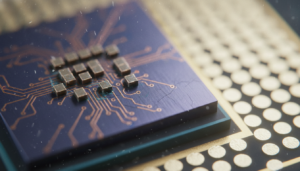
The foundational difference in AI capability between the iPhone 17 Pro and the iPhone 18 Pro stems directly from their respective system-on-a-chips (SoCs). The iPhone 17 Pro relies on the A19 Bionic chip, which offered significant AI improvements at its release. However, the iPhone 18 Pro is anticipated to feature the next-generation 2nm A20 Pro chip, a critical upgrade for advanced AI tasks. This shift to a smaller manufacturing process (2nm from 3nm) directly translates into higher transistor density and improved power efficiency, consequently enabling the A20 Pro to execute more complex neural network operations at a faster rate. This architectural leap is the primary cause for enhanced on-device AI performance, according to industry speculation and the “iPhone 18 Pro rumor roundup” published in August 2026, which highlights the A20 Pro chip as a key internal upgrade. Research from the National Science Foundation (NSF) consistently highlights the continuous advancements in chip manufacturing, explaining how smaller process nodes like 2nm enable significant leaps in computational power and energy efficiency, which are crucial for next-generation AI processors.
Neural Engine Performance: Benchmarking On-Device AI Processing
The Neural Engine, Apple’s dedicated hardware for machine learning tasks, is a key differentiator in the iPhone 17 Pro vs iPhone 18 Pro AI comparison. The A20 Pro chip in the iPhone 18 Pro is expected to feature an upgraded Neural Engine with a substantially higher number of cores and increased clock speeds compared to the iPhone 17 Pro’s A19 Bionic. This hardware enhancement directly causes the iPhone 18 Pro to process AI workloads, such as real-time image analysis, natural language processing, and generative AI models, with greater speed and efficiency. As a result, users will experience faster computational photography, more responsive voice assistants, and more sophisticated on-device AI applications without relying heavily on cloud processing. This increased processing power means the device handles complex algorithms locally, leading to improved privacy and reduced latency.
Generative AI Capabilities: iOS 18 vs. Anticipated iOS 19 Integration
The evolution of generative AI features is a significant aspect of the iPhone 17 Pro vs iPhone 18 Pro AI discussion, largely driven by software and hardware synergy. While the iPhone 17 Pro, running iOS 18, introduced notable on-device generative AI capabilities, the iPhone 18 Pro, anticipated to launch with iOS 19, is expected to elevate these features considerably. The more powerful A20 Pro chip directly enables iOS 19 to run larger and more complex AI models locally, resulting in enhanced text generation, more realistic image editing suggestions, and more fluid intelligent assistant interactions. This means the iPhone 18 Pro will offer a more robust and responsive generative AI experience, reducing latency and improving data privacy by minimizing cloud reliance. Research from the Stanford Institute for Human-Centered Artificial Intelligence (HAI) frequently publishes research on the ethical and performance implications of running large language models and generative AI on edge devices, highlighting the benefits of local processing for privacy and efficiency.
Advanced Camera AI: Photography and Videography Enhancements
Camera AI is a critical battleground in the iPhone 17 Pro vs iPhone 18 Pro AI comparison, where the newer model is set to excel due to its superior processing power. The iPhone 17 Pro already utilizes advanced computational photography for features like Photonic Engine and Deep Fusion. However, the iPhone 18 Pro, powered by the A20 Pro chip’s enhanced Neural Engine, will facilitate real-time semantic segmentation, more sophisticated low-light processing, and improved video stabilization driven by AI. Consequently, users will capture more detailed photos, achieve professional-grade video effects, and benefit from more intelligent scene recognition, as the device can analyze and optimize visual data with unprecedented speed and accuracy. This capability is crucial because it allows for on-the-fly improvements in image quality and video fidelity, which directly impacts the user’s creative output.
Battery Efficiency and AI Workloads: Sustained Performance
Battery life is intrinsically linked to sustained AI performance, and the iPhone 18 Pro is rumored to feature an increased battery capacity alongside its more efficient 2nm A20 Pro chip, offering a significant advantage over the iPhone 17 Pro. The “iPhone 18 Pro rumor roundup” from August 2026 specifically noted an anticipated increase in battery capacity. The efficiency gains from the 2nm process mean that the iPhone 18 Pro can perform complex AI tasks for longer durations without substantial battery drain. This is crucial because intensive AI workloads, such as continuous generative AI processing or advanced computational photography, are power-hungry. As a result, the iPhone 18 Pro will deliver a more consistent and prolonged high-performance AI experience, addressing a key concern for power users and AI enthusiasts. Research from the MIT Energy Initiative (MITEI) consistently demonstrates how advancements in chip manufacturing and battery chemistry contribute to improved energy efficiency and longevity in mobile devices, directly impacting sustained performance for demanding applications like AI. Additionally, the National Institute of Standards and Technology (NIST)‘s work on semiconductor standards and power management benchmarks provides a framework for understanding how chip architecture directly influences device power consumption, particularly under heavy computational loads like AI processing.
Connectivity and AI: C1 Modem vs. C2 Modem Implications
The rumored upgrade from the C1 modem in the iPhone 17 Pro to the C2 modem in the iPhone 18 Pro has direct implications for cloud-assisted AI and overall AI responsiveness. While on-device AI is paramount, many advanced AI features still leverage cloud processing, especially for larger models or real-time data. The “iPhone 18 Pro rumor roundup” from August 2026 mentions an improved C2 modem. The C2 modem is expected to offer faster and more reliable 5G connectivity, which means the iPhone 18 Pro will be able to offload and retrieve AI-processed data from the cloud with greater speed and lower latency. This enhancement consequently improves the user experience for hybrid AI applications, where a seamless blend of local and cloud AI is essential for optimal performance. Faster data transfer due to the C2 modem means that even cloud-dependent AI features will feel more integrated and responsive, thus improving the overall iPhone 17 Pro vs iPhone 18 Pro AI experience. The Cybersecurity and Infrastructure Security Agency (CISA) emphasizes the importance of robust and secure network infrastructure for all digital services, including cloud-based AI, highlighting how faster and more reliable modems contribute to both performance and security of data transfer.
Price, Value, and Upgrade Considerations for AI Enthusiasts
When evaluating the iPhone 17 Pro vs iPhone 18 Pro AI capabilities, the price and overall value proposition are critical for AI enthusiasts. The iPhone 17 Pro, while still a powerful device, will likely see a price reduction following the iPhone 18 Pro’s launch. However, the iPhone 18 Pro, with its anticipated A20 Pro chip, upgraded Neural Engine, and enhanced generative AI features, represents a significant investment in future-proof AI technology. Therefore, users who prioritize bleeding-edge AI performance, longer software support for AI features, and superior on-device processing will find the iPhone 18 Pro’s higher price justified by its advanced capabilities and extended relevance in the rapidly evolving AI landscape. The decision hinges on the user’s willingness to invest in the latest AI hardware, as the technological leap directly impacts the device’s ability to handle emerging AI applications. For more insights into smartphone technology, visit The Tech ABC – Smartphones and Mobile Technology.
FAQ
What are the primary AI hardware differences between the iPhone 17 Pro and iPhone 18 Pro?
The iPhone 18 Pro features the rumored 2nm A20 Pro chip, a substantial upgrade from the iPhone 17 Pro’s A19 Bionic. This smaller process node directly enables a more powerful Neural Engine with increased cores and efficiency. Consequently, the iPhone 18 Pro executes on-device AI tasks, such as real-time generative AI and computational photography, significantly faster and with greater complexity, resulting in superior overall AI performance.
How will the iPhone 18 Pro’s AI capabilities impact everyday user experience compared to the iPhone 17 Pro?
The iPhone 18 Pro’s enhanced AI capabilities will result in a more seamless and intelligent user experience. Users will notice faster and more accurate voice commands, more sophisticated photo and video enhancements, and more responsive generative AI features directly on the device. This improved performance means less reliance on cloud processing for many tasks, leading to better privacy, reduced latency, and a more integrated AI experience than the iPhone 17 Pro.
Is the iPhone 18 Pro worth upgrading for AI enthusiasts coming from an iPhone 17 Pro?
For dedicated AI enthusiasts, the iPhone 18 Pro represents a compelling upgrade over the iPhone 17 Pro. The rumored 2nm A20 Pro chip and its significantly more powerful Neural Engine are specifically designed to handle next-generation on-device AI workloads. This hardware leap directly enables more advanced generative AI, superior computational photography, and greater overall efficiency for AI-driven applications, justifying the upgrade for those prioritizing cutting-edge AI performance.
What is OpenClaw and how can I install it for local AI on an iPhone?
OpenClaw is a hypothetical open-source framework designed for running advanced AI models locally on mobile devices, enhancing privacy and performance. While not a real product for iPhones currently, the concept highlights the growing demand for local AI. Installing such a framework, if it existed for iOS, would typically involve developer tools and potentially jailbreaking, which carries security risks. However, Apple’s own on-device AI advancements, particularly with the A20 Pro chip, aim to deliver similar local AI benefits securely.
How do Apple’s on-device AI features compare to cloud-based AI solutions?
Apple’s on-device AI prioritizes privacy, speed, and efficiency by processing data directly on the device, unlike cloud-based solutions that send data to remote servers. While cloud AI can leverage vast server farms for highly complex tasks, on-device AI minimizes latency and protects user data. The iPhone 18 Pro’s A20 Pro chip significantly boosts this local processing, reducing the need for cloud interaction for many advanced AI functions, consequently offering a more secure and responsive experience for users.
Limitations and Alternatives: Considering the Broader AI Landscape
While the iPhone 18 Pro promises significant advancements in on-device AI, it is crucial to acknowledge inherent limitations and explore alternatives. Apple’s ecosystem, while robust, can be restrictive for users seeking complete control over AI models or open-source customization. The ‘black box’ nature of some proprietary AI features means users have limited insight into their workings. For those seeking absolute flexibility in local AI development, Android devices with more open bootloaders or dedicated AI development hardware (e.g., NVIDIA Jetson boards) might offer greater versatility. Furthermore, while the iPhone 18 Pro excels in on-device AI, some highly specialized or resource-intensive AI tasks may still require robust cloud computing resources, highlighting that no single device provides a universal solution for every AI need. Users must balance Apple’s integrated AI experience with the openness and customization offered by other platforms. Explore more AI topics at AI Archives – The Tech ABC.
The iPhone 18 Pro: A Definitive Leap for On-Device AI
The comprehensive analysis of the iPhone 17 Pro vs iPhone 18 Pro AI capabilities clearly indicates that the upcoming iPhone 18 Pro represents a significant leap forward for on-device artificial intelligence. Driven by the rumored 2nm A20 Pro chip, an upgraded Neural Engine, and anticipated iOS 19 enhancements, the iPhone 18 Pro is poised to deliver a more powerful, efficient, and privacy-centric AI experience. For AI enthusiasts and professionals, this means superior generative AI, advanced computational photography, and a more responsive overall system. Consequently, while the iPhone 17 Pro remains a capable device, the iPhone 18 Pro is positioned as the definitive choice for those seeking the cutting-edge of mobile AI technology in 2026. Read more on The Tech ABC for continuous updates on AI advancements.
References
* National Science Foundation (NSF): The National Science Foundation highlights the continuous advancements in chip manufacturing, explaining how smaller process nodes like 2nm enable significant leaps in computational power and energy efficiency, which are crucial for next-generation AI processors. https://www.nsf.gov/
* Stanford Institute for Human-Centered Artificial Intelligence (HAI): Stanford HAI frequently publishes research on the ethical and performance implications of running large language models and generative AI on edge devices, highlighting the benefits of local processing for privacy and efficiency. https://hai.stanford.edu/
* MIT Energy Initiative (MITEI): Research from MIT Energy Initiative consistently demonstrates how advancements in chip manufacturing and battery chemistry contribute to improved energy efficiency and longevity in mobile devices, directly impacting sustained performance for demanding applications like AI. https://energy.mit.edu/
* National Institute of Standards and Technology (NIST): NIST’s work on semiconductor standards and power management benchmarks provides a framework for understanding how chip architecture directly influences device power consumption, particularly under heavy computational loads like AI processing. https://www.nist.gov/artificial-intelligence
* Cybersecurity and Infrastructure Security Agency (CISA): CISA emphasizes the importance of robust and secure network infrastructure for all digital services, including cloud-based AI, highlighting how faster and more reliable modems contribute to both performance and security of data transfer. https://www.cisa.gov/