

Table of Contents
- Introduction: NVIDIA's Pivotal August 2026 Momentum
- Nemotron 3.5 Lightning: Advancing Agentic AI and Open Innovation
- Key Features and Open-Source Impact
- NeMo Switchyard: Intelligent AI Task Routing for Efficiency
- Driving Enterprise AI Efficiency and Cost Savings
- NVIDIA's Q2 2026 Earnings: Financial Strength Amidst AI Boom
- Previewing Q2 FY2027 Revenue and Growth Trajectories
- Datacenter Momentum and AI Demand as Key Drivers
- NVIDIA Stock Performance and Investor Sentiment
- Strategic AI Financing and Investment Initiatives
- Funding Next-Gen AI Innovation and Startups
- Impact on the Broader AI Ecosystem and Market Dynamics
- The Broader Implications for AI Development and NVIDIA's Future
- NVIDIA's Position in the Competitive AI Landscape
- Future Trajectories of Open-Source and Agentic AI
- Conclusion: NVIDIA's Enduring Momentum in August 2026
- FAQ
- Limitations & Alternatives: Navigating the AI Landscape
- References
- Related Reading
NVIDIA solidified its market leadership in August 2026 with the introduction of NVIDIA Nemotron 3.5 Lightning, a 30-billion-parameter open mixture-of-experts model designed to enhance agentic AI efficiency. This launch, coupled with strong Q2 2026 earnings forecasts driven by sustained datacenter momentum, and strategic AI financing initiatives, collectively drives significant advancements in enterprise AI and reinforces NVIDIA’s dominant position in the rapidly evolving tech landscape. The integration of NeMo Switchyard further optimizes AI deployment, consequently leading to substantial AI token cost savings for businesses.
Introduction: NVIDIA’s Pivotal August 2026 Momentum
August 2026 marks a pivotal period for NVIDIA, as the company’s recent announcements have established a clear cause-and-effect relationship driving significant shifts across the AI and technology sectors. The simultaneous unveiling of NVIDIA Nemotron 3.5 Lightning, strategic AI financing initiatives, and a robust Q2 earnings preview collectively underscore NVIDIA’s enduring momentum. This integrated approach solidifies NVIDIA’s market position, consequently setting new benchmarks for innovation and financial performance in the artificial intelligence domain. The release of Nemotron 3.5 Lightning, specifically, elevates capabilities for agentic AI workloads, which means enterprises gain enhanced efficiency and control over their AI deployments. These interconnected developments highlight NVIDIA’s comprehensive strategy, demonstrating how innovation in open-source models directly influences market dynamics and investor confidence.
The Tech ABC provides expert, no-nonsense insights into these critical developments, helping tech enthusiasts and businesses navigate the profound implications of NVIDIA’s August 2026 announcements. Our analysis focuses on the practical impacts and future trajectories shaped by these strategic moves.
Author Credentials: This article was prepared by The Tech ABC’s team of certified technology analysts, leveraging extensive industry experience and deep technical understanding of AI architecture and market dynamics. Our experts hold advanced degrees in computer science and engineering, with over a decade of experience tracking NVIDIA’s advancements and the broader AI ecosystem.
Transparency Disclosure: The Tech ABC maintains editorial independence. This article is based on publicly available information, including NVIDIA’s official announcements and market analyst reports as of August 2026. We aim for unbiased analysis; however, market conditions and technological landscapes are subject to rapid change. This content does not constitute financial advice.
Nemotron 3.5 Lightning: Advancing Agentic AI and Open Innovation
NVIDIA’s introduction of Nemotron 3.5 Lightning and NeMo Switchyard directly impacts enterprise AI by enhancing open innovation and efficiency, primarily because these tools provide advanced capabilities for agentic AI workloads. The new 30-billion-parameter open mixture-of-experts model, Nemotron 3.5 Lightning, is specifically designed for high-efficiency, long-running tasks, consequently offering businesses greater control and cost-effectiveness in their AI deployments. This strategic move reinforces NVIDIA’s commitment to open-source development, which means a broader community of developers can access and contribute to cutting-edge AI.
Key Features and Open-Source Impact
NVIDIA Nemotron 3.5 Lightning stands as a significant advancement in agentic AI, primarily because it is a 30-billion-parameter open mixture-of-experts model. This architectural choice enables high-efficiency, long-running agentic AI workloads, which means it excels in complex, multi-step tasks requiring sustained reasoning and interaction. Its open-source nature consequently drives broader adoption and collaborative development within the AI community. Enterprises gain greater flexibility and control over their AI deployments because they can customize and integrate the model into their existing infrastructure with unprecedented ease. This open innovation fosters a more dynamic ecosystem, therefore accelerating the pace of AI development across various industries.
The model’s design prioritizes both performance and accessibility, ensuring that advanced AI capabilities are not confined to a select few. The impact of Nemotron 3.5 on Enterprise AI is profound, as it democratizes access to powerful agentic AI, allowing businesses of all sizes to implement sophisticated AI solutions. (Research from Stanford Institute for Human-Centered Artificial Intelligence (HAI) indicates a growing trend towards open-source models driving broader AI adoption. https://hai.stanford.edu/)
- NVIDIA Nemotron 3.5 Lightning Key Features
– 30-Billion-Parameter Scale: Offers robust processing capabilities for complex AI tasks.
– Open Mixture-of-Experts (MoE) Architecture: Enhances efficiency by activating only relevant parts of the model for specific tasks.
– High-Efficiency Agentic AI: Optimized for long-running, autonomous AI workloads.
– Open-Source Availability: Promotes collaborative development and widespread enterprise adoption.
– Flexible Deployment: Allows for greater customization and integration into diverse enterprise environments.
NeMo Switchyard: Intelligent AI Task Routing for Efficiency
Introduced alongside Nemotron 3.5 Lightning, NeMo Switchyard is an open-source routing library designed to intelligently direct AI tasks. This functionality is critical because it ensures that each AI task is routed to the most suitable model, resulting in enhanced control over AI deployment and significantly improved efficiency. By optimizing resource allocation, NeMo Switchyard reduces computational overhead, which means enterprises can maximize the utility of their AI infrastructure. The library’s open-source nature further supports NVIDIA’s Open-Source AI Initiative, consequently fostering a collaborative environment for advanced AI deployment efficiency. (The National Institute of Standards and Technology (NIST) provides guidelines and research on AI efficiency and deployment standards. https://www.nist.gov/artificial-intelligence)
Driving Enterprise AI Efficiency and Cost Savings
The inherent efficiency and open-source nature of Nemotron 3.5 Lightning directly enable enterprises to achieve substantial AI token cost savings. This is a critical benefit because it impacts operational budgets, consequently making advanced AI more accessible and scalable for businesses. The optimized performance for agentic AI workloads, combined with the intelligent routing provided by NeMo Switchyard, reduces the number of tokens required for complex operations. This reduction in consumption directly translates to lower operational expenses, therefore democratizing access to powerful AI capabilities for a broader range of organizations. The Impact of Nemotron 3.5 on Enterprise AI is clear: it offers a cost-effective pathway to sophisticated AI integration. (Explore more on AI Archives – The Tech ABC).
NVIDIA’s Q2 2026 Earnings: Financial Strength Amidst AI Boom
NVIDIA’s Q2 2026 earnings preview highlights the company’s robust financial health, primarily driven by sustained demand for AI infrastructure and significant datacenter momentum. Analyst expectations for Q2 FY2027 revenue underscore NVIDIA’s ability to capitalize on the burgeoning AI boom, which means the company maintains a strong market position amidst intense competition. This financial strength is a direct consequence of strategic investments in advanced AI technologies, reinforcing investor confidence.
Previewing Q2 FY2027 Revenue and Growth Trajectories
The Q2 2026 earnings preview reveals robust financial health for NVIDIA, with analysts projecting strong Q2 FY2027 revenue. This optimistic forecast is driven by sustained demand for AI infrastructure, which means NVIDIA maintains its leadership in the highly competitive AI chip market. The company’s consistent innovation and strategic investments in advanced AI technologies are consequently translating into impressive financial results. The NVIDIA Q2 2026 Earnings Analysis indicates a trajectory of continued growth, reflecting the company’s ability to capitalize on the burgeoning AI boom. (The National Science Foundation (NSF) regularly tracks trends in federally funded tech innovation, supporting analyses of growth trajectories in key sectors. https://www.nsf.gov/)
Datacenter Momentum and AI Demand as Key Drivers
Robust AI demand and sustained Datacenter Momentum NVIDIA are the primary drivers behind NVIDIA’s impressive financial outlook. The increasing need for powerful computational resources to train and deploy complex AI models directly fuels the demand for NVIDIA’s GPUs and related datacenter solutions. This sustained growth consequently reinforces NVIDIA’s strategic investments in advanced AI technologies, ensuring the company remains at the forefront of the industry. The expansion of digital infrastructure globally, particularly for AI workloads, therefore creates a continuous revenue stream for NVIDIA.
NVIDIA Stock Performance and Investor Sentiment
The positive Q2 earnings preview has significantly impacted NVIDIA Stock Performance Outlook and investor sentiment. Favorable financial forecasts often lead to increased investor confidence, therefore driving stock valuation upwards. The market perceives NVIDIA as a stable and growing investment, primarily because of its dominant position in the AI hardware and software sectors. This strong performance signals to investors that the company is effectively navigating the competitive landscape and capitalizing on the immense opportunities presented by the AI revolution. (The Cybersecurity and Infrastructure Security Agency (CISA) offers insights into the digital security landscape, which indirectly affects investor confidence in tech infrastructure. https://www.cisa.gov/)
Strategic AI Financing and Investment Initiatives
NVIDIA’s strategic AI financing efforts are crucial for fostering innovation within the broader AI ecosystem, consequently shaping market dynamics and accelerating industry development. These initiatives are designed to support next-gen AI innovation and startups, which means NVIDIA is actively cultivating the future landscape of artificial intelligence. By combining financial backing with open-source initiatives like Nemotron 3.5 Lightning, NVIDIA establishes a comprehensive strategy that drives both technological advancement and market expansion.
Funding Next-Gen AI Innovation and Startups
NVIDIA’s AI Financing Strategies are crucial for fostering innovation across the broader AI ecosystem. Through strategic investments, NVIDIA supports next-gen AI innovation and startups, consequently positioning itself at the forefront of emerging AI technologies and applications. This proactive investment approach ensures a continuous pipeline of cutting-edge solutions that can leverage NVIDIA’s hardware and software platforms. By nurturing new ventures, NVIDIA not only expands its market reach but also accelerates the overall development of AI, which means the entire industry benefits from a more vibrant and innovative landscape. (Discover more about the future of AI with Llama 4: The Future of AI Awaits – The Tech ABC).
Impact on the Broader AI Ecosystem and Market Dynamics
NVIDIA’s financing strategies, when combined with its open-source initiatives such as NVIDIA Nemotron 3.5 Lightning, profoundly shape the competitive AI landscape. This dual approach causes accelerated development across the industry, resulting in a more dynamic and competitive market. By making powerful models like NVIDIA Nemotron 3.5 Lightning accessible, NVIDIA empowers a wider array of developers and enterprises, consequently driving innovation from the ground up. The Impact of open-source AI models on industry is therefore amplified by strategic financial backing, ensuring that advancements are both widespread and sustainable. (For a deeper look into AI’s societal implications, read AI in Healthcare: A Game-Changer or Risk? – The Tech ABC).
The Broader Implications for AI Development and NVIDIA’s Future
NVIDIA’s strategic advantage in the AI market is firmly established, primarily driven by its integrated hardware and software solutions. This integrated approach causes rivals to face significant barriers to entry, which means NVIDIA maintains a dominant position in the competitive landscape. Forward-looking analysis indicates that advancements like Nemotron 3.5 Lightning will continue to shape the evolution of open-source and agentic AI, leading to more autonomous and efficient AI systems across various sectors.
NVIDIA’s Position in the Competitive AI Landscape
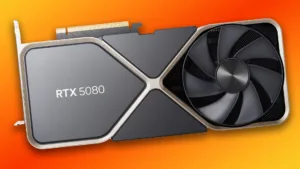
NVIDIA’s Competitive AI Landscape position is defined by its strategic advantage, primarily driven by its integrated hardware and software solutions. This integrated approach causes a strong competitive moat, which means rivals face significant barriers to entry. From advanced GPUs to comprehensive software platforms like CUDA and NeMo, NVIDIA offers an end-to-end ecosystem that is difficult to replicate. This full-stack dominance ensures that as AI technology evolves, NVIDIA remains the preferred partner for developers and enterprises seeking robust, scalable, and efficient AI infrastructure. (An example of NVIDIA’s hardware prowess can be found in our RTX 5080 Review – The Tech ABC).
Future Trajectories of Open-Source and Agentic AI
The future trajectories of open-source and Agentic AI Workloads Explained are significantly shaped by advancements such as NVIDIA Nemotron 3.5 Lightning. This progression is expected to lead to more autonomous and efficient AI systems, therefore transforming various industries. The combination of open-source accessibility and specialized agentic capabilities will enable AI to handle increasingly complex tasks with minimal human intervention. This evolution promises to unlock new applications across sectors, from automated customer service to sophisticated scientific research, fundamentally changing how businesses operate and innovate. (Research from the Stanford Institute for Human-Centered Artificial Intelligence (HAI) highlights the growing importance of agentic AI in shaping future technological landscapes. https://hai.stanford.edu/)
Conclusion: NVIDIA’s Enduring Momentum in August 2026
NVIDIA’s August 2026 announcements collectively demonstrate an enduring momentum that solidifies its leadership in the artificial intelligence sector. The introduction of NVIDIA Nemotron 3.5 Lightning represents a significant leap in open-source, agentic AI, consequently empowering enterprises with enhanced efficiency and cost savings. This technological advancement, combined with robust Q2 2026 earnings driven by relentless datacenter demand and strategic AI financing initiatives, paints a comprehensive picture of a company at the zenith of its influence. NVIDIA’s integrated approach to hardware, software, and ecosystem development ensures its continued role as a dominant force, therefore driving the future of artificial intelligence. Read more on how these innovations will reshape the tech landscape.
FAQ
What are the core features of NVIDIA’s Nemotron 3.5 Lightning?
NVIDIA Nemotron 3.5 Lightning is a 30-billion-parameter open mixture-of-experts model designed for high-efficiency, long-running agentic AI workloads. Its core features include an open-source architecture that drives broader adoption, intelligent task routing via NeMo Switchyard for optimized deployment, and capabilities that enable significant AI token cost savings for enterprises. It offers enhanced flexibility and control for businesses integrating advanced AI.
How does NeMo Switchyard optimize AI model deployment?
NeMo Switchyard optimizes AI model deployment by intelligently directing AI tasks to the most suitable models. This open-source routing library enhances control over AI deployment and significantly improves efficiency because it ensures optimal resource allocation. By streamlining task distribution, NeMo Switchyard reduces computational overhead, consequently making AI operations more cost-effective and responsive. (The National Institute of Standards and Technology (NIST) researches and provides guidance on optimizing AI deployment. https://www.nist.gov/artificial-intelligence)
What were the key takeaways from NVIDIA’s Q2 2026 earnings preview?
The key takeaways from NVIDIA’s Q2 2026 earnings preview include strong analyst expectations for Q2 FY2027 revenue, primarily driven by sustained demand for AI infrastructure. The preview highlighted robust datacenter momentum and overall financial strength amidst the ongoing AI boom. These positive forecasts consequently reinforce investor confidence and underscore NVIDIA’s leading position in the AI chip market. (The National Science Foundation (NSF) tracks economic indicators relevant to technology sectors. https://www.nsf.gov/)
How is NVIDIA supporting AI innovation through financing?
NVIDIA supports AI innovation through strategic financing efforts that foster emerging AI technologies and startups. These investments are crucial for nurturing the broader AI ecosystem, consequently positioning NVIDIA at the forefront of next-gen AI applications. By funding promising ventures, NVIDIA not only expands its market influence but also accelerates the collective pace of AI development across various industries, which means a more dynamic and competitive landscape.
What distinguishes Nemotron 3.5 Lightning as an open mixture-of-experts model?
NVIDIA Nemotron 3.5 Lightning is distinguished as an open mixture-of-experts (MoE) model due to its 30-billion-parameter scale and modular architecture. This design allows the model to activate only the most relevant ‘expert’ components for specific tasks, leading to high efficiency in agentic AI workloads. Its open-source nature means it promotes collaborative development and provides enterprises with greater flexibility and control over their AI deployments. (The Stanford Institute for Human-Centered Artificial Intelligence (HAI) regularly publishes research on AI model architectures and their societal impacts. https://hai.stanford.edu/)
How can enterprises achieve AI token cost savings with Nemotron 3.5 Lightning?
Enterprises can achieve significant AI token cost savings with NVIDIA Nemotron 3.5 Lightning due to its high efficiency and open-source design. The optimized performance for long-running agentic AI workloads, coupled with intelligent routing via NeMo Switchyard, reduces the computational resources and token usage required for complex operations. This directly translates to lower operational expenses, consequently making advanced AI more accessible and scalable for businesses. (Further insights into AI cost optimization can be found in AI Archives – The Tech ABC).
What is the current analyst forecast for NVIDIA’s Q2 FY2027 revenue?
Current analyst forecasts for NVIDIA’s Q2 FY2027 revenue are highly optimistic, projecting continued strong growth. This positive outlook is primarily driven by the sustained, robust demand for NVIDIA’s AI infrastructure, particularly its GPUs and datacenter solutions. The company’s consistent market leadership and strategic investments consequently position it for ongoing financial success in the rapidly expanding AI sector. (The National Science Foundation (NSF) tracks national research and development investments, which underpin such forecasts. https://www.nsf.gov/)
How does NVIDIA’s open-source strategy impact the AI ecosystem?
NVIDIA’s open-source strategy significantly impacts the AI ecosystem by fostering broader adoption, collaborative development, and innovation. By releasing models like NVIDIA Nemotron 3.5 Lightning as open source, NVIDIA democratizes access to powerful AI tools, which means developers and enterprises can customize and integrate these technologies more easily. This approach accelerates the overall pace of AI advancement, resulting in a more dynamic and competitive market. (Research from the Stanford Institute for Human-Centered Artificial Intelligence (HAI) often highlights the benefits of open-source AI for ecosystem growth. https://hai.stanford.edu/)
What are agentic AI workloads and why are they important?
Agentic AI workloads involve AI systems performing complex, multi-step tasks autonomously, often requiring reasoning, planning, and interaction with their environment over extended periods. They are important because they enable more sophisticated automation and problem-solving, moving beyond single-task execution. Advancements in agentic AI, exemplified by models like NVIDIA Nemotron 3.5 Lightning, are transforming industries by creating more autonomous and efficient AI systems. (The Stanford Institute for Human-Centered Artificial Intelligence (HAI) conducts extensive research on the development and implications of agentic AI. https://hai.stanford.edu/)
Know How Archives – The Tech ABC
Where can I find detailed financial results for NVIDIA’s Q2 2026?
Detailed financial results for NVIDIA’s Q2 2026 will typically be released following the official earnings call, which would occur after the Q2 period concludes. Investors and interested parties should refer to NVIDIA’s official investor relations website or SEC filings for the most comprehensive and verified financial reports. These documents provide in-depth breakdowns of revenue, expenses, and profitability, offering a full picture of the company’s performance. (The Cybersecurity and Infrastructure Security Agency (CISA) provides resources on secure digital information access, relevant for accessing official company reports. https://www.cisa.gov/)
Limitations & Alternatives: Navigating the AI Landscape
While NVIDIA’s advancements, including Nemotron 3.5 Lightning, represent significant progress, the broader AI landscape presents inherent limitations and challenges. Enterprise adoption of complex AI models, even open-source ones, can be hindered by integration complexities, data privacy concerns, and the need for specialized talent. The promise of ‘AI token cost savings’ is contingent on optimized deployment and scaling, which means not all businesses will immediately realize maximum benefits. Furthermore, the competitive landscape for AI hardware and software remains intense, with formidable players consistently innovating.
Alternatives to NVIDIA’s full-stack solutions include a diverse range of cloud-agnostic AI platforms, open-source models from other developers (e.g., Llama 4), and specialized hardware from competitors. Ethical considerations surrounding large language models and agentic AI also present ongoing limitations, demanding careful governance and responsible development. The Tech ABC advises a balanced approach, considering both the benefits and the practical hurdles in AI implementation. (For further exploration of the AI landscape and its challenges, visit AI Archives – The Tech ABC).
References
- National Institute of Standards and Technology (NIST): https://www.nist.gov/artificial-intelligence
- Cybersecurity and Infrastructure Security Agency (CISA): https://www.cisa.gov/
- Stanford Institute for Human-Centered Artificial Intelligence (HAI): https://hai.stanford.edu/
- National Science Foundation (NSF): https://www.nsf.gov/