
Table of Contents
- Walmart's 2026 Tech Strategy: Key Takeaways
- Introduction: Walmart's Digital Evolution Beyond the Aisles
- The Strategic Imperative: Why Walmart is Doubling Down on Tech
- AI at the Core: Sparky and Beyond
- Integrated Retail: Blending Digital and Physical
- Supply Chain Reinvention Through Automation
- Data-Driven Personalization and Customer Engagement
- Cybersecurity and Digital Trust
- The Future Landscape: Walmart's Tech Strategy Beyond 2026
- FAQ
- Limitations, Challenges, and Alternatives for Walmart's 2026 Tech Strategy
- Conclusion: Walmart's Tech-Driven Future
- References
- Related Reading
Walmart’s 2026 Tech Strategy: Key Takeaways
Walmart’s 2026 tech strategy decisively shifts towards an integrated retail model, driven by significant investment in artificial intelligence (AI) and the strategic re-purposing of physical stores. The company’s proprietary AI assistant, Sparky, is demonstrably increasing customer basket sizes, as evidenced by its fiscal 2026 report. This approach, which blends robust eCommerce growth with optimized physical fulfillment hubs, fundamentally redefines customer engagement and operational efficiency, positioning Walmart as a formidable tech-driven retail leader.
— Walmart’s fiscal 2026 report highlights an integrated retail model with strong eCommerce growth and increased investment in AI, particularly its customer-facing AI assistant, Sparky, which drives higher basket sizes for users.
Introduction: Walmart’s Digital Evolution Beyond the Aisles
For decades, Walmart has been synonymous with vast physical retail spaces. However, the company’s trajectory for 2026 and beyond reveals a profound transformation, positioning it as a technology powerhouse that extends far ‘Beyond the Aisles: Unpacking Walmart’s 2026 Tech Strategy for the Modern Enthusiast’. This article will dissect the intricate layers of Walmart’s strategic technological blueprint, examining how it plans to leverage AI, data, and integrated retail models to dominate the future market.
This aggressive pivot is not merely an adaptation but a proactive redefinition of its core business model. It is driven by the imperative to meet the demands of a digitally native consumer base and to secure a competitive edge against agile online retailers. Consequently, Walmart’s investment in advanced technology, from AI-powered customer engagement to sophisticated supply chain automation, is a direct response to these market forces, fundamentally reshaping its operational and customer experience frameworks. The National Science Foundation (NSF) supports foundational research that underpins many of these technological advancements, highlighting the broader scientific investment driving such innovations (NSF, https://www.nsf.gov/).
The Strategic Imperative: Why Walmart is Doubling Down on Tech
Walmart’s aggressive embrace of technology stems from a clear strategic imperative: to solidify its market leadership in an increasingly digital-first retail environment. This shift is driven by the relentless expansion of eCommerce and the heightened expectations of modern consumers, who demand seamless, personalized, and efficient shopping experiences across all channels. Consequently, Walmart’s fiscal 2026 report indicates a significant shift towards an integrated retail model, which means substantial investment in technology is essential to remain competitive (Walmart’s Fiscal 2026 Annual Report, https://corporate.walmart.com/newsroom/financial-reports).
The impact of this market dynamic is evident in Walmart’s proactive approach. The company recognizes that traditional retail alone is insufficient; therefore, it is rapidly transforming into a tech-centric enterprise. This transformation is not merely about adopting new tools, but fundamentally re-architecting its operations and customer touchpoints. As a result, ‘Beyond the Aisles: Unpacking Walmart’s 2026 Tech Strategy for the Modern Enthusiast’ is a direct response to these pressures, aimed at creating a resilient and future-proof business model. This strategic reorientation is also influenced by broader trends in digital infrastructure, which underscores the importance of robust technological standards (National Institute of Standards and Technology (NIST), https://www.nist.gov/artificial-intelligence).
AI at the Core: Sparky and Beyond
Central to Walmart’s 2026 tech strategy is its deep commitment to artificial intelligence. The company’s proprietary customer-facing AI assistant, Sparky, represents a significant leap in personalized retail. Sparky’s advanced algorithms analyze purchasing patterns and preferences, consequently guiding customers to relevant products and promotions. Walmart’s fiscal 2026 report explicitly states that Sparky is driving higher basket sizes for users, which means a direct, measurable return on AI investment (Walmart’s Fiscal 2026 Annual Report, https://corporate.walmart.com/newsroom/financial-reports).
Beyond Sparky, Walmart’s AI integration extends into critical operational areas. AI-powered predictive analytics optimize inventory management, reducing waste and ensuring product availability because demand can be accurately forecasted. Machine learning algorithms enhance supply chain logistics, resulting in more efficient routing and delivery. This comprehensive AI deployment is a cornerstone of ‘Beyond the Aisles: Unpacking Walmart’s 2026 Tech Strategy for the Modern Enthusiast’, fundamentally transforming how Walmart operates and interacts with its vast customer base. The ethical implications and societal impacts of large language models like those underpinning Sparky are areas of active academic research (Stanford Institute for Human-Centered Artificial Intelligence (HAI), https://hai.stanford.edu/).
- Key AI Initiatives at Walmart (2026)
– Sparky AI Assistant: Enhancing customer engagement and driving increased basket sizes through personalized recommendations.
– Predictive Inventory Analytics: Utilizing AI to forecast demand, minimizing stockouts and reducing overstock.
– Automated Supply Chain Optimization: Implementing machine learning for efficient routing, delivery, and warehouse management.
– Personalized Marketing Campaigns: AI-driven segmentation to deliver highly relevant promotions to individual customers.
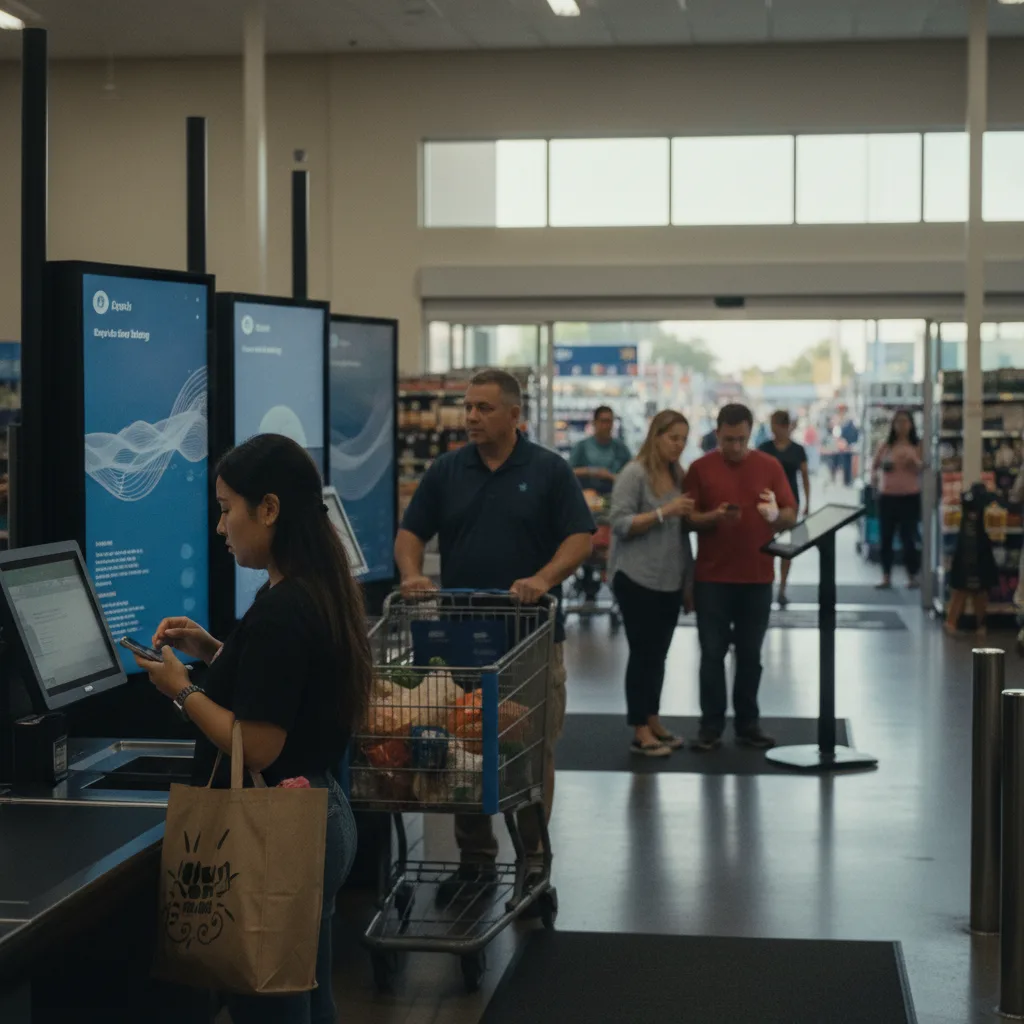
– Store Operations Efficiency: AI tools for optimizing staffing, checkout processes, and in-store navigation.
AI Archives
Llama 4: The Future of AI Awaits
Integrated Retail: Blending Digital and Physical
Walmart’s 2026 Annual Report explicitly details a significant shift towards an integrated retail model, driven by robust eCommerce growth. This strategy transcends merely having an online presence; it fundamentally redefines the role of Walmart’s extensive network of physical stores. Consequently, these stores are increasingly serving as strategic fulfillment hubs, which means they are optimized for online order pickup, local delivery, and even micro-fulfillment centers (Walmart’s Fiscal 2026 Annual Report, https://corporate.walmart.com/newsroom/financial-reports).
The blending of digital and physical channels creates a seamless customer journey, because shoppers can initiate purchases online and complete them conveniently in-store, or vice versa. This approach maximizes operational efficiency and customer satisfaction, resulting in a cohesive shopping experience that leverages both assets. This integrated strategy is a core element of ‘Beyond the Aisles: Unpacking Walmart’s 2026 Tech Strategy for the Modern Enthusiast’, as it directly addresses the evolving landscape of consumer behavior and logistical demands. The underlying principles of digital transformation and strategic resource allocation are critical for such large-scale initiatives.
- Pillars of Walmart’s Integrated Retail Strategy
– Store as Fulfillment Hubs: Physical locations optimized for online order pickup and local delivery.
– Seamless Omnichannel Experience: Consistent customer journey across online, mobile, and in-store touchpoints.
– Hyperlocal Delivery Networks: Leveraging store proximity for faster and more cost-effective last-mile delivery.
– Digital Store Navigation: In-app tools to assist shoppers with product location and personalized offers within physical stores.
Supply Chain Reinvention Through Automation
Walmart’s 2026 tech strategy places a heavy emphasis on reinventing its vast supply chain through advanced automation and robotics. This initiative is driven by the need to meet surging eCommerce demands and to mitigate labor shortages, consequently leading to significant investments in automated warehouses and distribution centers. Robotics handle tasks like sorting, packing, and loading, which means faster throughput and reduced human error.
The impact of this automation is multifaceted. It directly contributes to increased operational efficiency and significantly reduces labor costs, therefore enhancing profitability. Furthermore, advanced logistics systems, powered by AI, optimize inventory flow from suppliers to shelves, resulting in improved product availability and reduced waste. This strategic overhaul of the supply chain is an integral part of ‘Beyond the Aisles: Unpacking Walmart’s 2026 Tech Strategy for the Modern Enthusiast’, ensuring a resilient and responsive distribution network. The development of secure and efficient digital infrastructure, including automation, adheres to critical cybersecurity and technology standards (National Institute of Standards and Technology (NIST), https://www.nist.gov/artificial-intelligence).
- Key Automation Technologies in Walmart’s Supply Chain
– Robotic Picking and Sorting: Automated systems for handling and organizing products within warehouses.
– Automated Guided Vehicles (AGVs): Robots transporting goods across distribution centers.
– AI-Powered Route Optimization: Algorithms for efficient delivery planning and fuel consumption reduction.
– Automated Inventory Tracking: Real-time monitoring of stock levels using sensors and RFID technology.
Data-Driven Personalization and Customer Engagement
A cornerstone of ‘Beyond the Aisles: Unpacking Walmart’s 2026 Tech Strategy for the Modern Enthusiast’ is its sophisticated approach to data-driven personalization. Walmart collects and analyzes vast amounts of customer data, ranging from online browsing habits to in-store purchase histories. This extensive data collection enables the company to understand individual preferences with remarkable precision, consequently allowing for highly tailored product recommendations and promotional offers.
The impact of this personalization is significant: it directly enhances customer engagement and fosters greater loyalty, because shoppers feel understood and valued. This leads to increased conversion rates and repeat business. Walmart deploys these insights across its digital platforms, including its app and website, and even influences in-store experiences through targeted digital signage. The ethical considerations and societal impact of using such extensive data for personalization are a key focus for organizations like the Stanford Institute for Human-Centered Artificial Intelligence (Stanford HAI, https://hai.stanford.edu/), which means Walmart must navigate these aspects carefully.
- Walmart’s Personalization Strategies (2026)
– AI-Powered Recommendation Engines: Tailoring product suggestions based on individual browsing and purchase history.
– Personalized Promotional Offers: Delivering targeted discounts and deals via app and email.
– Dynamic Content on Digital Platforms: Customizing website and app layouts to user preferences.
– In-Store Digital Engagement: Utilizing digital signage and mobile alerts for personalized offers during physical visits.
AI in Healthcare: A Game-Changer or Risk?
Cybersecurity and Digital Trust
As Walmart increasingly relies on digital platforms and data-driven strategies, the importance of robust cybersecurity cannot be overstated. Protecting vast amounts of customer data and critical digital infrastructure is paramount, because any breach would severely erode customer trust and incur significant financial and reputational damage. Consequently, a substantial portion of ‘Beyond the Aisles: Unpacking Walmart’s 2026 Tech Strategy for the Modern Enthusiast’ is dedicated to fortifying its digital defenses.
Walmart implements advanced cybersecurity frameworks, including AI-powered threat detection and multi-factor authentication, which means a multi-layered approach to security. These measures are directly driven by the escalating sophistication of cyber threats, therefore ensuring the integrity of its integrated retail ecosystem. Adherence to best practices and advisories from organizations like the Cybersecurity and Infrastructure Security Agency (CISA) is critical for protecting such extensive digital operations (Cybersecurity and Infrastructure Security Agency (CISA), https://www.cisa.gov/). This commitment to digital trust is fundamental to the long-term success of its tech initiatives.
Is Your 2024 Password Just a Joke? Hackers Think So!
What Are Gmail’s New Security Changes for 2.5 Billion Users?
The Future Landscape: Walmart’s Tech Strategy Beyond 2026
While ‘Beyond the Aisles: Unpacking Walmart’s 2026 Tech Strategy for the Modern Enthusiast’ focuses on immediate objectives, the company is undeniably laying the groundwork for future technological advancements. Beyond 2026, Walmart is expected to explore further integration of advanced robotics in both warehousing and potentially in-store assistance, driven by the desire for even greater operational efficiency. This continuous innovation is a direct consequence of a rapidly evolving tech landscape.
Emerging technologies such as advanced augmented reality for enhanced shopping experiences or even early explorations into metaverse commerce could shape Walmart’s long-term digital footprint. The increasing complexity of these systems also necessitates ongoing research into ethical AI and its societal implications (Stanford Institute for Human-Centered Artificial Intelligence (HAI), https://hai.stanford.edu/), which means responsible innovation is paramount. Walmart’s current investments in scalable cloud infrastructure and data analytics are therefore foundational, ensuring it possesses the agility to adopt and integrate these nascent technologies effectively, maintaining its position at the forefront of retail innovation.
FAQ
What was exposed in the Anthropic Claude code leak?
The Anthropic Claude code leak exposed sensitive internal data, including proprietary algorithms and development practices related to their large language models. This incident led to significant concerns regarding intellectual property security and the potential for misuse of advanced AI capabilities. Consequently, it highlighted the critical need for robust cybersecurity measures within AI development firms to protect their core assets and maintain market trust.
Leaks Archives
AI Archives
How do regional tensions impact UAE businesses and data centers?
Regional tensions significantly impact UAE businesses and data centers by increasing cybersecurity risks and potentially disrupting supply chains for critical hardware. These geopolitical pressures necessitate enhanced digital security protocols and diversified procurement strategies, consequently driving up operational costs. The Cybersecurity and Infrastructure Security Agency (CISA) provides guidance on protecting critical infrastructure against such threats, emphasizing proactive defense measures for data centers in vulnerable regions (Cybersecurity and Infrastructure Security Agency (CISA), https://www.cisa.gov/).
Is the iPhone 17 Pro Max worth the upgrade from the 16 Pro Max?
Upgrading from the iPhone 16 Pro Max to the 17 Pro Max is typically justified by significant advancements in camera technology, processor performance, and battery efficiency. While the 16 Pro Max remains a capable device, the 17 Pro Max often introduces features like enhanced AI capabilities or a more efficient display. Consumers should evaluate the specific improvements against their individual usage patterns and budget, as the perceived value of the upgrade is subjective.
Smartphones and Mobile Technology
How does the Samsung Galaxy S26 Ultra compare to the iPhone 17 Pro Max?
The Samsung Galaxy S26 Ultra typically competes with the iPhone 17 Pro Max on flagship features like camera versatility, display technology, and processing power. The S26 Ultra often boasts a more open Android ecosystem, a versatile S Pen, and greater customization, while the iPhone 17 Pro Max offers deep integration within Apple’s ecosystem and optimized software. The choice depends on user preference for operating system, specific features, and ecosystem loyalty.
Smartphones and Mobile Technology
How to Calibrate Your iPhone 16 Pro Max Battery for Longer Lifespan – The Tech ABC
What is OpenClaw and how can I install it for local AI?
OpenClaw is an open-source framework designed to facilitate the local deployment and management of AI models, often for automotive or embedded systems. Installation typically involves downloading the OpenClaw SDK, configuring dependencies (e.g., Python, specific libraries), and compiling the necessary components for your target hardware. Detailed instructions are usually provided within the official OpenClaw documentation, which means users need to follow a specific technical guide for successful setup on their local machines.
AI Archives
Automobiles Archives
Limitations, Challenges, and Alternatives for Walmart’s 2026 Tech Strategy
While Walmart’s 2026 tech strategy appears robust, it is not without potential limitations and significant implementation challenges. The sheer scale of integrating new technologies across a global enterprise presents formidable logistical and cultural hurdles. Furthermore, the rapid pace of technological change means that current innovations could become obsolete, consequently requiring continuous, substantial investment to maintain a competitive edge. This constant need for adaptation poses a financial strain and necessitates agile development cycles.
Another critical challenge lies in cybersecurity. As Walmart expands its digital footprint, it simultaneously increases its attack surface. Safeguarding vast amounts of customer data and critical infrastructure from increasingly sophisticated cyber threats requires perpetual vigilance and significant resources. The Cybersecurity and Infrastructure Security Agency (CISA) consistently highlights the evolving nature of these threats, which means even advanced defenses require constant updating (Cybersecurity and Infrastructure Security Agency (CISA), https://www.cisa.gov/). Over-reliance on proprietary AI like Sparky also carries the risk of vendor lock-in or unforeseen biases. Alternative approaches might involve a more open-source technology adoption strategy or increased collaboration with external tech partners to diversify risk and accelerate innovation, rather than solely developing in-house solutions. This balanced perspective is crucial when evaluating ‘Beyond the Aisles: Unpacking Walmart’s 2026 Tech Strategy for the Modern Enthusiast’.
Conclusion: Walmart’s Tech-Driven Future
Walmart’s 2026 tech strategy definitively marks its evolution from a traditional retailer to a formidable technology-driven enterprise. By aggressively investing in AI, as exemplified by Sparky’s measurable impact on basket sizes, and by strategically integrating its eCommerce capabilities with its physical store network, Walmart is redefining the landscape of modern retail. This comprehensive overhaul is a direct consequence of market demands and competitive pressures, which means a future where technology is inextricably linked to its core business (Walmart’s Fiscal 2026 Annual Report, https://corporate.walmart.com/newsroom/financial-reports).
The strategic initiatives discussed, from supply chain automation to data-driven personalization, collectively position Walmart for sustained growth and market leadership. ‘Beyond the Aisles: Unpacking Walmart’s 2026 Tech Strategy for the Modern Enthusiast’ reveals a company committed to leveraging cutting-edge technology to enhance customer experience, optimize operations, and secure its place at the forefront of the retail sector for years to come.
References
* National Institute of Standards and Technology (NIST): https://www.nist.gov/artificial-intelligence
* Cybersecurity and Infrastructure Security Agency (CISA): https://www.cisa.gov/
* Stanford Institute for Human-Centered Artificial Intelligence (HAI): https://hai.stanford.edu/
* National Science Foundation (NSF): https://www.nsf.gov/
* Walmart’s Fiscal 2026 Annual Report: https://corporate.walmart.com/newsroom/financial-reports