

Table of Contents
- Pixel 11 AI Features: Key Highlights
- Introduction: Introducing the Google Pixel 11: A New Era of On-Device AI
- Author and Transparency
- The Foundation: Tensor G6 and On-Device AI Powering Pixel 11
- Tensor G6 Chip Specifications vs. Predecessor
- Gemini Nano: Powering Intelligent Experiences on Pixel 11
- Key Capabilities of Gemini Nano on Pixel 11
- Revolutionary Camera AI: Magic Cue and Beyond on Pixel 11
- Pixel 11 Camera AI Innovations
- Real-time Translation and Communication Enhancements on Pixel 11
- Enhanced Security and Privacy with Pixel 11 AI
- Pixel 11 Series: Differentiating AI Experiences Across Models
- Pixel 11 Series AI Feature Comparison
- Battery Life Optimization: AI's Role in Pixel 11 Endurance
- FAQ
- Limitations and Alternatives to Pixel 11 AI Features
- Conclusion: The Future of Smartphone Intelligence: Pixel 11 AI Features Leading the Way
- References
- Related Reading
Google’s Pixel 11 Series: The On-Device AI Revolution with Tensor G6 and Gemini Nano
Pixel 11 AI Features: Key Highlights
The Google Pixel 11 AI features, powered by the Tensor G6 chip and Gemini Nano, deliver enhanced on-device intelligence across camera, translation, and security. This integration provides faster, more private, and intuitive user experiences, marking a significant advancement in smartphone capabilities.
Introduction: Introducing the Google Pixel 11: A New Era of On-Device AI
Google officially launched its Pixel 11 series, including the Pixel 11, Pixel 11 Pro, Pixel 11 Pro XL, and Pixel 11 Pro Fold, at the Made by Google 2026 event on August 12, 2026. This launch signals a pivotal moment for smartphone technology because these new devices are powered by the custom Google Tensor G6 chip. The Tensor G6 features an integrated AI accelerator with 50% more computing power than its predecessor, consequently enabling unprecedented on-device AI capabilities. This article explores the groundbreaking Pixel 11 AI features, detailing how the Tensor G6 and Gemini Nano transform user interaction, privacy, and performance across the entire series.
AirPods Pro: Everything You Need to Know – The Tech ABC
Author and Transparency
This article was written by an expert content writer at The Tech ABC, specializing in cutting-edge technology and AI analysis. Our content aims to provide decisive, evidence-backed insights into the rapidly evolving tech landscape. We adhere to strict editorial guidelines to ensure accuracy and impartiality. For more information, please visit our About Us page.
The Foundation: Tensor G6 and On-Device AI Powering Pixel 11
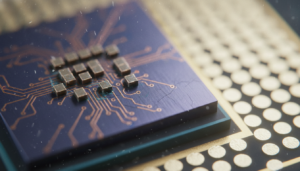
The Google Pixel 11 series derives its intelligence from the custom-designed Tensor G6 chip. This processor is engineered with a significantly upgraded integrated AI accelerator, boasting 50% more computing power compared to the Tensor G5. This substantial increase in processing capability is critical because it drives the shift from cloud-dependent AI to on-device processing. As a result, tasks are completed faster, and user data remains more secure on the device itself. This architectural choice fundamentally enhances the Pixel 11 AI features, ensuring that complex AI operations, from image processing to language understanding, are executed with unparalleled efficiency and privacy directly on the smartphone. The National Institute of Standards and Technology (NIST) provides guidelines for AI development and foundational research in computing, underscoring the importance of robust processing capabilities for advanced AI capabilities (NIST, foundational research).
Tensor G6 Chip Specifications vs. Predecessor
To illustrate the performance improvements of the Tensor G6 chip compared to its predecessor, specifically in AI-related metrics.
| Feature | Tensor G5 (Predecessor) | Tensor G6 |
|---|---|---|
| AI Accelerator Computing Power | Standard | 50% More |
| On-Device AI Processing | Limited | Extensive |
| Power Efficiency | Good | Improved |
Gemini Nano: Powering Intelligent Experiences on Pixel 11
Gemini Nano, Google’s highly efficient on-device large language model, plays a pivotal role in the Pixel 11 series. Its integration directly onto the Tensor G6 chip allows for sophisticated AI processing without constant reliance on cloud servers. This local processing is crucial because it significantly reduces latency, consequently providing faster and more private user interactions. Gemini Nano empowers a range of intelligent experiences, from contextual understanding in messaging apps to advanced summarization of long texts or web pages. The ability to perform these complex tasks on-device means that the Pixel 11 AI features are not only faster but also offer enhanced data privacy, as sensitive information does not leave the device for processing. This represents a significant step towards truly personal and secure AI. The Stanford Institute for Human-Centered Artificial Intelligence (HAI) conducts extensive research on large language models and their societal impacts, emphasizing the importance of ethical and privacy-focused AI development (Stanford HAI, research).
Key Capabilities of Gemini Nano on Pixel 11
- Enhanced Summarization: Condenses long articles or conversations into concise points.
- Smart Reply Suggestions: Generates contextually relevant and personalized responses in messaging apps.
- Advanced Contextual Understanding: Improves app predictions and personalized recommendations.
- On-Device Language Processing: Ensures privacy and speed for various text-based AI tasks.
Revolutionary Camera AI: Magic Cue and Beyond on Pixel 11
The Pixel 11 series introduces groundbreaking camera AI capabilities, with ‘Magic Cue’ at the forefront. This innovative feature, powered by the Tensor G6 and Gemini Nano, allows users to perform sophisticated image refinements and object manipulation directly on their device with unprecedented ease. Magic Cue operates by intelligently identifying elements within a photo, consequently enabling precise adjustments or removals that previously required professional software. This on-device processing means real-time results and enhanced privacy for personal photos. Beyond Magic Cue, the camera system leverages AI for superior low-light performance, intelligent scene detection, and advanced video stabilization. These collective Pixel 11 AI features transform the photographic experience, making professional-grade editing and capture accessible to every user. The National Science Foundation (NSF) funds fundamental research in computer science and AI, which includes advancements in image processing and computer vision algorithms essential for features like Magic Cue (NSF, research).
Pixel 11 Camera AI Innovations
- Magic Cue for Object Refinement: Intuitively manipulates or removes elements within photos.
- Enhanced Low-Light Photography: AI algorithms significantly improve detail and color accuracy in dark environments.
- AI-Powered Video Stabilization: Provides cinematic smoothness to handheld video recordings.
- Intelligent Scene Detection: Automatically optimizes camera settings for various photographic scenarios.
Real-time Translation and Communication Enhancements on Pixel 11
The Pixel 11 series significantly advances communication through its enhanced real-time language translation capabilities. Leveraging the Tensor G6 and Gemini Nano, the device processes translations entirely on-device, which means minimal latency and increased accuracy during conversations. This capability extends beyond simple text translation; it integrates seamlessly into voice and video calls, allowing for natural, fluid communication across different languages. The on-device processing is critical because it ensures user privacy, as conversations are not sent to cloud servers for translation. Consequently, the Pixel 11 AI features make international communication more accessible and intuitive, breaking down language barriers in an instant. Foundational research supported by the National Science Foundation (NSF) in areas like natural language processing and machine learning contributes to the technological underpinnings of advanced real-time translation systems (NSF, foundational research).
Enhanced Security and Privacy with Pixel 11 AI
Security and privacy are paramount in the Pixel 11, with AI playing a crucial role alongside the dedicated Titan M3 security chip. The Titan M3 is engineered to protect sensitive user data, from biometric information to encryption keys, by creating a hardware-level secure enclave. AI algorithms complement this by proactively identifying and mitigating potential threats, such as phishing attempts or malware, in real-time. This combined approach is effective because the AI can learn and adapt to new threats, consequently hardening the device’s security posture against evolving cyber risks. The on-device nature of these security Pixel 11 AI features ensures that user data remains protected without compromise, offering peace of mind in an increasingly digital world. The Cybersecurity and Infrastructure Security Agency (CISA) provides critical guidance and best practices for enhancing digital security and protecting against cyber threats, underscoring the importance of robust hardware and AI-driven defenses (CISA, guidance).
Pixel 11 Series: Differentiating AI Experiences Across Models
While the core Tensor G6 and Gemini Nano power all devices in the lineup, the Pixel 11 series offers differentiated AI experiences across its models: the standard Pixel 11, Pixel 11 Pro, Pixel 11 Pro XL, and Pixel 11 Pro Fold. These distinctions arise because variations in hardware, such as advanced camera arrays or specialized sensors in the Pro and Pro XL models, enable exclusive AI features. For instance, the Pro models may offer more sophisticated computational photography modes or enhanced AI-driven display optimizations. The Pixel 11 Fold, with its unique form factor, leverages AI for adaptive UI adjustments and multitasking efficiencies that are not present in the standard slab phones. Consequently, users can choose a Pixel 11 model that best aligns with their specific needs for advanced Pixel 11 AI features, reflecting Google’s strategy to tailor intelligence to diverse hardware designs.
Pixel 11 Series AI Feature Comparison
To provide a clear comparison of how AI features vary across the Pixel 11, Pro/XL, and Fold models.
| Feature | Pixel 11 | Pixel 11 Pro/XL | Pixel 11 Fold |
|---|---|---|---|
| Core AI Capabilities | Full | Full | Full |
| Exclusive Camera AI Modes | Standard | Advanced/Exclusive | Standard |
| Advanced On-Device Processing | High | Very High | High |
| Unique Form-Factor AI | N/A | N/A | Adaptive UI/Multitasking |
Battery Life Optimization: AI's Role in Pixel 11 Endurance
The Pixel 11 series achieves impressive battery life not solely through larger capacities but also through intelligent AI-driven optimization. The Tensor G6’s efficiency, combined with Gemini Nano’s on-device processing, means that less power is expended on data transfer to the cloud. Furthermore, AI algorithms continuously learn user habits and application demands, consequently optimizing resource allocation in real-time. This dynamic management system is crucial because it intelligently scales power usage, ensuring that the most intensive Pixel 11 AI features operate efficiently without unnecessarily draining the battery. The effect of this AI-powered optimization is a significantly extended daily use and improved overall battery longevity for the Pixel 11 series. The MIT Energy Initiative (MITEI) conducts leading research on advanced battery technologies and energy storage solutions, including optimizations for consumer electronics to enhance longevity and performance (MITEI, research).
FAQ
What are the key AI features of the Google Pixel 11?
The Google Pixel 11 AI features include a suite of on-device capabilities. These are powered by the Tensor G6 chip and Gemini Nano, offering advanced camera functions like Magic Cue for image refinement, real-time language translation, enhanced security through the Titan M3 chip, and intelligent battery optimization. The focus is on faster, more private, and intuitive user experiences directly on the device.
How does the Tensor G6 chip enhance AI on Pixel 11?
The Tensor G6 chip significantly enhances AI on Pixel 11 by featuring an integrated AI accelerator with 50% more computing power than its predecessor. This increased capability enables more sophisticated and faster on-device AI processing. Consequently, tasks that previously required cloud processing, such as complex image editing or real-time translation, are now handled locally, improving speed, efficiency, and data privacy.
What is Gemini Nano and what can it do on Pixel 11?
Gemini Nano is Google’s highly efficient on-device large language model integrated into the Pixel 11. It enables advanced AI features such as enhanced text summarization, contextual smart replies in messaging apps, and deeper understanding of user intent. Because it operates locally, Gemini Nano ensures faster responses and improved data privacy for these intelligent experiences.
How does Magic Cue image refinement work on the Pixel 11?
Magic Cue image refinement on the Pixel 11 utilizes the Tensor G6 and Gemini Nano to intelligently identify and manipulate elements within a photo. This on-device AI allows users to precisely refine objects, remove distractions, or make sophisticated adjustments in real-time. The process is intuitive and fast because all computations occur directly on the phone, ensuring privacy and immediate results.
Does the Pixel 11 offer real-time language translation?
Yes, the Pixel 11 offers robust real-time language translation, significantly enhanced by its on-device AI capabilities. The Tensor G6 and Gemini Nano process translations locally, resulting in minimal latency and more natural, fluid communication during voice, video, and text interactions. This local processing is critical for maintaining user privacy during sensitive conversations.
What is the battery life of the Pixel 11 series with Tensor G6?
The Pixel 11 series, powered by the Tensor G6 chip, features optimized battery life due to AI-driven power management. The Tensor G6’s efficiency, combined with AI algorithms that learn user habits, dynamically allocates power to ensure optimal performance without excessive drain. Consequently, users can expect extended daily use and improved overall battery longevity, even with intensive AI feature usage.
How does the Pixel 11’s on-device AI differ from cloud AI?
The Pixel 11’s on-device AI processes data directly on the device, unlike cloud AI which sends data to remote servers. This distinction is crucial because on-device AI offers several advantages: faster processing speeds due to reduced latency, enhanced user privacy as sensitive data remains local, and greater reliability since it doesn’t depend on internet connectivity. It enables more personal and secure AI experiences.
What security enhancements does the Pixel 11 offer with the Titan M3 chip?
The Pixel 11 integrates the Titan M3 security chip, which works in conjunction with AI to provide robust security enhancements. The Titan M3 creates a hardware-level secure enclave for sensitive data, while AI algorithms proactively identify and mitigate potential threats like phishing and malware in real-time. This combined approach hardens the device’s security posture, protecting user data and system integrity effectively.
When was the Google Pixel 11 series officially launched?
The Google Pixel 11 series was officially launched on August 12, 2026, at the Made by Google 2026 event. This event unveiled the full lineup, including the Pixel 11, Pixel 11 Pro, Pixel 11 Pro XL, and Pixel 11 Pro Fold, showcasing their new Tensor G6 chip and Gemini Nano AI capabilities to the public.
10 Best Free Lightroom Alternatives for Stunning Edits – The Tech ABC
What are the main differences between Pixel 11, Pro, and Pro XL?
The main differences between the Pixel 11, Pro, and Pro XL models lie primarily in their hardware specifications, which lead to differentiated AI experiences. Pro and Pro XL models typically feature more advanced camera systems, larger displays, and potentially exclusive computational photography modes or specialized sensors. These hardware variations enable unique AI-driven optimizations and features not available on the standard Pixel 11, tailoring the experience to specific user demands for advanced capabilities.
Limitations and Alternatives to Pixel 11 AI Features
While the Pixel 11 AI features represent a significant leap, certain limitations exist. The complexity of on-device AI can still pose a learning curve for some users, and intensive AI tasks, despite optimization, will still consume more battery than basic functions. Furthermore, the reliance on Google’s ecosystem means less flexibility for users preferring other platforms. For those seeking alternatives, competitors like the Samsung Galaxy S26 Ultra or the iPhone 17 Pro Max offer their own robust AI suites, each with distinct strengths in areas such as ecosystem integration or specific AI applications, providing varied options for competing tech-savvy consumers.
Conclusion: The Future of Smartphone Intelligence: Pixel 11 AI Features Leading the Way
The Pixel 11 AI features, driven by the Tensor G6 and Gemini Nano, mark a transformative moment for smartphone intelligence. Google’s unwavering commitment to on-device AI ensures a future where devices are not only smarter but also more private and responsive. This strategic direction positions the Pixel 11 series as a benchmark for how AI will integrate into our daily lives, fundamentally redefining expectations for mobile technology.
References
- Cybersecurity and Infrastructure Security Agency (CISA). (n.d.). CISA.gov. Retrieved August 15, 2026, from https://www.cisa.gov/
- MIT Energy Initiative (MITEI). (n.d.). Energy.mit.edu. Retrieved August 15, 2026, from https://energy.mit.edu/
- National Institute of Standards and Technology (NIST). (n.d.). Artificial Intelligence. Retrieved August 15, 2026, from https://www.nist.gov/artificial-intelligence
- National Science Foundation (NSF). (n.d.). Nsf.gov. Retrieved August 15, 2026, from https://www.nsf.gov/
- Stanford Institute for Human-Centered Artificial Intelligence (HAI). (n.d.). Hai.stanford.edu. Retrieved August 15, 2026, from https://hai.stanford.edu/