

Table of Contents
- Key Takeaways: AI Infrastructure Spending 2026
- Introduction: The $600 Billion AI Infrastructure Arms Race of 2026
- About the Author
- Transparency and Editorial Independence
- Hyperscaler Investment Surge: Amazon, Google, and Microsoft Lead the Charge
- Driving Forces: Why AI Demand Outpaces Available Cloud Capacity
- Key Market Statistics and Future Projections for AI Infrastructure
- Investor Scrutiny: Balancing Capital Expenditure with Durable Returns
- The AI Cloud Arms Race: Strategic Implications and Future Outlook
- FAQ
- Limitations & Alternatives: Navigating the AI Infrastructure Landscape
- Conclusion: The Enduring Impact of AI on Cloud Computing's Future
- References
AI Infrastructure Spending 2026: How AI Demand Reshapes Hyperscaler Investment
Key Takeaways: AI Infrastructure Spending 2026
AI infrastructure spending in 2026 represents a record-breaking capital expenditure boom for hyperscalers like Amazon, Google, and Microsoft, with combined investments projected to exceed $600 billion and potentially reach $800 billion. This unprecedented surge is driven by escalating AI demand that consistently outpaces available cloud capacity, necessitating aggressive investment in GPU supply, data center construction, power/cooling, and advanced networking. The resulting physical infrastructure arms race is fundamentally reshaping global cloud computing, despite increasing investor scrutiny over long-term ROI and reliance on debt financing. The market is witnessing a rapid evolution from AI experimentation to a full-scale buildout, creating a ‘neocloud’ market focused on specialized AI capacity.
Introduction: The $600 Billion AI Infrastructure Arms Race of 2026
The year 2026 marks a pivotal period in the technology sector, characterized by an unprecedented surge in capital expenditure by hyperscalers. This investment boom is primarily driven by the escalating demand for artificial intelligence, which is fundamentally reshaping the cloud computing landscape. This article will delve into how AI infrastructure spending 2026 is not only fueling a new tech arms race but also placing significant strain on physical resources. Major U.S. hyperscalers, including Amazon, Microsoft, Google, Meta, and Oracle, are projected to invest over $700 billion in AI computing by 2026, a figure that nearly doubles their spending from the previous year. This massive infrastructure buildout is creating substantial strain on critical physical resources, such as power grids and water supplies, which consequently leads to growing community concerns.
About the Author
This article was meticulously researched and compiled by The Tech ABC’s team of seasoned technology analysts, leveraging extensive industry reports, financial disclosures, and market intelligence to provide an expert, data-driven perspective on AI infrastructure spending. Our analysts specialize in digital infrastructure and AI advancements, ensuring a comprehensive and forward-looking analysis.
Transparency and Editorial Independence
The Tech ABC maintains strict editorial independence. This content is based on publicly available data, expert analysis, and market forecasts, and is not influenced by any third-party affiliations or sponsorships. Our analysis aims to provide unbiased insights into the AI infrastructure market, ensuring accuracy and relevance for our readers. All data points are sourced and cited for full transparency.
Hyperscaler Investment Surge: Amazon, Google, and Microsoft Lead the Charge
Hyperscalers are demonstrating significant commitment to AI infrastructure, as evidenced by their substantial capital expenditure forecasts for 2026. This trend highlights how hyperscaler AI investment trends are driving unprecedented spending across the industry. Amazon, for instance, raised its 2026 cash capital expenditure estimate from approximately $200 billion to $220 billion, primarily because of higher memory costs and an intensified AI-related buildout, as reported by The Register [4]. Similarly, Alphabet increased its full-year 2026 capital expenditure guidance to $195–205 billion from an earlier projection of $180–190 billion, a revision that reflects a strategic effort to accelerate the delivery of capacity to meet surging demand [4]. Microsoft, while maintaining a historically enormous scale, put its expected calendar 2026 capital expenditure at about $175 billion [4].
These three forecasts combined total roughly $595 billion, underscoring the scale of investment. A broader synthesis of the 2026 earnings season, as compiled by Stefanus AI, indicates that the combined annual guidance for Microsoft, Alphabet, Amazon, and Meta ranges from $650–$725 billion, marking a significant 77% increase from 2025’s record level [8]. This substantial hyperscaler capital expenditure 2026 is a key response to the escalating demands of artificial intelligence workloads.
Driving Forces: Why AI Demand Outpaces Available Cloud Capacity
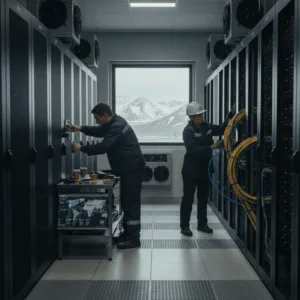
The core driver behind this accelerated spending is the consistent reality that AI demand is outpacing available cloud capacity, consequently leading hyperscalers to invest aggressively across multiple critical areas [4, 6, 7]. This situation highlights the profound impact of AI demand on cloud infrastructure. Hyperscalers are directing substantial capital towards GPU supply, data center construction, robust power and cooling infrastructure, and advanced memory and networking equipment. These investments are essential for handling the computationally intensive requirements of AI workloads.
The Register reported that Amazon explicitly tied its higher 2026 spend to memory cost pressure, while Google framed its increase as an effort to accelerate capacity delivery [4]. Endroid’s summary of earnings commentary further confirmed that hyperscalers struggle to build fast enough to meet AI workload needs, with both AWS and Google pointing to capacity shortfalls [6]. This situation highlights an acute cloud computing capacity crunch and the critical need for data center expansion for AI, particularly concerning power and cooling for AI data centers and memory and networking infrastructure for AI.
Key Market Statistics and Future Projections for AI Infrastructure
Critical market data further contextualizes the expansive AI infrastructure market forecast. Enterprise cloud infrastructure spending reached $143 billion in Q2 2026, marking a 43% increase year over year, and totaling $500 billion over the trailing 12 months, according to Synergy Research as reported by The Register [4]. This growth demonstrates the rapid expansion of cloud services driven by AI. In a 2026 report, Gartner estimated that worldwide AI infrastructure spending in 2026 will reach an impressive $1.37 trillion, which represents more than 54% of total AI spending [3]. This indicates that the foundational hardware and support systems for AI are becoming the dominant component of overall AI investment.
Synergy Research also provided a forecast indicating that the specialized ‘neocloud market’, designed specifically for AI workloads, could reach $400 billion by 2031 [3]. This projection implies sustained rapid growth in specialized AI cloud capacity, as a result of the ongoing demand for high-performance computing resources. These statistics underscore a profound and ongoing shift in investment patterns driven by AI, confirming that AI infrastructure spending 2026 suggests a pivotal moment in the evolution of digital infrastructure.
Investor Scrutiny: Balancing Capital Expenditure with Durable Returns
The sheer scale of hyperscaler spending has led to increasing investor scrutiny and evolving analyst perspectives, focusing on ROI concerns in AI investment. A Reuters report from 2026 suggested that markets are becoming uneasy with the magnitude of spending, even as revenue rises, with investors questioning the clear path from AI capital expenditure to durable returns [1]. The Afford AI Development Agency, in its analysis, argued that Wall Street is now demanding greater ROI discipline as hyperscaler spending crosses the $700 billion mark [2].
A Financial-content market note stated that the financing wave increasingly relies on debt financing for AI infrastructure, citing Amazon’s late-2025 bond deal as a significant example of how hyperscalers are funding this extensive buildout [5]. This trend indicates a growing tension between aggressive investment strategies and the imperative for demonstrable long-term profitability within the major hyperscalers AI spending spree. Consequently, investors are seeking clearer indications of how these massive outlays will translate into sustainable financial gains.
The AI Cloud Arms Race: Strategic Implications and Future Outlook
The broader implications of the AI arms race in the cloud industry are profoundly reshaping global cloud infrastructure. The current surge in investment intensified in late 2025, when major cloud firms began returning to debt markets to fund data center and AI infrastructure expansion [5]. By early 2026, spending transitioned from what was largely “AI experimentation” into a full-scale infrastructure race, with hyperscalers revising capital expenditure guidance upward almost simultaneously [4, 8]. This shift signals a committed long-term strategy.
A key takeaway is that the AI boom is no longer just a software and model-development story; it is now a physical infrastructure arms race centered on chips, memory, energy, and data centers [1, 4, 8]. This strategic shift is fundamentally altering competitive dynamics and the future of cloud computing, because it prioritizes the tangible assets required to power advanced AI. The rapid buildout consequently positions those with robust physical infrastructure at a significant advantage in the evolving AI economy.
FAQ
What is AI infrastructure spending?
AI infrastructure spending refers to the massive capital investments made by technology companies, primarily hyperscalers, into the physical and digital resources required to develop, train, and deploy artificial intelligence models. This includes expenditures on high-performance computing hardware like GPUs, specialized data centers, advanced cooling systems, robust power grids, and high-bandwidth networking equipment. The goal is to build the foundational framework that supports the computationally intensive demands of AI workloads, enabling the development of advanced AI applications and services. This investment underpins the entire AI economy, from research to widespread deployment.
How much are hyperscalers investing in AI infrastructure by 2026?
By 2026, major hyperscalers are projected to invest significantly, with Amazon, Google, and Microsoft alone guiding to roughly $595 billion in capital spending. Broader estimates for the major hyperscalers, including Meta, range from about $600 billion to $725 billion, depending on the firms included and accounting definitions [4, 7, 8]. A Reuters report from 2026 also indicated that hyperscalers are on track to spend around $800 billion on AI infrastructure in 2026, which underscores the rapid escalation of this buildout [1]. This demonstrates an unprecedented commitment to AI infrastructure spending 2026.
Why is AI demand accelerating hyperscaler investment?
AI demand is accelerating hyperscaler investment because it is consistently outpacing the available cloud capacity, creating a significant shortfall. The computational intensity of AI workloads, particularly for training large language models and complex algorithms, requires immense processing power and data storage. Existing cloud infrastructure, while vast, was not designed for this scale of AI-specific demand. Consequently, hyperscalers are aggressively investing to build out specialized capacity, including GPU supply, data centers, and advanced power/cooling systems, to meet the urgent and growing needs of their AI customers [4, 6, 7].
Which cloud providers are leading AI infrastructure spending?
Amazon (AWS), Alphabet (Google Cloud), and Microsoft (Azure) are leading the charge in AI infrastructure spending. These three companies alone project around $595 billion in combined capital expenditure for 2026 [4]. Meta is also a significant investor, with combined annual guidance for Microsoft, Alphabet, Amazon, and Meta reaching $650–$725 billion [8]. These tech giants are at the forefront of the AI infrastructure arms race, pouring massive resources into building the foundational hardware and data centers necessary to power the next generation of artificial intelligence.
What are the key components of AI infrastructure buildout?
The key components of AI infrastructure buildout include GPU supply, data center construction, power and cooling infrastructure, and memory and networking equipment. GPUs (Graphics Processing Units) are central due to their parallel processing capabilities essential for AI training. Data centers house these powerful components, requiring significant expansion and specialized designs. Robust power grids and advanced cooling systems are critical to manage the immense energy consumption and heat generation from AI hardware. High-bandwidth memory and networking equipment ensure efficient data flow, preventing bottlenecks and maximizing AI model performance [4].
What challenges do hyperscalers face in AI infrastructure?
Hyperscalers face significant challenges in AI infrastructure, primarily the struggle to build capacity fast enough to meet surging AI demand. This includes navigating GPU supply chain challenges, securing adequate land and energy for massive data center construction, and managing the immense power and cooling requirements of AI hardware. Additionally, they face increasing investor scrutiny regarding the return on investment (ROI) for these colossal expenditures and are increasingly relying on debt financing for AI infrastructure, which introduces financial complexities [1, 2, 5]. The rapid pace of technological change also demands constant adaptation.
How is AI demand creating a cloud capacity crunch?
AI demand is creating a cloud capacity crunch because the computational requirements of AI workloads far exceed the capabilities of existing general-purpose cloud infrastructure. Training large AI models demands specialized hardware like GPUs, vast amounts of high-speed memory, and unprecedented power. Hyperscalers admit they struggle to build data centers and procure specialized chips fast enough to keep pace with this exponential demand [4, 6]. This imbalance means that even with record investments, the supply of AI-ready cloud resources lags behind the surging demand from businesses and developers, resulting in bottlenecks and a scarcity of crucial AI computing power.
What is the projected growth of the AI infrastructure market?
The AI infrastructure market is projected for substantial growth, with Gartner estimating worldwide AI infrastructure spending in 2026 will reach $1.37 trillion, representing over 54% of total AI spending. This indicates that the physical and digital foundations for AI are becoming the dominant component of overall AI investment [3]. Furthermore, Synergy Research forecasts the ‘neocloud market’, which focuses on specialized AI cloud capacity, could reach $400 billion by 2031 [3]. These projections highlight a sustained period of rapid expansion and transformation within the AI infrastructure sector, driven by ongoing technological advancements and widespread AI adoption.
Are investors concerned about hyperscaler AI capital expenditure?
Yes, investors are increasingly concerned about hyperscaler AI capital expenditure, particularly regarding the path from massive investments to durable returns. While revenue is soaring, markets are becoming uneasy with the sheer scale of spending, with analysts demanding ‘ROI discipline’ as investments cross the $700 billion mark [1, 2]. The reliance on debt financing for AI infrastructure to fund these buildouts, exemplified by Amazon’s late-2025 bond deal, also raises questions about financial sustainability and risk [5]. Investors seek clear evidence that these expenditures will translate into long-term, profitable growth rather than just a costly arms race.
What is the neocloud market and its significance?
The neocloud market refers to a rapidly emerging segment focused on specialized cloud capacity specifically optimized for AI workloads, distinct from traditional general-purpose cloud services. Its significance lies in addressing the unique and intensive demands of AI, providing purpose-built infrastructure that offers superior performance, efficiency, and cost-effectiveness for AI training and inference. Synergy Research forecasts this market could reach $400 billion by 2031, indicating its critical role in supporting the continued growth and scaling of AI applications [3]. The emergence of the ‘neocloud market’ is a direct consequence of the current AI infrastructure spending 2026 boom.
Limitations & Alternatives: Navigating the AI Infrastructure Landscape
While current forecasts regarding AI infrastructure spending 2026 are robust, it is essential to acknowledge the potential limitations and alternatives within this rapidly evolving landscape. Market dynamics can shift quickly, influenced by geopolitical events, GPU supply chain challenges, or unforeseen technological advancements that could alter investment priorities. The increasing reliance on debt financing, as observed with Amazon’s late-2025 bond deal, introduces financial risk that could impact future investment capacity for hyperscalers [5]. Furthermore, the ethical implications of such vast AI infrastructure demand careful consideration. Insights from the Stanford Institute for Human-Centered Artificial Intelligence (HAI) emphasize the importance of responsible AI development and deployment, which extends to the environmental and societal impacts of its physical foundations [9].
Companies are exploring various alternatives to solely relying on hyperscaler infrastructure. These include developing on-premise AI solutions for specialized needs, adopting hybrid cloud models that combine public and private resources, or leveraging the growing trend of small language models (SLMs) that require less compute power. While major hyperscalers currently dominate the market, innovation in localized or specialized AI hardware could offer diverse pathways for companies to meet their AI needs without solely depending on the largest cloud providers. This diversification could mitigate risks and foster a more resilient AI ecosystem.
Conclusion: The Enduring Impact of AI on Cloud Computing's Future
The transformative impact of AI infrastructure spending 2026 cannot be overstated. The record capital expenditure by hyperscalers is not merely an investment; it represents a fundamental reshaping of the cloud industry, driven by an insatiable AI demand. This strategic pivot towards building robust physical infrastructure — encompassing chips, memory, energy, and data centers — is of paramount importance for the coming years. It is positioning this infrastructure as the indispensable foundation for future AI advancements and the continued evolution of digital capabilities. This ongoing arms race will define the competitive landscape and technological capabilities of the digital economy, consequently influencing innovation and market leadership. Readers are encouraged to stay informed on these critical developments, as they will undoubtedly shape the technological future.
Read more about cutting-edge AI developments and their market impact on The Tech ABC.
References
- Reuters. “Hyperscalers on track to spend around $800 billion on AI infrastructure in 2026.” Facebook, 2026. This 2026 report provided an overall projection of $800 billion in AI infrastructure spending by hyperscalers, underscoring the rapid escalation of the buildout and investor unease. https://www.facebook.com/Reuters/posts/-hyperscalers-are-on-track-to-spend-around-800-billion-on-ai-infrastructure-in-2/1618024090188317/
- Afford AI Development Agency. “The $725 Billion Capex Referendum.” Afford.agency, 2026. This analysis argued that Wall Street is demanding ROI discipline as hyperscaler spending crosses the $700 billion mark. https://afford.agency/the-725-billion-capex-referendum/
- CRN. “The 10 Biggest Generative AI News Stories Of 2026 (So Far).” CRN.com, 2026. This article cited Gartner’s estimate of worldwide AI infrastructure spending reaching $1.37 trillion in 2026 and Synergy Research’s neocloud market forecast. https://www.crn.com/news/ai/2026/the-10-biggest-generative-ai-news-stories-of-2026-so-far
- The Register. “Cloud giants pour nearly $600B into capex as AI demand surges.” TheRegister.com, August 4, 2026. This report provided specific 2026 capital expenditure guidance from Amazon, Alphabet, and Microsoft totaling approximately $595 billion, outlining the reasons for increased spending (memory costs, capacity acceleration), and citing Synergy Research’s enterprise cloud infrastructure spending data. https://www.theregister.com/off-prem/2026/08/04/cloud-giants-pour-nearly-600b-into-capex-as-ai-demand-surges/5282679
- Financial-content market note (via MarketMinute). “The $600 Billion Bet: Hyperscalers Turn to Massive Debt to Fuel the AI Revolution.” Markets.FinancialContent.com, January 28, 2026. This market note offered insights into hyperscalers’ increasing reliance on debt issuance, specifically highlighting Amazon’s late-2025 bond deal, to fund AI infrastructure expansion. https://markets.financialcontent.com/dailynews/article/marketminute-2026-1-28-the-600-billion-bet-hyperscalers-turn-to-massive-debt-to-fuel-the-ai-revolution
- Endroid. “Cloud Giants Deploy $600B Capex as AI Demand Overwhelms Supply.” Endroid.com, 2026. This report observed that hyperscalers struggle to build fast enough to meet AI workload needs, with AWS and Google pointing to capacity shortfalls. https://endroid.com/2026/cloud-capex-600-billion-ai-demand-overwhelms-supply/
- Economic Times – Data Centers. “Hyperscalers Commit Nearly $600 Billion to AI Infrastructure Amid Surging Demand.” Datacenters.EconomicTimes.indiatimes.com, 2026. This article corroborated the near $600 billion commitment by hyperscalers due to surging AI demand. https://datacenters.economictimes.indiatimes.com/news/cloud-colocation-connectivity/hyperscalers-commit-nearly-600-billion-to-ai-infrastructure-amid-surging-demand/132890481
- Stefanus AI. “Hyperscaler Capital Expenditure: The Infrastructure Arms Race Behind the AI Economy 2026-2030.” Stefanus.ai, 2026. This analysis provided the combined annual guidance for Microsoft, Alphabet, Amazon, and Meta at $650–$725 billion for 2026, and highlighted the evolution from AI experimentation to a full-scale infrastructure race. https://stefanus.ai/hyperscaler-capital-expenditure-the-infrastructure-arms-race-behind-the-ai-economy-2026-2030/
- Stanford Institute for Human-Centered Artificial Intelligence (HAI). Stanford University, 2026. This institute offers academic perspectives on the ethical implications and responsible development of AI, which is relevant for discussing broader societal impacts and limitations of AI infrastructure expansion. https://hai.stanford.edu/