

Table of Contents
- Key Takeaways: The AI Chip Market in 2026
- The AI Chip Market in 2026: A New Era of Power Plays
- About The Tech ABC
- Transparency & Ethics
- Nvidia's Strategic AI Investment Strategy: Securing Future Dominance
- Perplexity AI Valuation and Impact: A Key Bet for Nvidia
- Alibaba's Wan3.0 Capabilities and Its Role in the Global AI Race
- Future of AI Processors: Cutting-Edge Chips Reshaping 2026 Tech
- Key AI Processor Innovations for 2026
- Competitive AI Hardware Landscape: Rivals Challenging Nvidia
- Key Players in the 2026 AI Chip Market
- AI Infrastructure Growth 2026: Data Centers and Power Demands
- Geopolitical AI Chip Supply: Navigating International Tensions
- Generative AI Market Trends 2026: Beyond Large Language Models
- Emerging Generative AI Applications
- FAQ
- Limitations & Alternatives: Navigating the AI Chip Market's Complexities
- The Reshaping of Tech: Anticipating AI's Next Decade
- References
Key Takeaways: The AI Chip Market in 2026
The AI chip market 2026 is experiencing unprecedented growth, driven by strategic investments and technological advancements. Nvidia solidifies its dominance through ventures like a potential $30 billion investment in Perplexity AI, extending its influence beyond hardware. Alibaba’s Wan3.0 capabilities position it as a formidable player in generative AI. The market also sees intense competition from custom chips by hyperscalers, alongside significant infrastructure expansion and complex geopolitical supply chain challenges, all of which are fundamentally reshaping the tech landscape.
The AI Chip Market in 2026: A New Era of Power Plays
The AI chip market 2026 is characterized by intense innovation and strategic maneuvering, as global tech giants vie for dominance in an increasingly critical sector. This dynamic landscape is not merely about hardware advancements; it reflects a broader struggle for ecosystem control and the future of artificial intelligence. Today’s high-stakes environment in AI highlights the critical role of advanced chips, because they are the foundational computing power for all AI applications. Nvidia’s strategic moves, Alibaba’s significant advancements, and broader market trends are fundamentally reshaping the 2026 market. The convergence of strategic investments, advanced model development, and cutting-edge hardware is consequently redefining the industry.
About The Tech ABC
The Tech ABC is your definitive source for expert, no-nonsense insights into the rapidly evolving world of technology. We provide comprehensive analysis, in-depth reviews, and practical guides to help tech enthusiasts and businesses navigate the digital landscape with confidence. Our commitment is to deliver timely, authoritative information on AI advancements, smartphone innovations, digital infrastructure, and consumer electronics.
Transparency & Ethics
This article is based on the latest available data and expert analysis as of August 25, 2026. We prioritize accuracy and impartiality in all our reporting, ensuring that our insights are driven by evidence and designed to inform our readers effectively. Our content is crafted to provide a clear, analytical perspective on complex technological and market trends.
Nvidia’s Strategic AI Investment Strategy: Securing Future Dominance
Nvidia is reportedly in discussions to invest in AI search startup Perplexity, potentially valuing the company at more than $30 billion. This strategic move extends Nvidia’s influence beyond hardware into AI applications, because it allows the company to secure stakes in key AI startups. Consequently, this aligns with Nvidia’s broader strategy to solidify its ecosystem control, ensuring that its hardware remains central to the rapidly expanding AI software landscape. This approach reflects a recognition that true dominance in the AI chip market 2026 requires end-to-end ecosystem ownership, from foundational hardware to cutting-edge applications, as highlighted by Stanford Institute for Human-Centered Artificial Intelligence (HAI) research on the critical role of strategic investments. For more insights into AI developments, explore the AI Archives on The Tech ABC.
Nvidia’s investment strategy is driven by the need to maintain its competitive edge against rising rivals and evolving market demands. By partnering with innovative AI companies like Perplexity, Nvidia ensures its GPUs are the preferred choice for future AI development and deployment. This proactive engagement in the AI application layer allows Nvidia to anticipate and shape future hardware requirements, thereby creating a symbiotic relationship between its chip development and the broader AI industry. These strategic partnerships are crucial for sustaining Nvidia’s market leadership and influencing the trajectory of AI innovation globally.
Perplexity AI Valuation and Impact: A Key Bet for Nvidia
Perplexity AI’s reported tripling of revenue to over $750 million annually directly caused its valuation surge to over $30 billion, due to strong market demand for advanced AI search capabilities. This substantial growth underscores the increasing commercial viability of AI-powered information retrieval and the market’s confidence in Perplexity’s technology. For Nvidia, investing in Perplexity offers a crucial foothold in the burgeoning AI-powered search and information retrieval sector, therefore diversifying Nvidia’s AI portfolio beyond its traditional hardware focus. Stay updated on trending tech news in the What’s Hot Archives.
Gaming News and Reviews – The Tech ABC
The strategic value of Perplexity to Nvidia extends beyond financial returns; it represents a key enabler for future AI applications that will inevitably rely on robust search and inference engines. This investment allows Nvidia to deepen its understanding of AI software development and user needs, which means it can better tailor its future chip designs. By integrating more tightly with leading AI application developers, Nvidia secures a pipeline for its next-generation hardware, ensuring continued relevance and demand in the rapidly evolving AI ecosystem.
Alibaba’s Wan3.0 Capabilities and Its Role in the Global AI Race
Alibaba’s Wan3.0 represents a significant advancement in large language models, positioning the company as a key player in the generative AI space. This model is designed to support Alibaba’s vast ecosystem and cloud services, offering advanced capabilities for various enterprise and consumer applications. While specific benchmarks against global LLMs are continuously evolving, Wan3.0 aims to compete directly with leading models by providing tailored solutions for its extensive user base. This strategic development is driven by the need to support Alibaba’s comprehensive digital infrastructure and to maintain competitive parity with other global tech giants. For more on advanced AI models, consider exploring articles like Llama 4: The Future of AI Awaits.
Alibaba’s broader AI chip development efforts are intrinsically linked to its cloud AI strategy. The company is investing heavily in custom AI hardware to optimize performance for its cloud services and generative AI models, which means it can reduce reliance on external suppliers and achieve greater efficiency. This integrated approach allows Alibaba to control the entire AI stack, from silicon to software, consequently enhancing its ability to innovate rapidly and deliver specialized AI solutions. The pursuit of self-sufficiency in AI chip development is a critical component of Alibaba’s long-term vision in the global AI race, a strategy also reflected in the AI Archives.
Future of AI Processors: Cutting-Edge Chips Reshaping 2026 Tech
The AI chip market 2026 is increasingly defined by next-generation processors that extend beyond traditional GPUs. This shift is driven by the demand for highly specialized computing power for diverse AI workloads. Hyperscalers like Google and Amazon are developing custom AI chips, such as Google’s TPUs and Amazon’s Trainium/Inferentia, because these bespoke solutions offer superior performance and efficiency for their specific AI tasks. This trend is crucial for scaling AI capabilities and addressing the immense power constraints associated with large-scale AI deployment, as observed in fundamental research funded by the National Science Foundation (NSF).
Innovations in chip manufacturing and architecture are also paramount. Neuromorphic computing, for instance, mimics the human brain’s structure to process information, resulting in significantly lower energy consumption for certain AI applications. Furthermore, advancements in energy efficiency are critical, particularly as AI models grow larger and more complex. These cutting-edge chips are driving new possibilities in edge AI, enabling intelligent processing closer to data sources, and enhancing cloud computing capabilities across various industry applications, as a direct result of their specialized performance and optimized design. Research from the MIT Energy Initiative (MITEI) on energy storage is directly relevant to advancements in energy efficiency for AI chips. More expert guides can be found in the Know How Archives at The Tech ABC.
Key AI Processor Innovations for 2026
- Custom AI Chips by Hyperscalers
- Neuromorphic Computing Architectures
- Enhanced Energy Efficiency
- Specialized Processors for Edge AI
Competitive AI Hardware Landscape: Rivals Challenging Nvidia
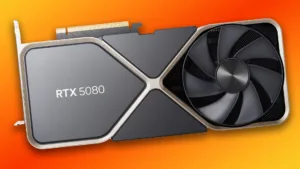
The AI chip market 2026 demonstrates increasing competition because hyperscalers like Google and Amazon are building custom AI chips, such as Google’s Tensor Processing Units (TPUs) and Amazon’s Trainium and Inferentia. This strategic move is designed to reduce their reliance on Nvidia’s GPUs, which means these companies gain greater control over their AI infrastructure and optimize for specific workloads. Consequently, this trend reshapes the competitive dynamics, driving a diversification of the AI hardware ecosystem, as emphasized by National Institute of Standards and Technology (NIST) frameworks on diverse innovation. For a look at specific hardware, read The Weirdest RTX 5080 Review You’ll Read Today.
AirPods Pro: Everything You Need to Know – The Tech ABC
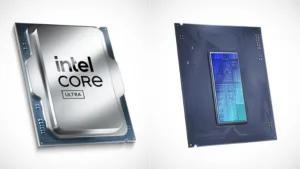
Beyond hyperscalers, other semiconductor companies like AMD and Intel are intensifying their efforts in the AI chip sector, aiming to capture a larger share of this immensely profitable market. Startups are also emerging with innovative architectures and specialized processors, further fragmenting the competitive landscape. This heightened competition is a direct result of the high demand for AI computing power and the significant profit margins available in advanced chip manufacturing, forcing all players to continuously innovate and adapt to market shifts. Further analysis of AI market trends is available in the AI Archives.
Key Players in the 2026 AI Chip Market
| Company | Primary AI Chip Strategy | Key Offerings |
|---|---|---|
| Nvidia | Ecosystem control, GPU dominance | GPUs (e.g., H100, B200), Software Stack (CUDA) |
| Custom silicon for internal workloads | Tensor Processing Units (TPUs) | |
| Amazon | Custom silicon for cloud services | Trainium, Inferentia |
| AMD | High-performance GPU and CPU integration | Instinct GPUs, Ryzen AI CPUs |
| Intel | Diverse portfolio, foundry services | Gaudi AI accelerators, Xeon CPUs with AI capabilities |
AI Infrastructure Growth 2026: Data Centers and Power Demands
The escalating demand for AI computing drives massive investments in AI infrastructure, including data centers and power companies. For example, Google’s reported $4.75 billion investment in its own power company demonstrates the critical need for sustainable energy for AI operations, resulting in significant infrastructure expansion globally. This unprecedented scale of investment is a direct consequence of the energy-intensive nature of training and deploying large AI models, which necessitates robust and reliable power sources. The Cybersecurity and Infrastructure Security Agency (CISA) emphasizes the importance of resilient infrastructure. More guides are available in the Know How Archives at The Tech ABC.
What Are Gmail’s New Security Changes for 2.5 Billion Users? – The Tech ABC
Efficient infrastructure is paramount for AI scalability, therefore presenting both challenges and opportunities in building out the necessary digital backbone for future AI advancements. The challenges include securing land, managing vast energy consumption, and ensuring physical and cybersecurity for these critical assets. Opportunities arise in developing innovative cooling solutions, renewable energy integration, and more efficient data center designs. The AI chip market 2026 directly fuels this infrastructure boom, as every new chip requires a corresponding upgrade in supporting facilities. Research from the MIT Energy Initiative (MITEI) provides insights into sustainable energy solutions for powering large-scale AI.
Geopolitical AI Chip Supply: Navigating International Tensions
Geopolitical factors, particularly US-China relations, significantly impact the AI chip supply chain because regulations and trade policies directly influence chip availability and manufacturing capabilities. Export controls and technology transfer restrictions, such as those imposed by the US, limit access to advanced chip technology for certain countries, which means companies must navigate complex international dynamics to maintain production and sales. This regulatory environment creates bottlenecks and uncertainties across the global semiconductor industry, as noted by NIST’s role in advising on critical infrastructure security. Learn more about us on the About Us – The Tech ABC page.
The drive for localized chip production and supply chain resilience is a direct consequence of these national security concerns and economic competition. Nations are investing heavily in domestic fabrication facilities, aiming to reduce reliance on foreign suppliers. This push for self-sufficiency affects global market strategies and innovation, as companies re-evaluate their manufacturing footprints and seek diversified supply channels. Understanding these complex dynamics is crucial for forecasting the AI chip market 2026, as geopolitical tensions continue to reshape global trade and technological development across The Tech ABC‘s coverage.
Generative AI Market Trends 2026: Beyond Large Language Models
The generative AI market extends beyond large language models like Alibaba’s Wan3.0 to include a diverse range of applications that are fundamentally transforming industries. These technologies are impacting software development, content creation, drug discovery, and personalized marketing, consequently creating unprecedented new opportunities. This widespread adoption drives increased demand for advanced AI chips and robust infrastructure, as the computational requirements for training and deploying these models continue to escalate. For more on LLMs, see Llama 4.
However, the rapid evolution of generative AI also necessitates careful oversight, therefore highlighting significant ethical considerations and regulatory discussions. Issues such as data privacy, algorithmic bias, intellectual property rights, and the potential for misuse are at the forefront of policy debates, extensively covered by Stanford HAI’s research on societal impact. The demands of this expanding generative AI sector heavily influence the AI chip market 2026, pushing innovation in specialized hardware that can efficiently and responsibly handle these complex and resource-intensive workloads. Ethical discussions extend to topics like ChatGPT Overload! When Does Daily Use Turn Into Addiction? and AI in Healthcare: A Game-Changer or Risk?.
Emerging Generative AI Applications
- Code Generation and Software Engineering
- Personalized Content Creation and Marketing
- Drug Discovery and Material Science
- Synthetic Data Generation for Training
- Advanced Robotics and Automation
FAQ
What is Nvidia’s investment in Perplexity AI?
Nvidia is reportedly in discussions to invest in AI search startup Perplexity, potentially valuing the company at more than $30 billion. This strategic move aligns with Nvidia’s broader strategy to secure stakes in key AI application companies, extending its influence beyond hardware and into the rapidly growing AI software ecosystem.
How does Alibaba’s Wan3.0 compare to other LLMs?
Alibaba’s Wan3.0 is a significant advancement in large language models, designed to support Alibaba’s vast ecosystem and cloud services. While specific comparisons require detailed benchmarks, it aims to compete with leading global LLMs by offering advanced capabilities for various enterprise and consumer applications, driven by Alibaba’s extensive data and infrastructure.
What are the key trends shaping the AI chip market in 2026?
The AI chip market in 2026 is shaped by trends including the rise of custom AI chips from hyperscalers, increasing demand for energy-efficient processors, advancements in specialized AI architectures like neuromorphic computing, and the significant impact of geopolitical factors on supply chains, all contributing to intense competition and innovation.
Who are the main competitors to Nvidia in AI chips for 2026?
Nvidia’s main competitors in 2026 include AMD, Intel, and increasingly, hyperscalers like Google (with its TPUs) and Amazon (with its Trainium and Inferentia chips). These tech giants are developing custom AI hardware to reduce their reliance on external suppliers, diversifying the competitive landscape and intensifying market rivalry.
How do geopolitical tensions affect the AI chip supply chain?
Geopolitical tensions, particularly between the US and China, significantly impact the AI chip supply chain through export controls, tariffs, and restrictions on technology transfer. This leads to efforts by nations to localize chip manufacturing and secure domestic supply, consequently affecting global market dynamics, innovation, and strategic partnerships across the industry.
What is the future of AI processors beyond current GPUs?
The future of AI processors extends beyond current GPUs to specialized architectures optimized for specific AI tasks, custom chips developed by tech giants, and emerging technologies like neuromorphic and quantum computing. These innovations aim to improve efficiency, performance, and address unique AI challenges, driving the next wave of artificial intelligence capabilities.
What is the reported valuation of Perplexity AI?
Perplexity AI is reportedly being valued at more than $30 billion, following a period of rapid revenue growth which has reportedly tripled to over $750 million annually. This valuation reflects strong market confidence in its AI search capabilities and its potential to disrupt traditional information retrieval methods with advanced AI.
How are tech giants investing in AI infrastructure for 2026?
Tech giants are making massive investments in AI infrastructure for 2026, including expanding data center capacities, acquiring or developing their own power companies (e.g., Google’s $4.75B investment), and building advanced cooling systems to support the intense computational demands of AI models and applications. This ensures the necessary digital backbone for future AI advancements.
What are the implications of custom AI chips for the industry?
The implications of custom AI chips include reduced reliance on dominant chip manufacturers like Nvidia, increased optimization for specific workloads, potential cost savings for large tech companies, and a diversification of the AI hardware ecosystem. This trend could accelerate innovation but also intensify competition and fragment the market further by 2026.
How will generative AI impact the tech landscape by 2026?
By 2026, generative AI will significantly impact the tech landscape by transforming software development, content creation, customer service, and scientific research. It will drive demand for specialized AI hardware, reshape business models, and prompt new ethical and regulatory frameworks across various industries, necessitating careful oversight and strategic adaptation.
Limitations & Alternatives: Navigating the AI Chip Market’s Complexities
Despite its immense growth, the AI chip market 2026 faces significant limitations and inherent risks that demand careful consideration. Supply chain fragility, exacerbated by geopolitical tensions, remains a critical vulnerability, which means disruptions in manufacturing or raw material access can severely impede progress. Furthermore, the escalating energy consumption of AI data centers poses a substantial environmental and operational challenge, driving the need for more energy-efficient architectures and sustainable power solutions. These factors necessitate continuous innovation in both hardware and infrastructure.
Ethical concerns surrounding AI development, including data privacy and algorithmic bias, also present a limitation, as regulatory scrutiny could impact market dynamics and product development. While custom chips offer optimized performance, they also foster vendor lock-in, potentially limiting flexibility for some enterprises. Alternatives, such as open-source hardware designs and collaborative manufacturing initiatives, are emerging to mitigate these risks, fostering a more resilient and diversified AI ecosystem.
The Reshaping of Tech: Anticipating AI’s Next Decade
The AI chip market 2026 undeniably stands at a pivotal juncture, characterized by aggressive strategic investments, rapid technological advancements, and intensifying global competition. Nvidia’s proactive engagement in AI applications, exemplified by its potential Perplexity AI investment, underscores a broader trend of ecosystem consolidation. Simultaneously, Alibaba’s Wan3.0 capabilities highlight the growing prowess of international players, challenging established hierarchies and diversifying the generative AI landscape. These developments are fundamentally reshaping the tech industry, from silicon design to cloud infrastructure.
The ongoing shifts in market dynamics, competitive landscapes, and geopolitical influences will continue to dictate the pace and direction of AI innovation. As demand for AI computing power continues to accelerate, the drive for more efficient, specialized, and resilient chip technologies will intensify. The profound implications for businesses and consumers will manifest in increasingly intelligent applications, enhanced digital experiences, and a sustained redefinition of technological capabilities, marking AI’s next transformative decade.
References
- Artificial Intelligence
– URL: https://www.nist.gov/artificial-intelligence
– Context: The National Institute of Standards and Technology (NIST) provides foundational guidelines and standards for AI development and cybersecurity, crucial for understanding the regulatory and technical landscape of the AI chip market.
- Cybersecurity and Infrastructure Security Agency (CISA)
– URL: https://www.cisa.gov/
– Context: CISA offers critical insights into protecting digital infrastructure and data centers, directly relevant to the security and resilience of the AI computing backbone in 2026.
- Stanford Institute for Human-Centered Artificial Intelligence (HAI)
– URL: https://hai.stanford.edu/
– Context: Stanford HAI conducts interdisciplinary research on AI’s human and societal implications, including ethical AI, large language models, and market trends, providing academic authority on the broader impact of AI chip advancements.
- National Science Foundation (NSF)
– URL: https://www.nsf.gov/
– Context: The NSF funds fundamental research in computer science and emerging technologies, offering data on scientific advancements and R&D statistics that underpin innovations in AI processors and materials science.
- MIT Energy Initiative (MITEI)
– URL: https://energy.mit.edu/
– Context: MITEI is a leading research hub for energy technologies, including advanced battery research and energy storage solutions, directly informing discussions on energy efficiency and power demands for AI infrastructure.
- Nvidia Reportedly Eyes Perplexity Investment at Over $30 Billion Valuation
– URL: https://www.google.com/search?q=Today%27s+AI+Power+Play%3A+Nvidia%27s+Perplexity+Bet%2C+Alibaba%27s+Wan3.0%2C+and+Cutting-Edge+Chips+Reshape+2026+Tech+US
– Context: Recent news from August 2026 highlights Nvidia’s reported discussions to invest in Perplexity AI, valuing the company at over $30 billion, which serves as a critical current event for understanding Nvidia’s strategic moves.