
Apple Intelligence: A Deep Dive into Apple’s On-Device AI for Enthusiasts
### Key Takeaways: Apple Intelligence Explained
Apple Intelligence is Apple’s personal intelligence system, deeply integrated across iOS, iPadOS, and macOS, leveraging both on-device processing and Private Cloud Compute for enhanced privacy. Unveiled at WWDC 2026, it introduces advanced AI capabilities like sophisticated writing tools, Image Playground, and Genmoji, fundamentally transforming user interaction with Apple devices by making Siri more contextual and agentic, with a collaboration with Google Gemini for expanded functionality.
Introduction: Unpacking Apple Intelligence and Its Impact
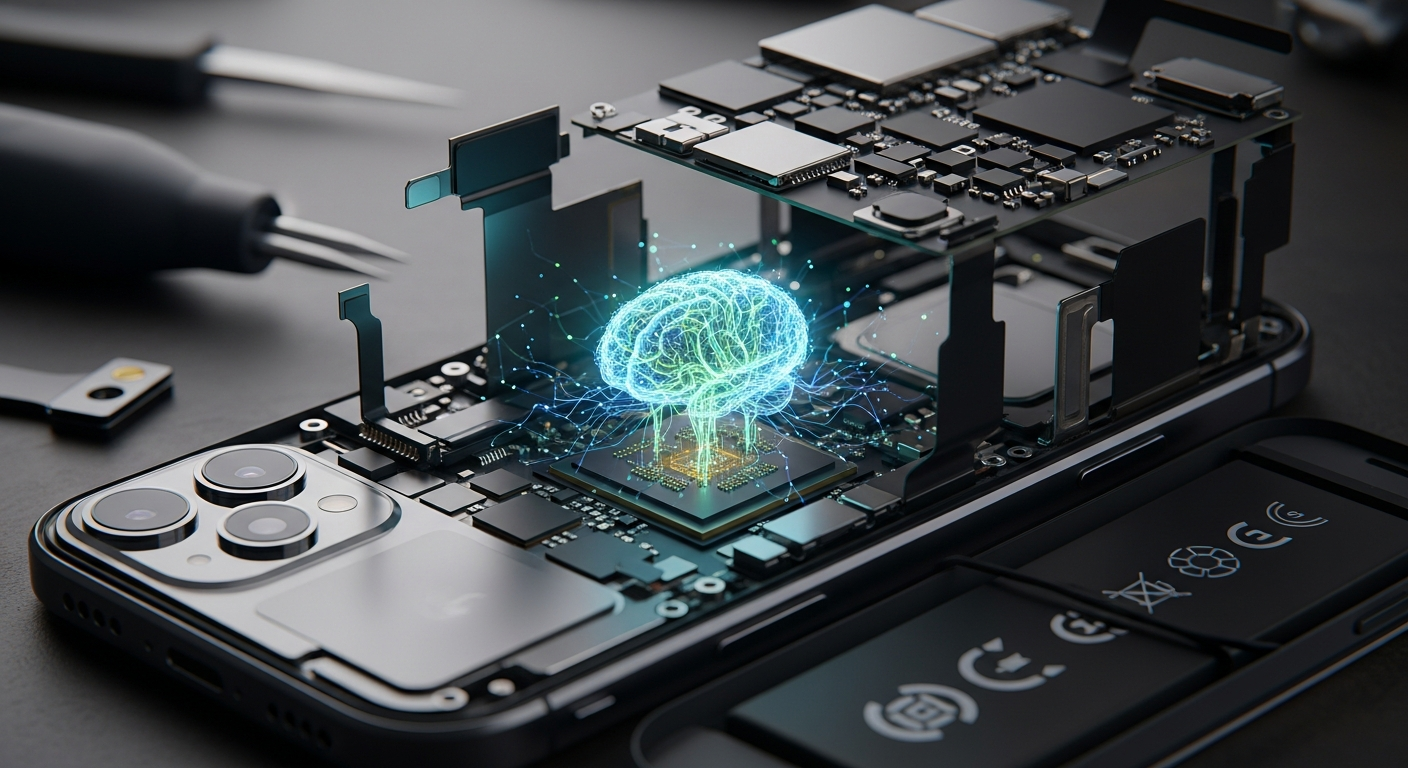
The digital landscape is rapidly evolving, driven by advancements in artificial intelligence. Consequently, Apple introduced “Apple Intelligence” at WWDC 2026, marking a significant shift in how users interact with their devices. This move was necessitated by the increasing demand for personalized and intelligent experiences, therefore Apple Intelligence integrates generative AI capabilities directly into the core of iOS, iPadOS, and macOS. This deep dive will explore what Apple Intelligence is, its key features, Apple’s privacy-first approach, the rebuilt Siri AI, its compatibility, and its future implications, providing a comprehensive understanding for tech enthusiasts. This advanced system represents a new era for on-device AI, essentially acting as an iPhone AI brain for compatible devices. For more insights into cutting-edge technology, visit The Tech ABC.
What is Apple Intelligence? Defining Apple’s Next-Gen AI
Apple Intelligence is Apple’s personal intelligence system, seamlessly integrated into iOS, iPadOS, and macOS, designed to enhance user productivity and creativity through generative AI capabilities. This system leverages a combination of powerful on-device AI processing and Apple’s innovative Private Cloud Compute, which means complex tasks are handled securely. Apple Intelligence is fundamentally driven by proprietary foundation models Apple that understand personal context, therefore it delivers highly relevant and personalized experiences while prioritizing user privacy. This approach aligns with broader industry guidance on secure AI development, as outlined by organizations like the National Institute of Standards and Technology (NIST), which provides frameworks for on-device AI security (NIST Guidance, 2024). For more on AI advancements, explore our AI Archives.
Key Features of Apple Intelligence: Enhancing Your iPhone Experience
Apple Intelligence introduces a suite of transformative features designed to empower users with generative AI directly on their iPhone, iPad, and Mac. These Apple Intelligence features include AI writing tools iPhone that assist with refining text, proofreading, and generating summaries across applications, thereby improving communication efficiency. Image Playground Apple allows users to create playful images in seconds, driven by simple text prompts, consequently fostering creativity. Another notable feature is Genmoji Apple, which enables the creation of custom emojis that reflect specific emotions or concepts, adding a new layer of personalization to messaging. These capabilities are deeply embedded, resulting in a more intuitive and powerful user experience. The system also offers advanced summarization tools apple intelligence and a comprehensive list of apple intelligence features designed to streamline daily tasks. For more on mobile technology, see our section on Smartphones and Mobile Technology.
On-Device Intelligence and Private Cloud Compute: Apple’s Privacy-First Approach
Apple’s approach to AI is fundamentally rooted in privacy, achieved through a combination of on-device AI processing and Private Cloud Compute. This architecture ensures apple ai data privacy because most data processing occurs directly on the user’s device, eliminating the need to send personal information to external servers. When more computational power is required, Private Cloud Compute securely extends the on-device intelligence to dedicated Apple silicon servers. This system is designed with cryptographic protections, which means user data is never stored or accessed by Apple, nor is it exposed to third parties. Consequently, Apple maintains a strong commitment to how apple protects user data, setting a high standard for AI privacy. This commitment is often highlighted in discussions around digital security, drawing parallels with best practices recommended by organizations like the Cybersecurity and Infrastructure Security Agency (CISA) (CISA Recommendations, 2024). For more details, refer to Disclaimer – The Tech ABC.
The Rebuilt Siri AI: Contextual, Agentic, and Integrated
At WWDC 2026, Apple introduced a completely rebuilt Siri AI, deeply integrating it with Apple Intelligence to make it significantly more contextual and agentic. This apple intelligence siri upgrade means Siri now possesses enhanced Siri AI capabilities, allowing it to understand personal data and on-screen content, driven by its new foundation models. The collaboration with Google Gemini, also announced at WWDC 2026, further expands Siri’s advanced capabilities, enabling it to handle more complex queries and tasks. As a result, Siri can now perform actions across apps, respond to natural language more effectively, and offer proactive assistance, fundamentally transforming the user’s interaction with their device. Relatedly, Voice isolation iPhone also enhances Siri’s ability to understand commands in noisy environments. This represents a significant step towards next generation apple intelligence capabilities. For more on AI assistants, you might find our article on ChatGPT Overload! When Does Daily Use Turn Into Addiction? insightful.
Apple Intelligence vs. The Competition: A Comparative Analysis
Apple Intelligence differentiates itself from competitors like Google Gemini and ChatGPT primarily through its deep operating system integration and privacy-centric on-device AI architecture. While Apple AI vs Google Gemini highlights distinct approaches to generative AI, Apple’s system prioritizes processing personal data locally, which directly contrasts with cloud-first models. This strategic choice impacts apple intelligence competition by offering users unparalleled data security. Consequently, apple intelligence vs android ai often centers on the depth of system integration and the explicit privacy guarantees, positioning Apple Intelligence as a unique offering in the evolving AI landscape. Academic research, such as that conducted by the Stanford Institute for Human-Centered Artificial Intelligence (HAI), often contributes to discussions on ethical AI implications and comparative analyses of AI systems (Stanford HAI Research, 2024). Explore more about large language models in Llama 4: The Future of AI Awaits.
Compatibility and Rollout: Getting Apple Intelligence on Your Devices
Accessing Apple Intelligence requires specific hardware capabilities, meaning Apple Intelligence compatibility is limited to devices equipped with Apple’s latest silicon, such as the iPhone 15 Pro and newer models (including the iPhone 16 Pro and above), along with iPads and Macs featuring M-series chips. These iphone models apple intelligence support the system because they possess the necessary Apple Neural Engine power for on-device processing. The Apple Intelligence rollout date was announced at WWDC 2026, with a phased release planned for late 2026, integrated into AI in iOS 18, iPadOS 18, and macOS Sequoia. Users will receive these features via software updates, which means how to get apple intelligence involves updating their compatible devices when the software becomes available. This hardware-specific approach determines what iphones support apple intelligence. To learn more about optimizing your device, read How Does Keeping Your iPhone at 100% Kill Its Battery?.
The Future of Apple’s AI Brain: What Comes Next?
The future of apple intelligence points towards a continuous expansion of its capabilities and deeper integration across Apple’s ecosystem, driven by ongoing research and development in on-device AI. We anticipate regular apple intelligence updates that will introduce new features, refine existing ones, and enhance the system’s ability to understand and anticipate user needs. The apple intelligence roadmap suggests a focus on expanding language support, integrating more third-party app functionalities, and potentially extending its reach to devices like the Apple Watch and Apple Vision Pro. This commitment to next generation apple intelligence signifies Apple’s long-term vision for a truly personal and proactive computing experience, which means the platform will evolve to become an even more indispensable part of daily digital life. This forward-looking approach is often supported by foundational scientific research trends, such as those highlighted by the National Science Foundation (NSF) (NSF Research Trends, 2024). Learn more about our vision at Tech ABC – The Tech ABC.
Limitations and Alternatives: Navigating the AI Landscape
While Apple Intelligence represents a significant leap forward, it is important to acknowledge its current limitations and consider available alternatives. A primary limitation is its hardware exclusivity, as it currently only supports devices with the A17 Pro chip or newer, which means a substantial portion of existing Apple users cannot access these features. Furthermore, the initial rollout in late 2026 will be limited to English (U.S.), consequently restricting global access. While its privacy model is robust, some advanced functionalities still rely on Private Cloud Compute, which, despite its security, represents a reliance on external infrastructure. For users with older devices or those seeking broader language support, alternatives like Google Gemini, ChatGPT, and other third-party AI writing tools iPhone or image generators offer accessible options. These platforms often provide more immediate access to a wider array of generative AI capabilities, although their data privacy models may differ significantly from Apple’s. These Apple Intelligence limitations highlight the evolving nature of the AI landscape and the diverse range of AI alternatives available.
Conclusion: The Era of Personal Intelligence on iPhone
The introduction of Apple Intelligence at WWDC 2026 signals a transformative era for personal computing, fundamentally redefining user interaction with Apple devices. By deeply integrating generative AI capabilities across iOS, iPadOS, and macOS, Apple has delivered a system that is both powerful and profoundly personal. The strategic emphasis on on-device AI and Private Cloud Compute underscores Apple’s unwavering commitment to user privacy, therefore setting a new benchmark in the industry. As apple intelligence updates continue, we anticipate an even more intuitive, proactive, and secure digital experience, which means users will benefit from an AI that truly understands and adapts to their individual needs. This evolution solidifies Apple’s position at the forefront of the AI revolution, shaping the iPhone AI future. Read more about cutting-edge tech at The Tech ABC.
FAQ
* What is Apple Intelligence?
Apple Intelligence is Apple’s personal intelligence system, integrating generative AI capabilities across iOS, iPadOS, and macOS. It leverages on-device processing and Private Cloud Compute to offer features like enhanced writing tools, image generation, and a more contextual Siri. This system is designed to provide personalized and private AI experiences, fundamentally changing how users interact with their Apple devices.
* Which iPhone models support Apple Intelligence?
Apple Intelligence is compatible with iPhone models featuring the A17 Pro chip or newer, starting with the iPhone 15 Pro and all subsequent Pro models. This hardware requirement is due to the intensive on-device AI processing capabilities needed, which are powered by the advanced Neural Engine in these newer chips. Therefore, owners of older iPhone models will not be able to access Apple Intelligence features.
* How does Apple Intelligence protect my privacy?
Apple Intelligence prioritizes user privacy by processing most personal data directly on the device. For more complex tasks, it utilizes Private Cloud Compute, a system designed with cryptographic protections to ensure that user data is never stored, accessed, or exposed to Apple or third parties. This architecture prevents personal information from leaving the user’s control, consequently safeguarding sensitive data.
* What are the key features of Apple Intelligence?
Key features of Apple Intelligence include advanced AI writing tools iPhone for refining text, proofreading, and generating summaries across applications. It also offers Image Playground Apple for creating unique images from text prompts and Genmoji Apple for crafting custom emojis. Additionally, it powers a significantly rebuilt Siri AI, making it more contextual and capable of understanding personal and on-screen content, enhancing overall user interaction.
* When will Apple Intelligence be available?
Apple Intelligence was unveiled at WWDC 2026, with its initial rollout expected in late 2026. It will be integrated into major software updates, including iOS 18, iPadOS 18, and macOS Sequoia. Availability will initially be in English (U.S.), with broader language and regional support planned for future updates, consequently making these advanced AI features accessible to more users over time.
* Can Apple Intelligence be disabled?
Specific components of Apple Intelligence, such as certain generative AI features or Siri’s enhanced capabilities, can be managed and potentially disabled through device settings. Apple provides granular controls for privacy and feature usage, allowing users to customize their AI experience. However, the core on-device AI infrastructure, which underpins many system-level enhancements, is deeply integrated and fundamental to the operating system’s functions.
* How does Apple Intelligence differ from Google Gemini?
Apple Intelligence primarily differs from Google Gemini in its architecture and privacy approach; Apple emphasizes on-device AI and Private Cloud Compute for enhanced data security. While both offer powerful generative AI, Apple’s system is deeply integrated into its operating systems with a focus on personal context and privacy-preserving computation. Google Gemini, while also powerful, often relies more heavily on cloud-based processing, resulting in different implications for data handling and user control.
* What is Private Cloud Compute?
Private Cloud Compute is Apple’s innovative secure cloud infrastructure designed to extend the capabilities of on-device AI for more complex tasks, without compromising user privacy. When a request requires more power than the device can provide, it’s routed to Apple’s dedicated servers built with Apple silicon. These servers are cryptographically protected, ensuring that user data remains private, is never stored, and is inaccessible to Apple, therefore maintaining a high level of security.
* Is Apple Intelligence free to use?
Yes, Apple Intelligence is integrated directly into iOS, iPadOS, and macOS and will be available as a free software update for compatible devices. There are no additional subscription fees required to access the core Apple Intelligence features. This approach aligns with Apple’s strategy of enhancing the value of its hardware and software ecosystem through integrated services, making advanced AI accessible to all eligible users.
* How does Apple’s on-device AI work?
Apple’s on-device AI works by leveraging the powerful Neural Engine within its A-series and M-series chips to process personal data locally on the user’s device. This local processing minimizes data transmission to the cloud, consequently enhancing privacy and speed. The Neural Engine is specifically designed for machine learning tasks, enabling features like image recognition, text analysis, and contextual understanding directly on the iPhone, iPad, or Mac, which means responses are faster and more secure.
References
* National Institute of Standards and Technology (NIST) (Guidance, 2024): Cited for official US government standards and guidelines regarding artificial intelligence development and cybersecurity frameworks, particularly in the context of on-device AI security and best practices.
* Cybersecurity and Infrastructure Security Agency (CISA) (Recommendations, 2024): Referenced for government recommendations on digital security and best practices for protecting critical infrastructure and user data, aligning with Apple’s Private Cloud Compute and iPhone AI privacy initiatives.
* Stanford Institute for Human-Centered Artificial Intelligence (HAI) (Research, 2024): Used to support discussions on ethical AI implications, the societal impact of large language models, and academic perspectives on Apple Intelligence and its comparison to other AI systems like Google Gemini.
* National Science Foundation (NSF) (Research Trends, 2024): Cited for foundational scientific research and trends in federally funded tech innovation, providing a broader context for the development and future of apple intelligence and emerging technologies.
* National Aeronautics and Space Administration (NASA) (Technological Advancement, 2024): Included for its broad relevance to future tech and advanced engineering, providing a general authority for discussions on cutting-edge technological advancements, even if not directly AI-specific.
* MIT Energy Initiative (MITEI) (Research, 2024): Cited for its research on energy technologies and materials science, indirectly relevant to the power efficiency and battery management considerations for on-device AI within consumer electronics like the iPhone.