
Table of Contents
- Key Takeaway: Selecting the Optimal Cloud for Machine Learning
- Introduction: Navigating the Cloud AI Landscape
- About The Tech ABC Editorial Team
- Transparency Disclosure
- AWS Machine Learning Services: The Mature Ecosystem
- Key Offerings: Amazon SageMaker, Rekognition, Comprehend
- Strengths for ML: Scalability, Comprehensive Ecosystem, Broad Toolset
- Considerations: Potential Complexity, Cost Management
- Azure Machine Learning Platform: Enterprise-Ready AI
- Key Offerings: Azure ML Studio, Cognitive Services, Azure Databricks
- Strengths for ML: Seamless Enterprise Integration, Hybrid Cloud Capabilities, Microsoft Ecosystem Synergy
- Considerations: Microsoft-Centric Workflows, Learning Curve for Non-Microsoft Users
- Google Cloud AI and ML Offerings: Innovation and Data Science Power
- Key Offerings: Vertex AI, AI Platform, Custom Tensor Processing Units (TPUs)
- Strengths for ML: Leading-Edge Innovation, Superior TPU Performance, Strong Data Science Focus
- Considerations: Ecosystem Maturity Compared to AWS, Pricing Model Nuances
- Recent News Impact: Google-Blackstone US$5 Billion AI Cloud Venture (May 2026)
- Comparing Cloud ML Pricing and Costs: A Financial Deep Dive
- Compute Costs: GPU vs. TPU Performance-Price Ratio
- Service-Specific Pricing: Managed Services and API Costs
- Cost Optimization Strategies Across Platforms
- Data Handling for Machine Learning in Cloud: Storage, Processing, and Security
- Data Ingestion and Storage Solutions (S3, Blob Storage, Cloud Storage)
- ETL and Data Pipelines for ML (Glue, Data Factory, Dataflow)
- Data Security and Compliance for AI Workloads
- MLOps and Deployment on AWS, Azure, GCP: From Development to Production
- Model Training and Management Capabilities
- Deployment and Monitoring Strategies (Real-time, Batch)
- Automation and Orchestration for ML Pipelines
- Choosing the Best Cloud for Your ML Project: A Decision Framework
- Key Factors to Consider: Project Scale, Existing Infrastructure, Team Expertise, Budget
- Use Case Scenarios: Startups vs. Enterprises, Specific AI Tasks (e.g., Computer Vision, NLP)
- Frequently Asked Questions (FAQ) About Cloud AI Platforms
- Which cloud platform is best for small machine learning projects?
- How do Google Cloud TPUs compare to AWS and Azure GPUs for AI training?
- What are the key pricing differences for machine learning services across AWS, Azure, and GCP?
- Which cloud provider offers the most comprehensive suite of pre-built AI models?
- Is Azure Machine Learning a good choice for large enterprise AI initiatives?
- What are the MLOps and model deployment capabilities of each cloud platform?
- How does data security for AI/ML differ between AWS, Azure, and GCP?
- Which cloud excels in specific AI workloads like computer vision or NLP?
- What impact does the Google-Blackstone AI cloud venture have on GCP's offerings?
- Can I migrate machine learning models easily between AWS, Azure, and GCP?
- Limitations and Alternatives: Nuances in Cloud AI Selection
- Conclusion: Making an Informed Cloud AI Decision
- References
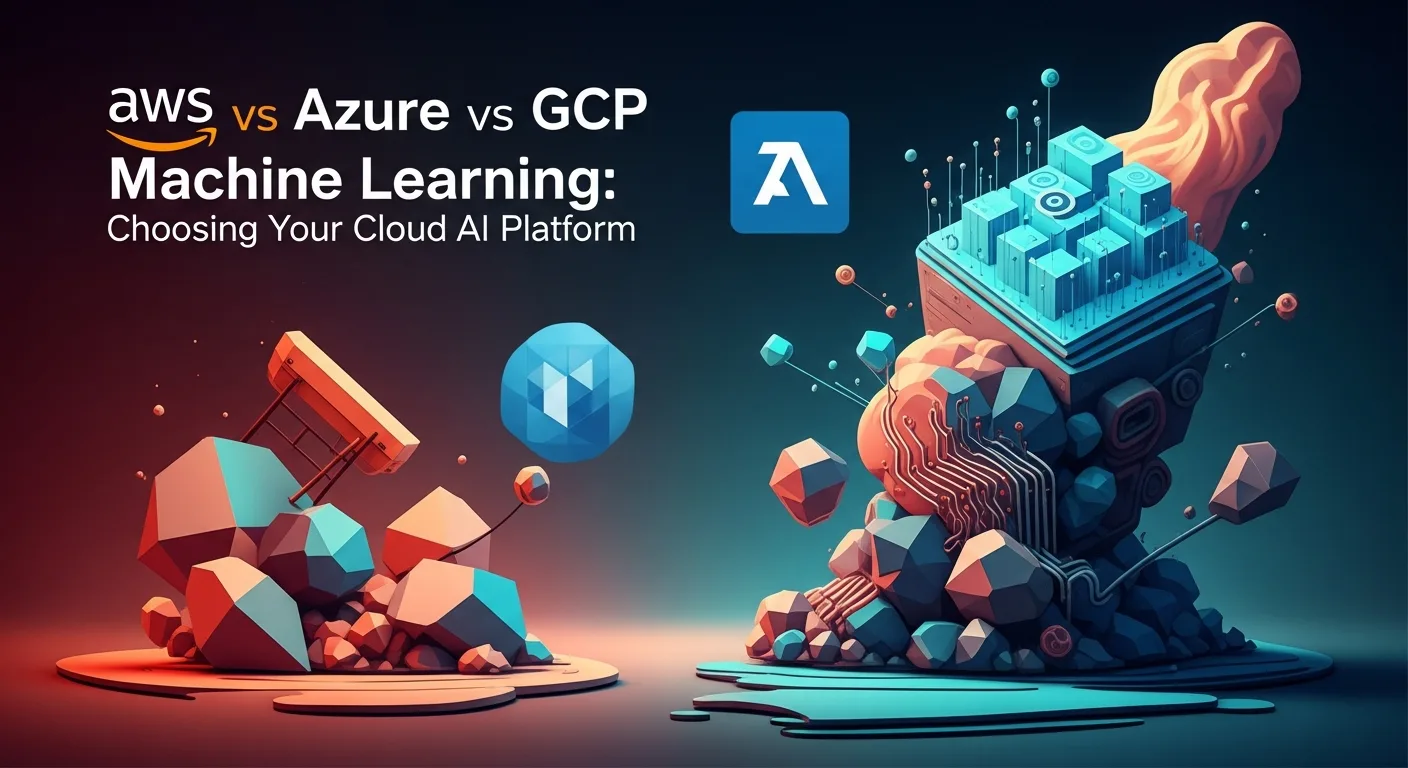
AWS vs Azure vs GCP Machine Learning: Choosing Your Cloud AI Platform
Key Takeaway: Selecting the Optimal Cloud for Machine Learning
Choosing between AWS vs Azure vs GCP machine learning platforms necessitates a deep dive into project scale, existing infrastructure, team expertise, and budget. AWS offers a mature, comprehensive ecosystem, ideal for broad enterprise needs. Azure excels in seamless enterprise integration and hybrid cloud scenarios, particularly for Microsoft-centric organizations. GCP, powered by Vertex AI and advanced TPUs, leads in innovation and high-performance data science, especially for cutting-edge AI workloads. The optimal choice is therefore contingent upon specific use cases, resulting in varied strengths across training, deployment, and data handling capabilities.
Introduction: Navigating the Cloud AI Landscape
The rapid evolution of artificial intelligence has made cloud platforms indispensable for machine learning (ML) development and deployment. However, the challenge of selecting the most suitable provider from Amazon Web Services (AWS), Microsoft Azure, and Google Cloud Platform (GCP) is substantial, because each offers distinct advantages and ecosystems. This article provides a decisive comparison of AWS vs Azure vs GCP machine learning capabilities, leveraging detailed insights to guide your platform selection for optimal project outcomes. Our analysis focuses on critical aspects such as service offerings, performance, cost, and MLOps, thereby enabling an informed decision aligned with specific business and technical requirements.
About The Tech ABC Editorial Team
Our team of seasoned technology analysts and AI specialists brings decades of combined experience in cloud computing, machine learning, and enterprise architecture. We are committed to providing expert, unbiased insights to help you navigate complex technological decisions.
The Tech ABC
Transparency Disclosure
This article is an independent analysis by The Tech ABC. Our evaluations are based on publicly available information, industry reports, and expert assessments as of May 20, 2026. We aim to provide objective, data-driven comparisons. This content may contain affiliate links, which support our research without affecting our editorial integrity. For more details, please see our full disclaimer.
AWS Machine Learning Services: The Mature Ecosystem
AWS offers a robust and mature ecosystem for machine learning, characterized by its extensive service portfolio and deep integration capabilities. This makes it a formidable contender in the aws vs azure vs gcp machine learning comparison, particularly for organizations seeking comprehensive solutions and broad scalability.
Key Offerings: Amazon SageMaker, Rekognition, Comprehend
Amazon SageMaker serves as AWS’s flagship ML service, providing a fully managed environment for building, training, and deploying models. This comprehensive platform significantly streamlines the ML lifecycle, consequently reducing operational overhead. Beyond SageMaker, AWS offers specialized services such as Amazon Rekognition for computer vision and Amazon Comprehend for natural language processing (NLP), which provide pre-trained models and customizable APIs. These services enable developers to integrate advanced AI functionalities into applications rapidly, driven by AWS’s expansive infrastructure.
Strengths for ML: Scalability, Comprehensive Ecosystem, Broad Toolset
AWS’s primary strength in machine learning lies in its unparalleled scalability and the breadth of its ecosystem. Its infrastructure supports virtually any workload size, from small-scale experiments to large-scale enterprise deployments, because it offers a vast array of compute, storage, and networking options. The extensive toolset, including integration with data lakes (S3) and analytics services (Athena, Glue), ensures that all stages of the ML pipeline are well-supported. This comprehensive approach results in a flexible environment suitable for diverse ML projects, a characteristic aligning with the broad technology standards relevant to cloud infrastructure as suggested by the National Institute of Standards and Technology (NIST) in their work on Artificial Intelligence.
Considerations: Potential Complexity, Cost Management
Despite its strengths, AWS machine learning services can present a steep learning curve due to their sheer breadth and depth. Navigating the multitude of services and configurations consequently requires significant expertise. Furthermore, managing costs effectively on AWS can be challenging; because of its granular pricing model, unnoticed resource usage can lead to unexpected expenses. Therefore, careful planning and continuous monitoring are crucial for cost optimization in AWS ML environments.
Azure Machine Learning Platform: Enterprise-Ready AI
Microsoft Azure positions its machine learning platform as an enterprise-grade solution, focusing on seamless integration with existing Microsoft technologies and hybrid cloud capabilities. This makes Azure a compelling option in the aws vs azure vs gcp machine learning debate for businesses deeply invested in the Microsoft ecosystem.
Key Offerings: Azure ML Studio, Cognitive Services, Azure Databricks
Azure Machine Learning Studio provides a collaborative, end-to-end platform for ML development, offering both code-first and low-code/no-code experiences. Its Cognitive Services deliver a suite of AI APIs for vision, speech, language, and decision-making, enabling rapid integration of AI into applications. Azure Databricks, a highly optimized Apache Spark analytics platform, enhances data processing and ML model training capabilities. This combination ensures that Azure supports a wide spectrum of ML workflows, from data preparation to model deployment.
Strengths for ML: Seamless Enterprise Integration, Hybrid Cloud Capabilities, Microsoft Ecosystem Synergy
Azure’s core advantage for machine learning is its deep integration with Microsoft’s enterprise products, including Active Directory, SQL Server, and Power BI. This synergy simplifies identity management, data access, and reporting for organizations already using Microsoft solutions. Furthermore, Azure’s robust hybrid cloud capabilities, facilitated by Azure Arc, allow enterprises to run ML workloads across on-premises, multi-cloud, and edge environments, which provides significant flexibility and addresses data residency requirements, aligning with recommendations for digital security and data protection from the Cybersecurity and Infrastructure Security Agency (CISA) on their Home Page.
Considerations: Microsoft-Centric Workflows, Learning Curve for Non-Microsoft Users
While Azure excels for Microsoft-centric enterprises, its tightly integrated ecosystem can present a learning curve for teams unfamiliar with Microsoft technologies. Workflows are often optimized for Microsoft tools, which means organizations relying heavily on open-source or non-Microsoft proprietary solutions may face additional integration challenges. Consequently, adoption can be slower for non-Microsoft users who need to adapt to Azure’s specific architectural patterns.
Google Cloud AI and ML Offerings: Innovation and Data Science Power
Google Cloud Platform (GCP) distinguishes itself through cutting-edge innovation, particularly in its specialized hardware and strong focus on data science. This makes GCP a powerful contender in the aws vs azure vs gcp machine learning comparison, especially for advanced AI research and high-performance computing.
Key Offerings: Vertex AI, AI Platform, Custom Tensor Processing Units (TPUs)
Vertex AI unifies GCP’s machine learning services into a single platform, streamlining the entire ML development lifecycle from data ingestion to model deployment. This consolidation simplifies model management and experimentation. GCP’s custom Tensor Processing Units (TPUs) provide unparalleled performance for deep learning workloads, because they are specifically designed for matrix computations critical to neural networks. These offerings collectively empower data scientists to build and deploy complex AI models efficiently, driven by Google’s foundational AI research.
Strengths for ML: Leading-Edge Innovation, Superior TPU Performance, Strong Data Science Focus
GCP’s commitment to innovation is evident in its continuous advancements in AI research and hardware. Its TPUs consistently outperform general-purpose GPUs for specific deep learning tasks, resulting in faster training times and reduced computational costs for large-scale models. This superior performance is a direct consequence of Google’s long-standing leadership in AI research. The platform’s strong data science focus, complemented by services like BigQuery and Dataflow, provides robust tools for data preparation and analysis, which are critical for effective machine learning, a point often highlighted in academic research on AI advancements, such as that conducted by the Stanford Institute for Human-Centered Artificial Intelligence (HAI) on their Home Page.
Considerations: Ecosystem Maturity Compared to AWS, Pricing Model Nuances
While GCP boasts significant innovation, its overall ecosystem, particularly in terms of the breadth of integrated services, is still maturing when compared to AWS. This can mean fewer pre-built integrations for certain niche use cases. Additionally, GCP’s pricing model, while competitive, can have nuances, particularly with TPUs, which requires careful resource allocation to optimize costs. Therefore, understanding the specific pricing structures is crucial for budget management.
Recent News Impact: Google-Blackstone US$5 Billion AI Cloud Venture (May 2026)
The recently announced Google-Blackstone US$5 billion AI Cloud Venture, initiated in May 2026, significantly enhances GCP’s competitive edge for specialized AI workloads. This partnership aims to bring 500 megawatts of data center capacity online by 2027, which means a substantial increase in dedicated AI compute resources. The venture specifically offers Compute-as-a-Service using Google’s custom AI chips, Tensor Processing Units (TPUs), thereby solidifying GCP’s position as a robust option for high-performance AI projects. This strategic investment is driven by increasing demand for dedicated AI compute, consequently enabling greater scalability and specialized support for cutting-edge machine learning initiatives.
Comparing Cloud ML Pricing and Costs: A Financial Deep Dive
Understanding the financial implications is critical when comparing aws vs azure vs gcp machine learning platforms. Each cloud provider employs distinct pricing models, which means direct comparisons require careful consideration of compute, storage, and service-specific costs.
Compute Costs: GPU vs. TPU Performance-Price Ratio
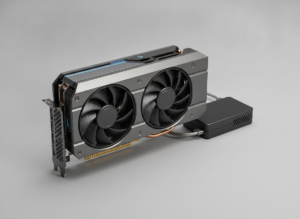
Compute costs represent a significant portion of ML expenses. AWS and Azure primarily leverage NVIDIA GPUs, offering a wide range of instance types. GCP distinguishes itself with custom TPUs, which provide a superior performance-price ratio for specific deep learning tasks, particularly for models like large language models. This specialized hardware often results in faster training times and lower costs for compatible workloads, because TPUs are optimized for matrix operations. However, for general-purpose ML or tasks not suited for TPUs, GPU pricing can vary significantly across all platforms, driven by instance type, region, and reservation models.
Service-Specific Pricing: Managed Services and API Costs
Beyond raw compute, the pricing of managed ML services and AI APIs differs considerably. AWS SageMaker has a complex pricing structure based on instance usage, storage, and data processing. Azure ML Studio and Cognitive Services often use a pay-as-you-go model with tiered pricing for API calls and managed compute. GCP’s Vertex AI also follows a consumption-based model, with specific costs for model training, prediction, and data labeling. Understanding these service-specific charges is crucial, as they can quickly accumulate, impacting the overall project budget.
Cost Optimization Strategies Across Platforms
Effective cost optimization is essential regardless of the chosen platform. Strategies include leveraging spot instances for non-critical workloads, utilizing reserved instances for stable, long-term compute needs, and optimizing data storage tiers. Implementing robust monitoring and alerting tools is also vital to track resource consumption and prevent unexpected charges. Furthermore, designing efficient ML pipelines that minimize redundant computations and data transfers can significantly reduce operational costs across AWS, Azure, and GCP.
Data Handling for Machine Learning in Cloud: Storage, Processing, and Security
Effective data handling is foundational for any successful machine learning initiative. When evaluating aws vs azure vs gcp machine learning capabilities, it is imperative to compare their approaches to data ingestion, processing, storage, and security, because these factors directly impact model performance and compliance.
Data Ingestion and Storage Solutions (S3, Blob Storage, Cloud Storage)
Each cloud provider offers robust solutions for data ingestion and storage. AWS provides Amazon S3 for object storage, alongside RDS and DynamoDB for structured and NoSQL data. Azure offers Blob Storage, Data Lake Storage, and various database services. GCP features Cloud Storage for objects and Bigtable/Cloud SQL for structured data. These services are designed for high durability and scalability, ensuring that vast datasets required for ML can be stored and accessed efficiently. Selecting the appropriate storage solution is therefore critical, driven by data volume, access patterns, and cost considerations.
ETL and Data Pipelines for ML (Glue, Data Factory, Dataflow)
Building efficient Extract, Transform, Load (ETL) and data pipelines is crucial for preparing data for machine learning. AWS offers Glue, a serverless data integration service, and Data Pipeline. Azure provides Data Factory for orchestrating data workflows and Synapse Analytics. GCP features Dataflow (powered by Apache Beam) for stream and batch processing, and Dataproc for Apache Spark and Hadoop clusters. These tools enable data engineers to cleanse, transform, and move data at scale, which is essential for training accurate ML models. The choice of ETL tool often depends on existing team expertise and specific integration requirements.
Data Security and Compliance for AI Workloads
Data security and compliance are paramount for AI workloads, particularly with sensitive data. All three clouds offer extensive security features, including encryption at rest and in transit, identity and access management (IAM), and network isolation. AWS provides KMS and IAM policies; Azure offers Key Vault and Azure Active Directory; GCP utilizes Cloud KMS and IAM. Each platform also offers compliance certifications (e.g., HIPAA, GDPR, ISO 27001), which is crucial for regulated industries. Implementing a robust security posture is therefore non-negotiable, driven by the need to protect data integrity and meet regulatory requirements, a practice emphasized by the Cybersecurity and Infrastructure Security Agency (CISA) in their Data Security Best Practices.
MLOps and Deployment on AWS, Azure, GCP: From Development to Production
Operationalizing machine learning models from development to production requires robust MLOps capabilities. A critical aspect of comparing aws vs azure vs gcp machine learning ecosystems is their support for model training, deployment, monitoring, and automation, because these factors dictate the efficiency and reliability of ML systems.
Model Training and Management Capabilities
AWS SageMaker offers comprehensive features for model training, including distributed training, hyperparameter tuning, and experiment tracking. Azure ML Studio provides similar capabilities with integrated notebooks and automated ML (AutoML). GCP’s Vertex AI unifies these functions, offering MLOps tooling for experiment management, model versioning, and feature stores. All platforms support popular ML frameworks like TensorFlow, PyTorch, and scikit-learn. The effectiveness of model training is therefore enhanced by the platform’s ability to manage experiments, track metrics, and ensure reproducibility, resulting in more robust and reliable models.
Deployment and Monitoring Strategies (Real-time, Batch)
Deployment options include real-time endpoints for low-latency predictions and batch inference for large datasets. AWS offers SageMaker Endpoints, Lambda, and ECS. Azure provides Azure Kubernetes Service (AKS) and Azure Container Instances (ACI) for deployment, alongside Azure Functions. GCP utilizes Vertex AI Endpoints, Cloud Run, and GKE. Post-deployment, continuous monitoring is crucial for detecting model drift, performance degradation, and data quality issues. Each platform provides monitoring tools and integration with logging and alerting services, which means proactive identification and resolution of operational problems, aligning with principles for AI system monitoring often explored in foundational scientific research, such as that supported by the National Science Foundation (NSF) on their Home Page.
Automation and Orchestration for ML Pipelines
Automating and orchestrating ML pipelines is fundamental to MLOps. AWS Step Functions and Apache Airflow on MWAA enable workflow orchestration. Azure Data Factory and Azure Pipelines facilitate automation for CI/CD and data movement. GCP’s Cloud Composer (managed Apache Airflow) and Vertex AI Pipelines provide robust tools for building and managing automated ML workflows. These orchestration capabilities ensure that models can be continuously retrained, validated, and redeployed, driven by new data and performance metrics, thereby maintaining model relevance and accuracy over time.
Choosing the Best Cloud for Your ML Project: A Decision Framework
Selecting the best cloud platform for your ML project requires a structured decision framework that considers various organizational and technical factors. This final comparative analysis helps synthesize the strengths of aws vs azure vs gcp machine learning to align with specific project needs.
Key Factors to Consider: Project Scale, Existing Infrastructure, Team Expertise, Budget
The optimal cloud choice is highly dependent on several key factors. Project scale dictates the required compute and storage resources, influencing cost and complexity. Existing infrastructure, particularly a strong commitment to a specific cloud provider or on-premises solutions, often steers the decision due to integration efficiencies. The team’s expertise with particular cloud ecosystems significantly impacts development velocity and operational efficiency. Finally, budget constraints necessitate a thorough understanding of each platform’s pricing models and potential for cost optimization. These considerations collectively form the basis for a strategic decision.
Use Case Scenarios: Startups vs. Enterprises, Specific AI Tasks (e.g., Computer Vision, NLP)
Different use cases favor different platforms. Startups often prioritize rapid development and cost efficiency, potentially leaning towards GCP for its innovation or AWS for its breadth. Large enterprises, with existing Microsoft investments, may find Azure’s integration capabilities highly beneficial. For specific AI tasks, GCP excels in deep learning and high-performance computing due to its TPUs, making it well-suited for cutting-edge computer vision or complex NLP models. AWS provides a comprehensive suite for diverse ML applications, while Azure offers strong support for hybrid scenarios and regulated industries. Therefore, aligning the platform with the specific AI task and organizational context is paramount.
Frequently Asked Questions (FAQ) About Cloud AI Platforms
Which cloud platform is best for small machine learning projects?
For small machine learning projects, GCP (Google Cloud Platform) often provides a more streamlined experience with Vertex AI, making it user-friendly for rapid prototyping. AWS SageMaker and Azure ML also offer simplified interfaces for smaller tasks. The ‘best’ choice ultimately depends on developer familiarity and specific service needs, but GCP’s integrated tools can accelerate initial development phases due to its cohesive platform design.
How do Google Cloud TPUs compare to AWS and Azure GPUs for AI training?
Google Cloud’s TPUs (Tensor Processing Units) generally offer superior performance for specific deep learning workloads, especially large language models and complex neural networks, compared to AWS and Azure GPUs. This is because TPUs are custom-designed for matrix multiplications crucial for deep learning. While GPUs are more versatile for a broader range of ML tasks, TPUs provide a better performance-price ratio for highly parallelizable AI training, resulting in faster training times for compatible models.
What are the key pricing differences for machine learning services across AWS, Azure, and GCP?
The key pricing differences stem from compute, storage, and managed service models. AWS is known for its granular, complex pricing; Azure often offers competitive enterprise agreements and hybrid benefits; and GCP provides strong value for specialized AI hardware like TPUs. While all use a pay-as-you-go model, their specific service tiers and discounts vary. Consequently, a detailed cost analysis based on expected resource consumption is essential for accurate comparison.
Which cloud provider offers the most comprehensive suite of pre-built AI models?
AWS generally offers the most comprehensive suite of pre-built AI models through services like Rekognition, Comprehend, and Transcribe, due to its mature ecosystem. Azure’s Cognitive Services and GCP’s AI Platform also provide extensive pre-trained models for common tasks like vision, speech, and language. However, AWS’s broader portfolio and longer market presence often translate to a wider variety of specialized, ready-to-use AI functionalities, enabling quicker integration for developers.
Is Azure Machine Learning a good choice for large enterprise AI initiatives?
Yes, Azure Machine Learning is an excellent choice for large enterprise AI initiatives, primarily due to its seamless integration with existing Microsoft enterprise tools (e.g., Active Directory, Power BI) and robust hybrid cloud capabilities. Its focus on security, compliance, and governance, combined with features like Azure Arc, enables enterprises to manage AI workloads across diverse environments. This makes it particularly appealing for organizations with significant investments in the Microsoft ecosystem, resulting in streamlined adoption and operational efficiency.
What are the MLOps and model deployment capabilities of each cloud platform?
All three platforms offer robust MLOps and model deployment capabilities. AWS SageMaker provides a full MLOps suite with experiment tracking and pipeline automation. Azure ML Studio focuses on enterprise-grade MLOps, including model registries and monitoring. GCP’s Vertex AI unifies MLOps tooling, from data management to continuous deployment with Vertex AI Pipelines. Each platform supports real-time and batch inference, alongside monitoring for model performance, thereby ensuring efficient operationalization of machine learning models.
How does data security for AI/ML differ between AWS, Azure, and GCP?
All three cloud providers offer comprehensive data security features for AI/ML workloads, including encryption, identity and access management (IAM), and network isolation. AWS, Azure, and GCP each provide robust compliance certifications (e.g., HIPAA, GDPR). The primary differences lie in their specific implementation details and integration with their respective ecosystems (e.g., Azure Active Directory). Therefore, while the core security principles are similar, organizations should evaluate how each platform’s security controls align with their specific regulatory and operational requirements, as recommended by the Cybersecurity and Infrastructure Security Agency (CISA) in their Data Security Best Practices.
Which cloud excels in specific AI workloads like computer vision or NLP?
GCP often excels in cutting-edge AI workloads like complex computer vision and advanced NLP, primarily due to its superior TPU performance and strong research focus. AWS offers a broader range of pre-built services (e.g., Rekognition, Comprehend) that are highly effective for many common vision and NLP tasks. Azure’s Cognitive Services also provide strong capabilities. The ‘best’ choice depends on the specific complexity and scale of the workload; GCP is advantageous for highly specialized, research-intensive tasks.
What impact does the Google-Blackstone AI cloud venture have on GCP’s offerings?
The Google-Blackstone US$5 billion AI cloud venture, announced in May 2026, significantly boosts GCP’s capacity and competitive edge for specialized AI workloads. This initiative aims to bring 500 megawatts of data center capacity online by 2027, offering dedicated Compute-as-a-Service with Google’s custom TPUs. Consequently, this venture solidifies GCP’s position as a robust option for high-performance AI projects, providing enhanced scalability and specialized support driven by increasing demand for dedicated AI compute.
Can I migrate machine learning models easily between AWS, Azure, and GCP?
Migrating machine learning models between AWS, Azure, and GCP is generally feasible but not always seamless. Models trained using open-source frameworks (e.g., TensorFlow, PyTorch, scikit-learn) can often be re-deployed across platforms. However, challenges arise with proprietary services, data formats, and MLOps pipelines specific to each cloud. Consequently, careful planning, data reformatting, and adapting deployment scripts are usually required, making direct, ‘easy’ migration less common due to platform-specific dependencies.
Limitations and Alternatives: Nuances in Cloud AI Selection
While this comparison provides a comprehensive overview, it is important to acknowledge the limitations inherent in selecting a cloud AI platform. The ‘best’ platform is not universally static; it evolves with technological advancements and specific project requirements. Furthermore, this analysis primarily focuses on the three major hyperscalers, omitting specialized AI cloud providers or hybrid solutions that might be optimal for niche use cases. Organizations should consider that vendor lock-in, while mitigated by open-source frameworks, remains a potential concern. Alternatives, such as on-premises deployments for highly sensitive data or specialized edge AI solutions, may also be viable depending on the operational context. Therefore, this guide serves as a foundational framework, emphasizing that a tailored assessment is always necessary to achieve optimal outcomes.
Conclusion: Making an Informed Cloud AI Decision
The decision between AWS vs Azure vs GCP machine learning platforms is a strategic one, profoundly impacting project success and long-term scalability. AWS offers unmatched breadth and maturity, suitable for diverse enterprise needs. Azure provides strong enterprise integration and hybrid cloud flexibility, particularly for Microsoft-centric environments. GCP stands out with cutting-edge innovation and superior performance for specialized deep learning tasks, driven by its TPUs and recent ventures like the Google-Blackstone partnership. The optimal choice is therefore not about a single ‘best’ platform, but about aligning a provider’s strengths with your project’s specific requirements, existing infrastructure, and team expertise. Thorough evaluation based on the decision framework presented will ensure an informed choice, leading to efficient and impactful AI development. Explore more expert guides on The Tech ABC to further refine your technology strategy. Read more.
References
Cybersecurity and Infrastructure Security Agency (CISA). CISA Home Page. Accessed May 20, 2026. Context: Cited for government recommendations on digital security, best practices for protecting data, and official alerts on software vulnerabilities relevant to cloud data security.*
National Institute of Standards and Technology (NIST). Artificial Intelligence. Accessed May 20, 2026. Context: Cited for official US government standards and guidelines for artificial intelligence development and broad technology standards relevant to cloud infrastructure.*
National Science Foundation (NSF). NSF Home Page. Accessed May 20, 2026. Context: Cited for foundational scientific research, trends in federally funded tech innovation, and broad scientific principles underpinning new technologies like AI system monitoring.*
Stanford Institute for Human-Centered Artificial Intelligence (HAI). Stanford HAI Home Page. Accessed May 20, 2026. Context: Cited for academic research on AI advancements, ethical implications, and the societal impact of large language models, relevant to cutting-edge AI offerings.*