
Table of Contents
- Introduction: The Imperative of AI-Ready Devices for 2026 Research
- The Evolving Landscape of Research Technology in 2026
- Why AI is Indispensable for Modern Research Workflows
- Essential Hardware Specifications for AI-Powered Research Devices
- Recommended Hardware Specifications for AI Research Devices (2026)
- Top Laptops for AI-Driven Research in 2026
- Comparison of Top Laptops for AI Research (2026)
- Leading Tablets for Mobile Research and AI Integration
- Comparison of Top Tablets for AI-Assisted Research (2026)
- Critical Software and AI Tools Enhancing Research Workflows
- Essential AI Tools for Modern Research
- Key Considerations When Choosing Research Devices in 2026
- Key Factors for Selecting AI Research Devices
- FAQ
- Limitations of AI-Driven Research Devices and Emerging Alternatives
- Conclusion: Equipping Researchers for the AI-Powered Future
- References
- Related Reading
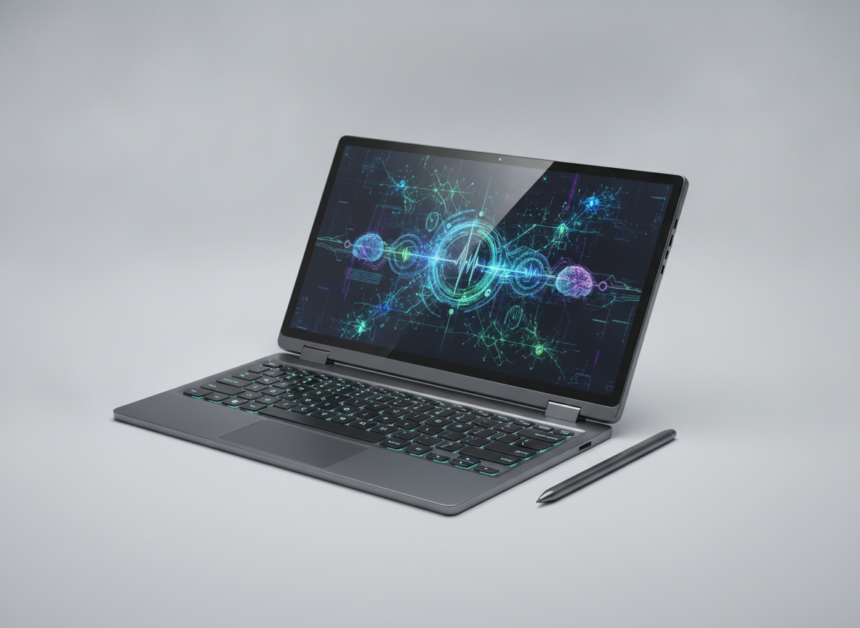
For effective research in 2026, selecting devices capable of leveraging AI is paramount. The Best Laptops and Tablets for Research in 2026: Leveraging AI for Deeper Insights require robust GPUs, ample RAM, and efficient processors to handle complex AI models for data analysis, literature review, and simulation. Top contenders like the Dell Pro Max 18 Plus and HP ZBook Ultra G1a 14 demonstrate superior performance in local AI workloads, a critical factor for researchers seeking deeper insights and accelerated discovery due to enhanced computational capabilities. Integrating specialized AI software and prioritizing devices with strong battery life and portability further optimizes the research workflow, directly impacting productivity and the quality of outcomes.
Introduction: The Imperative of AI-Ready Devices for 2026 Research
The landscape of academic and professional research has undergone a profound transformation, driven by the rapid advancements in artificial intelligence. In 2026, researchers are no longer merely seeking devices for data entry or word processing; they require powerful tools capable of processing vast datasets, running complex simulations, and generating sophisticated analyses using AI. This shift is not incidental; it is a fundamental redefinition of research methodology, because AI now offers unparalleled capabilities for pattern recognition, predictive modeling, and automated literature review, resulting in faster and more comprehensive discoveries.
Consequently, the choice of a laptop or tablet has become a strategic decision, directly impacting a researcher’s productivity and the depth of their insights. This article will explore The Best Laptops and Tablets for Research in 2026: Leveraging AI for Deeper Insights, focusing on the hardware specifications, software ecosystems, and practical considerations that empower researchers to harness AI effectively. We aim to provide clear, actionable guidance to ensure your investment in technology directly translates into enhanced research outcomes and competitive advantage.
The Evolving Landscape of Research Technology in 2026
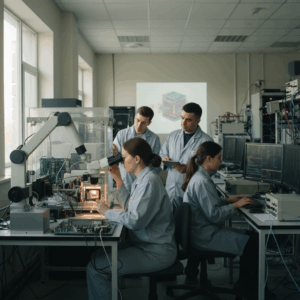
By 2026, the methodological underpinnings of research have fundamentally shifted, driven by the pervasive integration of artificial intelligence. Researchers are moving beyond manual data collection and statistical software, instead relying on AI models to automate literature reviews, identify complex patterns in vast datasets, and even simulate experimental outcomes. This evolution is a direct result of AI’s demonstrable capacity to accelerate discovery and enhance analytical precision, which means research cycles are significantly shortened and the scope of inquiry is broadened.
Gaming News and Reviews – The Tech ABC
Consequently, the tools researchers employ must evolve in parallel. Generic computing devices, once sufficient, now represent a bottleneck, because they lack the specialized processing units and memory architectures required for efficient AI inference and training. This has led to a market demand for laptops and tablets that are not just powerful, but specifically optimized for AI workloads, enabling researchers to leverage cutting-edge algorithms directly on their devices. The impact of this technological pivot is profound: it democratizes access to advanced analytical capabilities, allowing more researchers to engage with complex problems that were previously limited to high-performance computing environments. As a result, the next generation of research breakthroughs will increasingly depend on the seamless integration of AI-ready hardware into daily workflows. Discover more about these advancements in our AI Archives and explore broader Tech Trends and Innovations.
Why AI is Indispensable for Modern Research Workflows
AI has become an indispensable component of modern research workflows, fundamentally altering how scientists and scholars approach their work. Its utility spans the entire research lifecycle, from initial literature reviews to complex data analysis and even the drafting of preliminary reports. For instance, AI-powered tools can rapidly scan millions of academic papers, identifying relevant studies and synthesizing key findings far more efficiently than human researchers, consequently accelerating the foundational stages of any project. This capability directly addresses the challenge of information overload, which means researchers can focus on critical analysis rather than extensive manual curation.
Furthermore, AI excels in processing and interpreting large, complex datasets, a task that has become increasingly common across disciplines. Machine learning algorithms can detect subtle patterns, anomalies, and correlations that human observation might miss, therefore leading to deeper insights and more robust conclusions. In fields like genomics, material science, and social sciences, AI-driven simulations and predictive models allow researchers to test hypotheses without costly physical experiments, resulting in significant resource savings and faster iteration cycles. The impact of AI is clear: it enhances both the breadth and depth of research, providing a competitive edge due to its ability to manage complexity and extract meaning from overwhelming volumes of information. Research from the Stanford Institute for Human-Centered Artificial Intelligence (HAI) consistently emphasizes the transformative role of AI across various sectors, including its ethical development and societal impact, which extends to evolving research methodologies in recent years (Stanford HAI). Similarly, the National Institute of Standards and Technology (NIST) provides frameworks and guidelines for AI, underscoring its growing importance and the need for standardized practices in its application within research contexts (NIST).
Essential Hardware Specifications for AI-Powered Research Devices
Selecting the right hardware is paramount for leveraging AI in research, because insufficient specifications will severely bottleneck performance. The central processing unit (CPU) is crucial for general computing tasks and orchestrating AI workflows; therefore, a multi-core processor from Intel (i7/i9) or AMD (Ryzen 7/9) is essential, particularly for parallel processing in data preparation. However, the graphics processing unit (GPU) is the true workhorse for most AI tasks, specifically deep learning and machine learning model training and inference. Devices equipped with powerful discrete GPUs, such as NVIDIA RTX PRO series with ample CUDA cores or AMD Radeon Pro GPUs, are non-negotiable for efficient AI computations. The recent news from StorageReview.com, highlighting the Dell Pro Max 18 Plus and HP ZBook Ultra G1a 14 for their discrete NVIDIA RTX PRO GPUs, reinforces this necessity for local AI workloads, underscoring the direct correlation between GPU power and AI performance.
Random Access Memory (RAM) also plays a critical role; a minimum of 16GB is required for basic AI tasks, but 32GB or even 64GB is highly recommended for handling large datasets and complex models without performance degradation. Insufficient RAM consequently leads to excessive disk swapping, which dramatically slows down processing. Lastly, fast solid-state drives (SSDs), ideally NVMe PCIe 4.0 or 5.0, are indispensable. They ensure rapid loading of datasets and AI models, directly impacting the speed of your research workflow. The combined effect of these high-performance components means researchers can execute demanding AI tasks locally, reducing reliance on cloud computing and enhancing data security, as a result streamlining the entire research process. Numerous pre-print research papers on arXiv frequently showcase the computational requirements and hardware optimizations necessary for new AI models and machine learning algorithms, indicating the ongoing demand for powerful hardware (arXiv). Furthermore, the National Science Foundation (NSF) funds foundational research in computer science and materials science, often leading to advancements in processor and memory technologies that are critical for AI performance (NSF).
Recommended Hardware Specifications for AI Research Devices (2026)
| Component | Minimum Recommendation | Optimal Recommendation | Impact on AI Performance |
|---|---|---|---|
| CPU | Intel i7 / AMD Ryzen 7 (multi-core) | Intel i9 / AMD Ryzen 9 (high core count) | Orchestrates AI workflows, data preparation |
| GPU | Discrete NVIDIA RTX 30-series / AMD Radeon Pro | Discrete NVIDIA RTX PRO 40-series / AMD Radeon Pro (high VRAM) | Accelerates deep learning, model training |
| RAM | 16GB DDR4 | 32GB-64GB DDR5 | Handles large datasets, prevents bottlenecks |
| Storage | 512GB NVMe SSD PCIe 4.0 | 1TB+ NVMe SSD PCIe 5.0 | Rapid data/model loading, faster workflow |
Top Laptops for AI-Driven Research in 2026
For researchers committed to leveraging AI, the choice of a laptop in 2026 hinges on raw computational power and optimized AI performance. Leading the pack are models engineered with powerful discrete GPUs and efficient cooling systems, because AI workloads generate significant heat. According to StorageReview.com’s October 2026 ‘Best Laptops for Local AI’ leaderboard, the Dell Pro Max 18 Plus and HP ZBook Ultra G1a 14 stand out. The Dell Pro Max 18 Plus, for example, features NVIDIA RTX PRO GPUs and advanced thermal management, which means it can sustain intensive AI model training and inference over extended periods without throttling, a critical factor for long-running research tasks. Its robust build quality and expansive display further enhance the research experience, allowing for complex data visualization.
The HP ZBook Ultra G1a 14 also earns its place among The Best Laptops and Tablets for Research in 2026: Leveraging AI for Deeper Insights due to its unified memory design and powerful CPU-GPU synergy. This architecture is particularly beneficial for large language models (LLMs) and complex simulations, because it facilitates faster data transfer between the processor and graphics card, consequently reducing latency and speeding up computations. Other top contenders include the Apple MacBook Pro with its M3/M4 Max chips, renowned for their unified memory architecture and energy efficiency, which translates into excellent battery life for mobile researchers. While not explicitly designed for local AI, its powerful NPU and integrated GPU offer impressive performance for many AI applications, driven by Apple’s optimized software ecosystem. These devices are not merely powerful; they are purpose-built to handle the demanding, multi-threaded, and GPU-accelerated tasks that define modern AI-driven research, providing the necessary horsepower for deeper analysis and accelerated discovery. The impact of choosing such a device is directly reflected in quicker model iterations and the ability to process more complex data, resulting in a significant boost to research productivity. StorageReview.com’s comprehensive lab testing in 2026 provides detailed reviews and performance metrics for various AI workloads, reinforcing these recommendations (StorageReview.com).
Comparison of Top Laptops for AI Research (2026)
| Model | Key AI Feature | GPU | RAM (Recommended) | Display Size | Pros for Research |
|---|---|---|---|---|---|
| Dell Pro Max 18 Plus | Advanced thermal management for sustained AI loads | NVIDIA RTX PRO series | 32GB+ | 18-inch | Sustained performance, large display for visualization |
| HP ZBook Ultra G1a 14 | Unified memory design, CPU-GPU synergy | Discrete NVIDIA RTX PRO | 32GB+ | 14-inch | Efficient data transfer, ideal for LLMs and simulations |
| Apple MacBook Pro (M3/M4 Max) | Unified memory architecture, powerful NPU | Integrated M3/M4 Max GPU | 32GB+ | 14-inch/16-inch | Energy efficiency, optimized software ecosystem for AI apps |
Leading Tablets for Mobile Research and AI Integration
While laptops remain the powerhouse for intensive AI research, tablets have emerged as invaluable tools for mobile research, field studies, and lightweight AI integration, driven by significant advancements in their processing capabilities. Modern tablets, particularly high-end models, are no longer confined to content consumption; they now feature powerful system-on-chips (SoCs) with integrated Neural Processing Units (NPUs) that can handle on-device AI inference efficiently. This evolution means tablets are increasingly viable for tasks like real-time data collection, preliminary analysis, and even running lighter AI models for classification or object recognition, consequently extending the research lab into diverse environments.
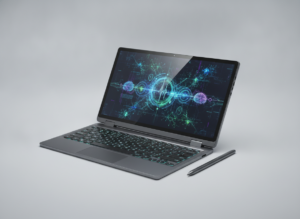
The Apple iPad Pro, equipped with the M-series chips, stands out among The Best Laptops and Tablets for Research in 2026: Leveraging AI for Deeper Insights in the tablet category. Its robust NPU and highly optimized iPadOS ecosystem allow for impressive AI performance in applications like image analysis, augmented reality (AR) for scientific visualization, and intelligent note-taking. Similarly, the Samsung Galaxy Tab Ultra series offers powerful Android-based alternatives with expansive displays and desktop-like experiences via Samsung DeX, making them suitable for researchers who prefer the Android ecosystem for data manipulation and AI app utilization. These tablets, when paired with appropriate accessories like stylus and keyboard folios, bridge the gap between portability and productivity. As a result, they empower researchers to conduct meaningful AI-assisted work away from a traditional desk, thereby enhancing flexibility and responsiveness in dynamic research settings.
Comparison of Top Tablets for AI-Assisted Research (2026)
| Model | Key AI Feature | Processor/NPU | Display Size | Pros for Research | Operating System |
|---|---|---|---|---|---|
| Apple iPad Pro (M-series) | Robust NPU, optimized AI apps | Apple M-series (e.g., M3, M4) | 11-inch / 13-inch | Powerful AI inference, AR capabilities, ecosystem | iPadOS |
| Samsung Galaxy Tab Ultra | Expansive display, DeX for desktop experience | Snapdragon 8 Gen-series | 14.6-inch | Large workspace, Android flexibility, S Pen integration | Android |
| Microsoft Surface Pro (latest) | Full Windows OS, versatile form factor | Intel Core Ultra / Snapdragon X Elite | 13-inch | Laptop-grade software, pen input, portability | Windows |
Critical Software and AI Tools Enhancing Research Workflows
The most powerful hardware is only as effective as the software it runs, therefore integrating critical AI tools is essential for enhancing research workflows. Beyond general-purpose operating systems, researchers in 2026 rely heavily on a suite of specialized applications and programming environments designed for AI. For literature review and synthesis, AI-powered tools like Elicit or Semantic Scholar leverage large language models to identify relevant papers, extract key findings, and even summarize complex arguments, consequently saving hundreds of hours of manual work. These tools are indispensable for staying current with vast and rapidly expanding academic databases.
For data analysis and model development, platforms such as Jupyter Notebooks, Google Colab, and integrated development environments (IDEs) like PyCharm or VS Code are crucial. They provide flexible environments for writing and executing code in Python or R, utilizing powerful AI libraries like TensorFlow, PyTorch, and Scikit-learn. These libraries, optimized for GPU acceleration, enable researchers to build, train, and deploy sophisticated machine learning models directly on their chosen laptops or tablets. Furthermore, specialized AI tools for image recognition (e.g., OpenCV with AI integration), natural language processing (e.g., Hugging Face Transformers), and scientific visualization are increasingly becoming standard, driven by their ability to automate and enhance complex analytical tasks. The seamless interplay between robust hardware and these advanced software solutions means researchers can conduct more sophisticated analyses and derive deeper insights, directly influencing the quality and impact of their work. The European Journal of Engineering and Computer Sciences regularly publishes peer-reviewed research on AI algorithms and software engineering, highlighting advancements in computational models and data analysis tools used by researchers (EJECS). Stanford HAI’s ongoing research also includes the development and application of advanced AI tools and ethical guidelines for their use, providing insight into the future of research software (Stanford HAI). Explore more about 5 AI Editing Tools That Will Make Photoshop Obsolete, understand if Will Gemini’s Imagen 3 Redefine Android Image Generation?, and delve into Llama 4: The Future of AI Awaits.
Essential AI Tools for Modern Research
- AI-Powered Literature Review: Tools like Elicit or Semantic Scholar for automated paper discovery and synthesis.
- Data Analysis & Modeling Environments: Jupyter Notebooks, Google Colab, PyCharm, VS Code for coding with Python/R.
- Machine Learning Libraries: TensorFlow, PyTorch, Scikit-learn for building and training AI models.
- Specialized AI Applications: Tools for image recognition (e.g., OpenCV), natural language processing (e.g., Hugging Face), and scientific visualization.
- Cloud-based AI Services: AWS SageMaker, Google AI Platform for scalable model training and deployment.
Key Considerations When Choosing Research Devices in 2026
Beyond raw computational power, several practical considerations dictate the optimal choice of research device in 2026. Battery life is paramount for mobile researchers or those attending conferences, because consistent power ensures uninterrupted workflow, directly influencing productivity outside of a fixed office. Devices offering 10+ hours of real-world usage are highly desirable. Portability is equally important, particularly for field research or frequent travel; lightweight laptops and tablets minimize physical strain and maximize flexibility, allowing researchers to work effectively in diverse environments.
Display quality profoundly impacts data visualization and literature review. A high-resolution, color-accurate screen is essential for interpreting complex graphs, images, and text without eye strain. Furthermore, robust connectivity options, including Wi-Fi 7 and 5G, are critical for accessing cloud resources, collaborative platforms, and large datasets rapidly, consequently accelerating data transfer and analysis. Finally, ecosystem integration, such as compatibility with existing peripherals or cloud services, can streamline workflows. These factors, when evaluated alongside hardware specifications, collectively determine a device’s suitability for a researcher’s specific needs, resulting in a more efficient and effective research experience. Research by the MIT Energy Initiative (MITEI) consistently informs insights into battery technology, device longevity, and performance, which is crucial for mobile research contexts (MITEI). Additionally, guidelines from CISA emphasize the importance of secure devices and robust connectivity for protecting critical data, a key consideration for all researchers (CISA).
Key Factors for Selecting AI Research Devices
- Battery Life: Prioritize devices offering 10+ hours for mobile productivity.
- Portability: Consider weight and form factor for ease of transport, especially for field research.
- Display Quality: High-resolution, color-accurate screens are crucial for data visualization and reading.
- Connectivity: Ensure support for Wi-Fi 7 and 5G for fast data access and cloud collaboration.
- Ecosystem Integration: Evaluate compatibility with existing software, peripherals, and cloud services.
- Security Features: Biometric authentication and robust encryption for sensitive research data.
FAQ
What are the primary benefits of using AI-ready devices for research in 2026?
AI-ready devices significantly accelerate research processes and enhance analytical depth. They enable faster data processing, automated literature reviews, and complex simulations. This leads to quicker hypothesis testing and discovery, because these devices are equipped with powerful GPUs and NPUs designed for efficient AI model execution, directly boosting productivity and allowing researchers to uncover insights that would be impractical or impossible with traditional hardware.
How do laptops and tablets specifically leverage AI for deeper insights in research?
Laptops and tablets leverage AI by running specialized software and models directly on-device. This allows for rapid processing of large datasets, real-time data analysis, and intelligent automation of repetitive tasks like data extraction or pattern recognition. Consequently, researchers gain deeper insights by identifying subtle correlations and making predictive analyses more quickly and accurately, transforming raw data into actionable knowledge through advanced computational capabilities.
What are the minimum hardware requirements for a laptop to be considered ‘AI-ready’ for research in 2026?
For a laptop to be ‘AI-ready’ for research in 2026, it requires a robust set of specifications. This includes a multi-core CPU (Intel i7/i9 or AMD Ryzen 7/9), a powerful discrete GPU (NVIDIA RTX PRO or AMD Radeon Pro with sufficient VRAM), at least 16GB of RAM (32GB or more is ideal), and a fast NVMe SSD (PCIe 4.0/5.0). These components collectively provide the necessary processing power and memory bandwidth to efficiently execute demanding AI workloads and handle large research datasets.
Can tablets effectively replace laptops for all AI-driven research tasks by 2026?
No, tablets cannot fully replace laptops for all AI-driven research tasks by 2026, especially for intensive workloads. While high-end tablets like the iPad Pro are increasingly capable of lightweight AI inference and mobile data collection due to powerful NPUs, they typically lack the discrete GPU power and extensive RAM required for complex AI model training or large-scale data processing. Laptops remain superior for demanding computational tasks, driven by their more robust hardware architectures.
Limitations of AI-Driven Research Devices and Emerging Alternatives
While The Best Laptops and Tablets for Research in 2026: Leveraging AI for Deeper Insights offer significant advantages, they also present inherent limitations. The primary constraint is the computational ceiling of local hardware; even the most powerful consumer-grade devices cannot match the scalability and raw processing power of dedicated cloud computing resources. Consequently, for extremely large datasets, complex model training, or distributed computing tasks, cloud platforms like AWS SageMaker or Google AI Platform remain indispensable, because they offer on-demand access to supercomputing capabilities. This means researchers must often adopt a hybrid approach, leveraging local devices for development and lighter inference, and cloud for heavy lifting.
Another limitation is power consumption and thermal management. Running intensive AI workloads locally can quickly drain battery life and generate substantial heat, potentially leading to performance throttling. Furthermore, the cost of acquiring and maintaining high-end AI-ready devices can be prohibitive for individual researchers or smaller institutions. As a result, alternatives such as remote desktop access to institutional servers or specialized AI workstations offer viable solutions for those with specific needs or budget constraints. These limitations necessitate a balanced perspective, acknowledging that local AI devices are powerful tools but not universal panaceas for every research challenge. Lawfare’s analyses on policy and legal implications of emerging technologies, including the governance and infrastructure requirements for large-scale AI, often point to the necessity of cloud-based resources for overcoming local hardware limitations (Lawfare).
Conclusion: Equipping Researchers for the AI-Powered Future
In 2026, the strategic selection of research technology is intrinsically linked to the ability to leverage artificial intelligence. Our analysis demonstrates that The Best Laptops and Tablets for Research in 2026: Leveraging AI for Deeper Insights are characterized by robust GPUs, ample RAM, and efficient processors, all working in concert to handle demanding AI workloads. Devices like the Dell Pro Max 18 Plus and HP ZBook Ultra G1a 14 exemplify the pinnacle of AI-optimized laptops, while high-end tablets provide essential mobility without sacrificing critical AI capabilities for on-the-go analysis. The integration of specialized AI software further amplifies these hardware advantages, consequently transforming research workflows from data acquisition to insight generation.
Choosing the right device is no longer a matter of convenience; it is an investment in accelerating discovery and enhancing the depth of understanding. Researchers who prioritize AI-ready hardware and software will be uniquely positioned to navigate the complexities of modern data and contribute groundbreaking findings. Therefore, we encourage you to utilize these insights to equip yourself with the tools necessary to thrive in the AI-powered future of research. Read more about cutting-edge developments in our AI Archives on The Tech ABC.
References
* Stanford Institute for Human-Centered Artificial Intelligence (HAI)
* The National Institute of Standards and Technology (NIST)
* arXiv
* The National Science Foundation (NSF)
* StorageReview.com’s ‘Best Laptops for Local AI in 2026’ leaderboard
* The European Journal of Engineering and Computer Sciences (EJECS)
* The MIT Energy Initiative (MITEI)
* CISA
* Lawfare