
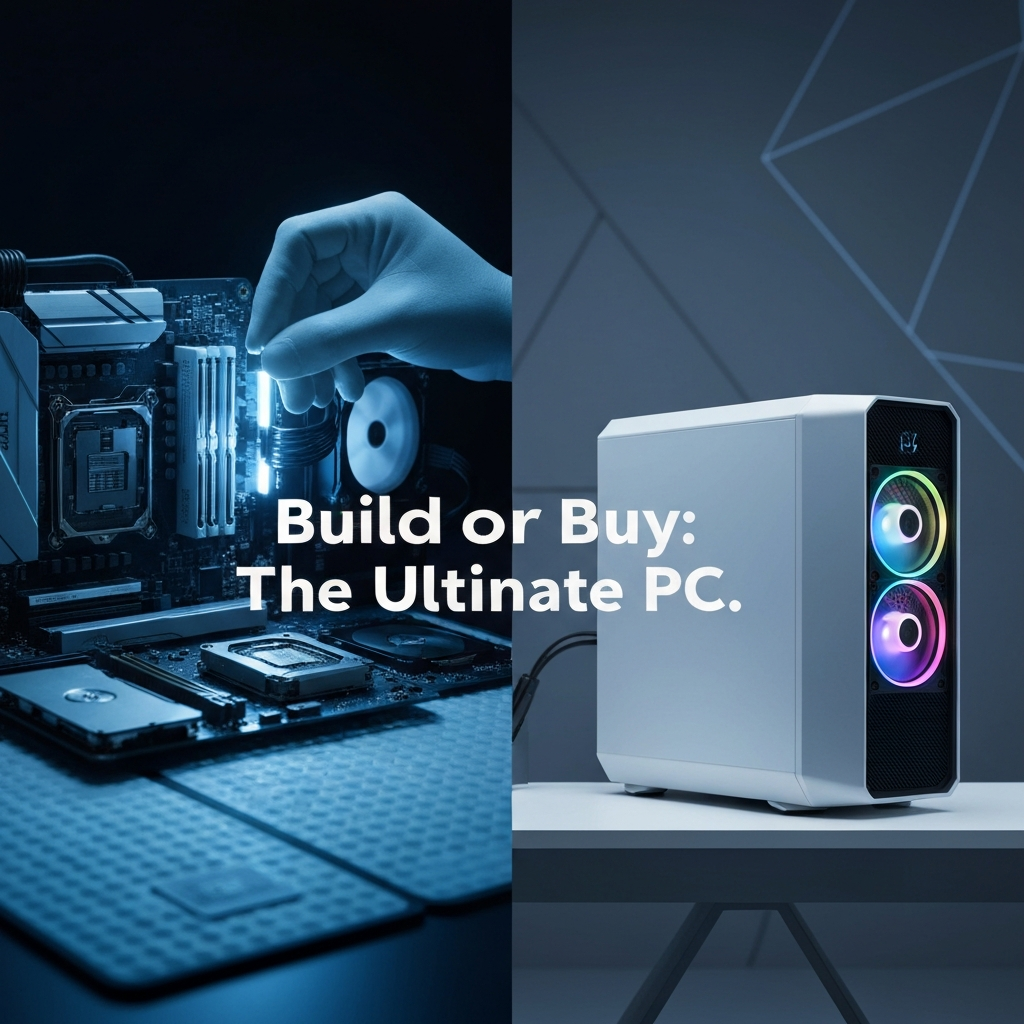
Deciding between building your own gaming PC and buying a prebuilt one is one of the biggest dilemmas for any aspiring gamer in 2024. The internet is filled with conflicting advice, leaving you to question which path offers the best value, performance, and long-term satisfaction. Competitors often provide vague lists of pros and cons, but they fail to deliver actionable guidance on what truly matters: real-world costs, the actual difficulty for a beginner, and how your choice today will impact your upgrade options tomorrow. This definitive guide cuts through the noise. We will provide a transparent, beginner-friendly analysis of the custom vs. prebuilt debate, focusing on detailed cost breakdowns across different budgets, a practical assessment of the build process, and a clear-eyed look at future-proofing. Our goal is to empower you with the practical knowledge needed to make the best decision for your gaming future.
Cost & Value Analysis: A Transparent Breakdown
The most significant factor for many aspiring PC gamers is the bottom line. The debate over custom vs prebuilt gaming pc cost is nuanced, but by breaking it down, we can reveal where the true value lies. We'll move beyond generic statements and look at real-world numbers and hidden costs.
Overall Cost Comparison
In 2024, the question "is it cheaper to build gaming pc 2024?" generally leans towards yes, but with important caveats. Building your own PC allows you to handpick every component, avoiding the markup that prebuilt manufacturers add for labor and branding. According to discussions on Quora, building your own PC can save 10% to 30% compared to a prebuilt system with similar components. For example, a prebuilt system might cost $1,500, while the individual parts could be sourced for around $1,200. This gaming pc cost comparison highlights the "build-it-yourself" tax you pay for convenience. The key is maximizing your gaming pc price per performance; by choosing a slightly less expensive case or a different brand of RAM, you can allocate more of your budget to the GPU or CPU, the components that directly impact gaming performance. This level of control over the overall gaming pc cost is the custom builder's greatest financial advantage.
Budgeting & Affordability
When creating a gaming pc budget build, every dollar counts. Building your own PC gives you unparalleled control. You can hunt for deals, buy used components, or start with a modest build and upgrade over time. The initial cost of building a gaming pc can be tailored precisely to your wallet. Tom's Hardware forum discussions suggest that building a gaming PC under $500 offers better performance and control over part quality compared to prebuilt options at the same price point, which often involve significant compromises. Conversely, be wary of prebuilt gaming pc hidden costs. These can include bloated software (bloatware) that slows down your system, inferior power supplies or motherboards that limit future upgrades, and premium charges for faster shipping or extended warranties. A custom build offers transparency—you know exactly what you're paying for, down to the last screw. For those aiming for a mid-range sweet spot, a custom best gaming pc under $1000 will almost always outperform a prebuilt at the same price point.
Value & Performance
The discussion of prebuilt vs custom pc value extends beyond the initial purchase price. Value is about performance per dollar, and this is where custom PCs truly excel. When you build your own, you can ensure that there are no bottlenecks. You can pair a high-end processor with a powerful graphics card without being forced into a bundle that includes an overpriced case or an inadequate cooling solution. This allows you to craft the best gaming pc build for your specific needs, whether that's high-refresh-rate esports or 4K single-player epics. The best gaming pc is not just about having the most expensive parts; it's about having the right parts working in harmony. By optimizing your component selection, you achieve a higher cost vs value ratio, getting more frames and better performance for your money compared to an off-the-shelf machine.
Build Difficulty & Practicality for Beginners
The idea of assembling a complex machine can be intimidating. PCMag highlights that building a gaming PC is often overestimated in difficulty, with modern components and abundant online guides making the process akin to assembling high-tech LEGOs.
Beginner Building Guidance
For a first time pc build, the key is preparation. Countless how to build a pc step-by-step with pictures guides and video tutorials are available online that cater specifically to the beginner gaming pc build. The modern PC building process is incredibly streamlined. Motherboards are clearly labeled, manuals are more detailed than ever, and communities on platforms like Reddit are ready to help. Our top first time pc build tips are: watch multiple video guides before you start, read your motherboard manual thoroughly, and take your time. Don't rush the process. Learning how to build a gaming pc for beginners is a rewarding skill that gives you a deeper understanding and appreciation of your machine.
Tools & Assembly
You don't need a professional workshop to build a PC. The essential tools for building a gaming pc are surprisingly simple: a set of Phillips head screwdrivers (specifically a #2 and a smaller #1), zip ties for cable management, and an anti-static wrist strap to protect your components from static electricity. That's it. The gaming pc assembly guide that comes with your components, especially the motherboard and case manuals, will walk you through the entire process. Before you buy, make a checklist of all parts needed to build a gaming pc: CPU, motherboard, RAM, storage (SSD/HDD), graphics card (GPU), power supply unit (PSU), and a case. Ensuring you have all the parts needed to build a gaming pc on hand before you begin makes the process smooth and stress-free.
General Build Practicality
For those who want maximum simplicity, finding the easiest gaming pc to build often comes down to the case and motherboard choice. Larger cases provide more room to work, and motherboards with clear labeling and simple BIOS interfaces are ideal for beginners. If you're still hesitant, a pc builder website can be an invaluable tool. These sites, such as the popular PCPartPicker.com, are often called a custom pc builder or pc build calculator and allow you to select your components virtually. The best pc builder website will automatically check for pc builder compatibility issues, ensuring your chosen CPU fits your motherboard socket and your GPU fits in your case. This removes the biggest point of anxiety for new builders: component incompatibility.
Future-Proofing & Upgrades: A Long-Term View
A gaming PC is an investment, and how it adapts to future demands is critical to its long-term worth. The table below breaks down the key differences in future-proofing between building your own PC and buying a prebuilt one.
| Aspect | Custom-Built PC | Prebuilt PC |
|---|---|---|
| Upgrade Pathways | Unlimited options. Easily swap any standard component (GPU, RAM, storage) to keep the system current and adapt to new technology. | Often limited. Upgrades may be difficult or impossible due to non-standard case designs, motherboards, or power supply connectors. |
| Component Limitations | Uses standard, off-the-shelf parts, ensuring wide compatibility and availability for replacements and future upgrades. | Frequently uses proprietary parts (custom motherboards, PSUs) that lock you into the manufacturer's ecosystem and prevent standard upgrades. |
| Long-Term Value | Higher long-term value. The ability to perform incremental upgrades extends the PC's lifespan and relevance significantly. | Lower long-term value. A single outdated or failed proprietary part can render the entire system obsolete or costly to repair. |
Ultimately, the system that offers the best long term value gaming pc is the one that can adapt. A custom PC, built with standard, high-quality components, is designed for longevity. You are not just buying a machine for today; you are building a platform for the future. This approach aligns with smart future plans, allowing your PC to evolve with your needs and the ever-changing landscape of technology. For a deeper dive into what's next, exploring the latest PC gaming trends for 2024 can provide critical insights into making better long-term investments for your setup.
Frequently Asked Questions
Is it cheaper to build a gaming PC in 2024?
Generally, yes. In 2024, it is still cheaper to source and build a gaming PC yourself than to buy a prebuilt one with the same specifications. You avoid paying for labor, marketing, and brand markups, which can save you between 10-30%. This also allows you to allocate more of your budget towards performance-critical components like the GPU and CPU.
How hard is it for a beginner to build a gaming PC?
The difficulty is often overstated. For a beginner, the process is more like assembling a complex LEGO set than it is electrical engineering. With countless step-by-step video guides online and user-friendly components, a first-time build is very achievable. The key is to do your research, watch tutorials beforehand, and take your time.
What tools are essential for building a PC?
You only need a few basic tools. The absolute essentials are a Phillips head screwdriver (a #2 size will handle most screws), zip ties for cable management, and an anti-static wrist strap to protect your components from static discharge. You do not need a soldering iron or any advanced equipment.
What are proprietary parts in a prebuilt PC?
Proprietary parts are components designed specifically for a particular manufacturer's prebuilt system, meaning they don't follow standard industry sizes or specifications. This can include non-standard motherboards, power supplies, or cases. They are a major drawback as they can make it very difficult or even impossible to upgrade or repair the PC with standard, off-the-shelf parts in the future.