

The Genesis of Innovation
Apple Inc. was co-founded by Steve Jobs, Steve Wozniak, and Ronald Wayne on April 1, 1976 — from a garage to being one of the greats in tech worldwide. Although this initial foot in the door of personal computer helped it to expand into different consumer electronics, software and services. By the time Apple II came along in 1977 and Macintosh in 1984 this quickly started to change which meant computers were no longer just toys for hobbyist and engineers but now a consumer product.
Innovative Products/Runtime Services

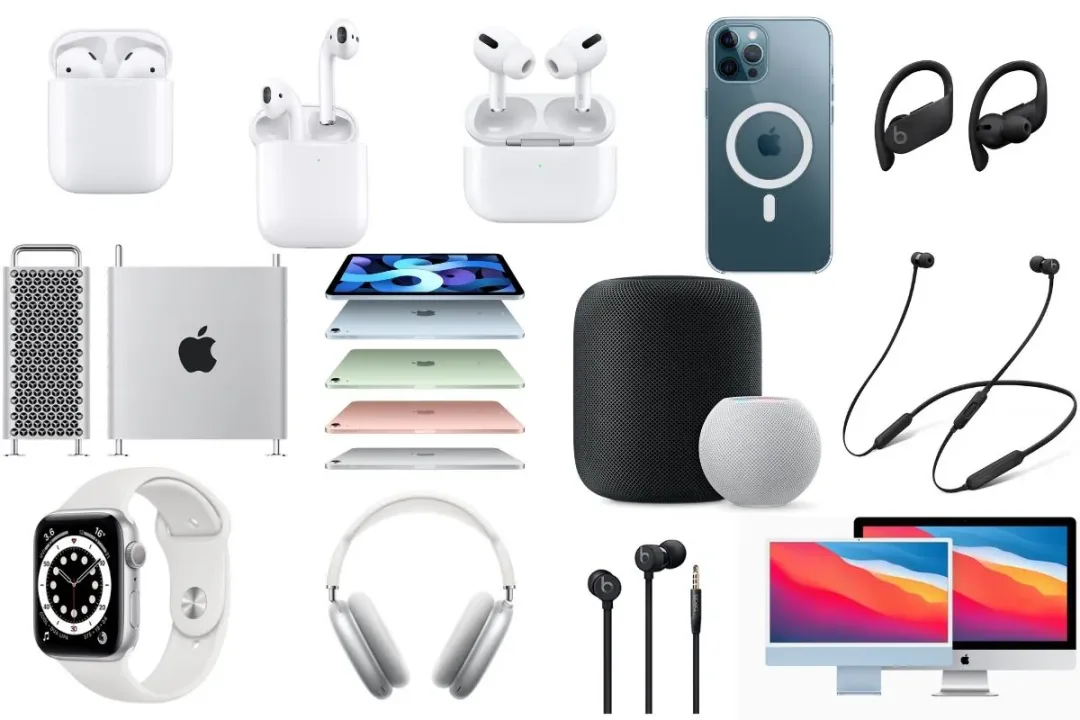
We got used to Apple staying ahead of competitors, which we did expect because Apple always had a top class product lineup. The game-changing iPod hit the market in 2001, and once digital music was portable there was no turning back for the music industry. But 2007 was a game-changer in making smartphones more accessible to the general public and enabling multiple features to be grouped into one device with the release of the iPhone. iPad, 2010: Because the best way to use the Internet and enjoy entertainment devices was on a phone, but more like a tablet!? Hence, you have Apple with a software ecosystem of MacOS, iOS, and their own apps.
Read Also – Revolutionary or Ruthless? Discover the Real Steve Jobs Behind the Legend!
Business Model and Go To Market Strategy
Apple is the other side of this spectrum where it is all about adopting vertical integration that controls each part on the hardware and software compatibility to give a singular experience for user. This means Apple has maintained fat margins throughout the iPhone consumer cycle. Through marketing strategy, sustainability, product design and innovative features it has created a strong churn of loyal customer waiting for every new release due to the brand image the company has developed. Its offline and online channel is also being integrated into its retail outlets where they can receive personalized services from customer service points and support.
-
Why Is There No iOS 19, and What iOS 27 Means for Your iPhone
Apple skipped seven version numbers this year, jumping straight from iOS 18 to the year-based naming that gave us iOS 26 and the current iOS 27.
-
Delete Connection History vs Simplink Off: Fixing the LG OLED HDMI Handshake
After the webOS 26 rollout, LG OLED owners on C4, G4, C5 and G6 sets are hitting black screens, “No Signal” errors and eARC dropouts when a PS5 Pro, Xbox Series X, RTX GPU or Denon receiver tries to negotiate full HDMI 2.1 bandwidth.
-
Apple TV 4K 2026 Review: The $299 Box Earns Its Price Only With HomePods
Table of Contents The claim: this is a home theater hub priced like a home theater hub What changed in the Apple TV 4K 2026, from A19 to Wi-Fi 7 A19 chip: 50% faster CPU, double the GPU performance Wi-Fi 7, Gigabit Ethernet and the single 128GB tier The evidence: four-HomePod Home Theatre is the…
-
How to Run Qwen 2.5 Coder 32B Locally: The Hardware You Actually Need in 2026
Table of Contents What Hardware Do You Actually Need to Run Qwen 2.5 Coder 32B Locally? The VRAM Math: Why 32 Billion Parameters Does Not Mean 32GB How to Estimate VRAM for Any 32B Model Q4_K_M Quantization Explained: What You Trade and What You Keep Is 24GB of VRAM Enough in 2026 — And Can…
-
Radeon in 2026: Why FSR 4 on Older Cards Changes the Value Math
Table of Contents What Actually Changed: The FSR 4.1 Rollout to Older Radeon Hardware The INT8 Breakthrough That Made Backporting Possible Full Model vs Lite Model: Who Gets Which Radeon in 2026: Why FSR 4 on Older Cards Changes the Value Math Which Radeon Cards, APUs and Consoles Support FSR 4.1 Right Now Handhelds and…
-
Samsung Galaxy Card vs Apple Card: Which Tech Credit Card Actually Pays You Back on Hardware?
Table of Contents Samsung Galaxy Card vs Apple Card: The 30-Second Verdict Hardware Rewards Showdown: 5% vs 3% (and the 6% Asterisk) Samsung Galaxy Card Explained: Barclays, Visa and the $200 Bonus Apple Card in Late 2026: New Issuer, Aggressive Counter-Promo Beyond Hardware: Wallet Rewards, Streaming and Everyday Spend Financing and Banking Integration: Where Apple…
-
Your Laptop Is Now an Interview Machine: The Hardware That Actually Matters for AI-Era Video Interviews
Table of Contents Why AI Interviews Changed the Hardware Requirements The NPU Threshold: Why 40 TOPS Became the Line What 16GB of RAM Actually Buys You Cameras: Where Integrated Hardware Still Falls Short Gaze Correction and the Honesty Question Audio Is the Underrated Priority How to Choose: A Practical Buying Framework Frequently Asked Questions Limitations…
-
How to Use Gemini Nano on Your Pixel: Enabling On-Device AI from the Pixel 8 to the Pixel 11
Table of Contents What Gemini Nano Actually Is — and Why It Runs on the Phone How to Enable Gemini Nano on Your Pixel: The Exact Steps Enabling on-device AI step by step Pixel 8 to Pixel 11: Which Devices Get Which Gemini Nano Version What On-Device AI Actually Does on a Pixel Today Features…
-
How Much RAM Does a Large Language Model Actually Need on Your Phone or Laptop?
Table of Contents The Formula Behind Every LLM RAM Calculation LLM RAM Requirements by Model Size 3B to 4B models: the mobile tier 7B to 9B models: the 16 GB sweet spot entry 12B to 14B models: the current best value 27B to 35B models: the coding-agent threshold 70B and above: workstation territory Quantization: Why…
-
GPT-5 vs GPT-6: Why the Older Model Still Wins on Your Phone and Laptop
Table of Contents The Short Answer: Which Model Belongs on Your Device The 2025-2026 Release Timeline, in Order ChatGPT Models Explained: Sol, Terra, Luna and Astra Why Reasoning Tokens Make GPT-6 Feel Slower on a Phone On-Device AI vs Cloud AI: Where the Delay Actually Lives GPT-6 Pricing vs GPT-5.6: The 2.5x Cost Gap Benchmarks:…
Money and its Global Footprint
Apple is one of the largest and most successful companies, demonstrated in terms of financial results more than once. This power has helped Apple to make not only the financial but also tapped its fingers in technology, media and entertainment, health care among others. 2022-Apple hits $3tn-market cap Apple Inc became the first $3 trillion market capitalization company of 2022. The company is also notable for its focus on sustainability and privacy, meaning that it’s innovating yet tackling two of the most prevalent issues in climate and society.
Conclusion
Apple Inc. serves as a case study for innovation, strategy in marketing and finance. The fact that it is able to reinvent whole industries and create new technological benchmarks, substantiates its claim to being a tech giant. Apple is not done evolving, and it has a continued influence in the future of consumer electronics — and beyond.